Company distribution reforms: what family businesses need to know

By Fiona Graham, Chief Operating Officer

Recent press reports suggested that proposed changes to the taxation of company distributions could result in transfers of family businesses to the next generation being taxed as income.

Understandably, this caused considerable concern, particularly among businesses already dealing with the impact of changes to Business Property Relief.

Family Business UK acted quickly to raise members’ concerns directly with senior officials in HMRC and the Treasury, ensuring the potential consequences for family business succession were understood at the highest levels of Government. The Chancellor has since written directly to FBUK, confirming that the reforms are intended to protect genuine family business succession.

The documents published alongside the Budget provide further reassurance about what is, and is not, changing.

What is the Government proposing?

The Government plans to reform the tax rules covering distributions from companies to individual shareholders.

Its aim is to prevent arrangements that allow people to extract company profits at Capital Gains Tax rates where there has been no genuine change in the economic ownership of the business.

FBUK supports the creation of a clearer and more consistent framework, as well as proportionate action to address artificial arrangements. In our direct engagement with HMRC and the Treasury, we have been unequivocal that the reforms must distinguish between artificial capital extraction and genuine changes in the ownership of a family business.

The Government plans to consult on the technical detail in 2027, before introducing the new rules in April 2028.

Can parents still pass shares to their children?

Yes.

The Government has confirmed that parents will still be able to gift or sell shares in a family business to their children under the existing rules.

Where Gift Hold-Over Relief applies, any Capital Gains Tax can continue to be deferred until the child later disposes of the shares.

The reforms are therefore not a new general income tax on passing shares in a family business to the next generation.

The Government has also said that more complex transfers covered by the reforms will continue to receive capital treatment where there is a genuine change in ownership.

Why did FBUK intervene?

FBUK’s engagement has ensured that the practical realities of succession in multigenerational family businesses are part of the Government’s consideration of these reforms.

Succession in a family business is rarely a simple transfer from one person to another.

Ownership may be spread across different generations and family branches. Some shareholders may work in the business, while others may contribute through governance, investment, property or personal guarantees. Some may be preparing to take responsibility for the business, while others wish to retire or leave.

Family businesses often use purchases of their own shares to manage these changes. A company may buy shares to:

  • enable a shareholder to retire;
  • transfer ownership towards the next generation;
  • buy out a family member who is no longer involved;
  • consolidate ownership following an inheritance;
  • manage changes between different family branches; or
  • provide liquidity to an estate following a death.

These transactions involve a genuine change in ownership. They are fundamentally different from arrangements through which someone extracts accumulated profits while retaining substantially the same interest in the business.

Drawing on the experience of our members, FBUK warned Ministers and officials that rigid new conditions could unintentionally make ordinary family business succession more difficult and expensive.

What did FBUK ask the Government to address?

Our response focused particularly on purchases of a company’s own shares and demergers.

We raised concerns about proposals that could exclude shareholders with an interest of less than 5%. In a multigenerational business, ownership may be divided between siblings, cousins and different family branches, meaning a smaller shareholding can still be significant.

We also argued against making employment a general condition of relief. A shareholder may have inherited shares without working for the company, may have retired, or may hold shares through a trust or as a personal representative. In many cases, the purpose of the transaction is specifically to transfer ownership away from someone who is not involved in the business.

Our central recommendation was that the rules should distinguish genuine commercial changes in economic ownership from arrangements whose purpose is simply to extract accumulated profits at capital rates. A family connection should not, by itself, suggest that a transaction is artificial or designed to avoid tax.

Following FBUK’s representations, the Government has already indicated movement on several of the concerns we raised.  In particular, it intends to relax the proposed requirement that a shareholder must have been an employee for the two years immediately before the sale. It has also acknowledged concerns over the proposed 5% minimum shareholding requirement and will consider that further through the technical consultation.

Phased succession and company-funded exits

FBUK also highlighted that family business succession is often gradual.

An outgoing owner may retain a limited interest or protective rights while responsibility passes to the next generation. A company may also be unable to fund the immediate purchase of all the outgoing shareholder’s shares without placing significant pressure on working capital.

We therefore asked the Government to allow genuine successions to be completed in stages, including through deferred payments. A genuine transfer should not lose capital treatment simply because the business cannot safely finance an immediate lump-sum buyout.

The Budget documents provide important reassurance on this point. The Government has recognised that holding-company structures can be used as part of legitimate family business succession, including where the company helps fund a retiring owner’s exit.

The Government has said that the changes to the purchase of own shares rules are intended to allow qualifying company-funded exits to be completed in stages, enabling ownership to pass in an orderly way while spreading the call on the company’s cash and distributable reserves.

This is a significant and welcome response to one of the important practical issues FBUK raised directly with the Government. It demonstrates the value of ensuring that Ministers and officials hear from family businesses before the detailed rules are finalised.

What happens following a death?

We also raised the position of a family business following the death of a shareholder.

An estate may hold valuable but illiquid shares for which there is no external market while facing an inheritance tax liability. A purchase of those shares by the company may be the only practical way of providing liquidity without selling or breaking up the underlying business.

If the money needed by the estate could only be extracted at income tax rates, substantially more cash might have to leave the company to meet the same liability. This would further reduce the money available for investment, employment and growth.

FBUK has asked for a clear route to capital treatment where a share purchase supports genuine estate administration and results in a real change in ownership. We have put this issue directly to HMRC and the Treasury and will continue pressing for it to be addressed through the technical consultation.

What happens next?

The Chancellor’s direct reassurance and the statements published alongside the Budget are welcome. However, the final legislation has not yet been published.

The Government will hold a technical consultation in 2027 to test how the proposed conditions work and whether adjustments are needed to protect genuine family business succession. Implementation is planned for April 2028.

FBUK will continue working directly with HMRC and the Treasury throughout the next stage of this process. We will bring Ministers and officials practical evidence from family-owned businesses, test the proposed rules against real succession scenarios, and hold the Government to the commitment given directly to FBUK by the Chancellor.

Our engagement has already helped secure important reassurance and movement on practical concerns. We will now use our influence throughout the technical consultation to ensure that commitment is translated into legislation that works for family businesses with different ownership structures and circumstances.

Our position is clear: the tax system should prevent artificial profit extraction, but it must not obstruct genuine succession, retirement, estate administration or changes in ownership between different branches of a family.

These reforms are separate from the inheritance tax changes affecting Business Property Relief. The reassurance on company distributions is positive, but it does not resolve the wider pressures those changes are creating. The full restoration of Business Property Relief remains FBUK’s number-one policy ask.


Want to find out more about the announcements in the Budget?  Join our webinar on 5th November for a full rundown and expert analysis.  Find out more: https://familybusinessuk.org/event/post-budget-webinar/  
FBUK Responds to Budget 2026

Responding to today’s Budget, FBUK CEO Neil Davy said:

“Family businesses want to play their part in tackling youth unemployment and driving growth in every postcode, as they have done for generations.

“We called for action in this Budget on the cost of hiring and doing business, so there is much here to welcome. The announcement on business rates will provide valuable support for many smaller family firms, while the more measured approach to minimum wage increases for younger workers will help address one of the barriers to creating entry-level jobs.

“We also welcome steps to back entrepreneurs, encourage new businesses and reduce energy costs for some firms. Importantly, the Chancellor explicitly recognised the need to protect genuine family business successions as the Government reforms the taxation of company distributions. That recognition matters. Passing a business successfully from one generation to the next protects jobs, investment and local prosperity for the long term.

“We would still like the Government to go further by fully restoring Business Property Relief, but today’s Budget suggests ministers are listening and increasingly recognise the distinctive contribution family businesses make to the UK economy. FBUK look forward to building on that progress and working with the Government to turn these early green shoots into stronger growth across the country.”


Want to find out more about the announcements in the Budget?  Join our webinar on 5th November for a full rundown and expert analysis.  Find out more: https://familybusinessuk.org/event/post-budget-webinar/
Government takes forward key recommendations developed with Family Business UK to cut red tape

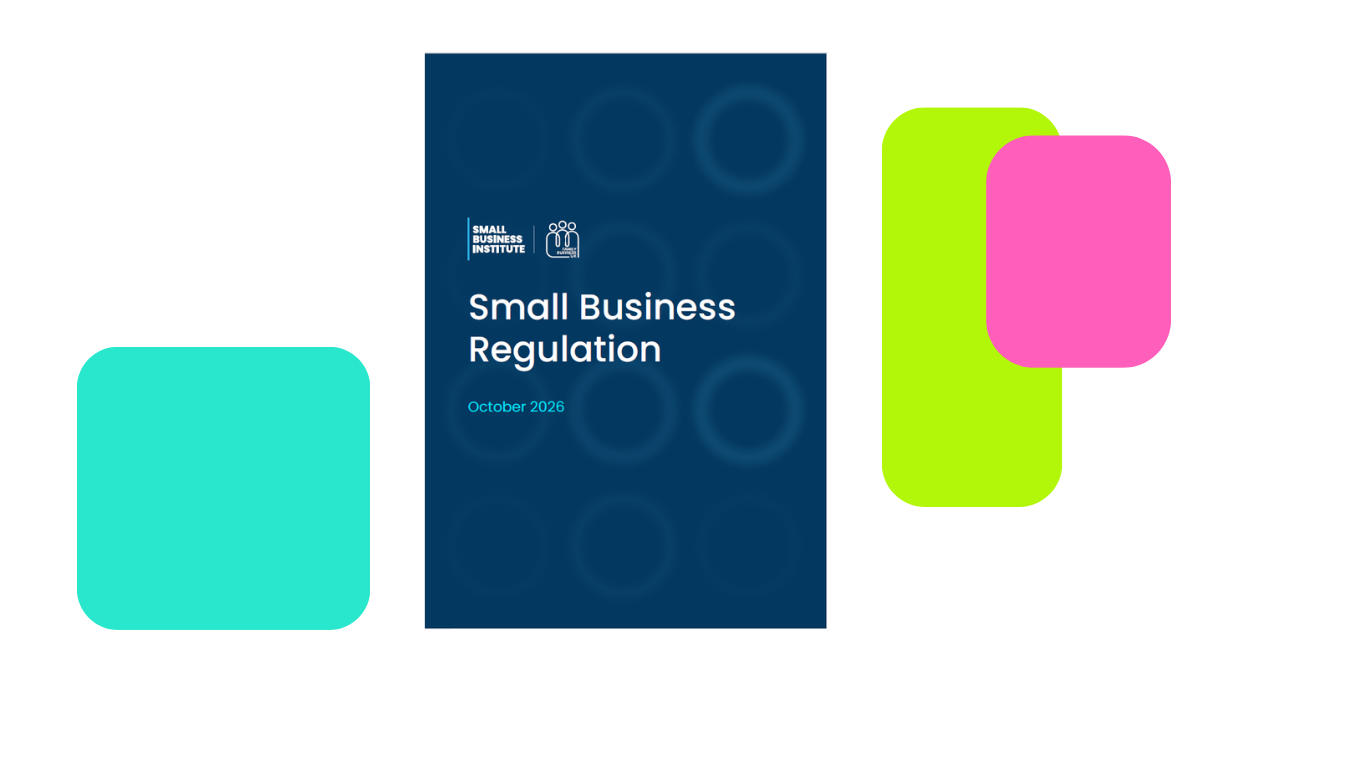
Family Business UK has welcomed government commitments to simplify licensing and reduce duplicate reporting, following its work with other leading business groups on the Small Business Regulatory Taskforce.

FBUK CEO Neil Davy represented the organisation on the Taskforce and represented the family business sector in a series of meetings over the summer. Alongside the Small Business Institute, the research and policy arm of Small Business Britain, FBUK delivered its regulatory enforcement workstream, examining how regulation affects businesses in practice.

The joint report drew on four focus groups involving 30 businesses, alongside survey evidence from both organisations, including FBUK’s Family Business Pulse.

Businesses described repeated requests for information, inconsistent requirements across local authorities and compliance burdens that increase sharply as firms grow. FBUK’s survey findings showed that 39% of respondents identified regulatory thresholds as creating additional compliance burdens as their business grows, while 31% highlighted the impact of managing multiple compliance systems, processes or formats.

The workstream called for a more joined-up regulatory system, consistent licensing and inspection processes, and requirements designed around the resources available to smaller businesses.

Progress on licensing and reporting

The Government’s response takes forward several priorities identified through this work.

It has accepted the recommendation to digitise and standardise licence applications, with plans to expand a digital licensing pilot to more local authorities and an additional licence type. This responds to concerns about businesses having to navigate different processes and repeatedly submit the same information when operating across council boundaries.

Ministers have also accepted the ambition for businesses to “tell government once”, with further work to explore how information can be shared across services. A delivery roadmap will follow next year’s Spending Review, subject to funding decisions.

Alongside this, the Office for National Statistics will work with business representatives on a roadmap to reduce survey burdens, including greater use of existing administrative data. The Government has also backed more proportionate construction procurement and the reuse of supplier credentials.

Neil Davy, CEO of Family Business UK, said:

“Family businesses have told us clearly that repeated requests for the same information, inconsistent licensing processes and confusing requirements take valuable time and money away from investment and growth.

“Having worked alongside other leading business groups on the Regulatory Taskforce, we welcome the Government’s commitment to take forward key recommendations we helped develop, including simplifying licensing and reducing duplicate reporting.

“The priority now is delivery. Family businesses need to see these commitments translate into fewer forms, faster decisions and a more consistent experience across regulators and local authorities. Further action is also needed to address the regulatory cliff edges that can discourage businesses from growing.

“With the Budget approaching, today’s announcement is a welcome step towards giving family businesses more time and confidence to invest, create jobs and support their communities.

“We now look to the Chancellor to follow suit when he stands at the Despatch Box on Budget Day, with a clear message of support for family businesses and the policies they need to invest and grow.”

Further action needed

While the response represents welcome progress, it stops short of the full package proposed in the joint report.

FBUK will continue to press for consistent inspection standards and action on regulatory cliff edges that discourage growth, alongside clear accountability for delivery and discussions are ongoing with government and business partners to ensure that reform delivers practical improvements for family businesses, freeing up time and resources to invest, create jobs and contribute to local growth.

Family businesses call on Chancellor to cut employment costs and tackle youth unemployment

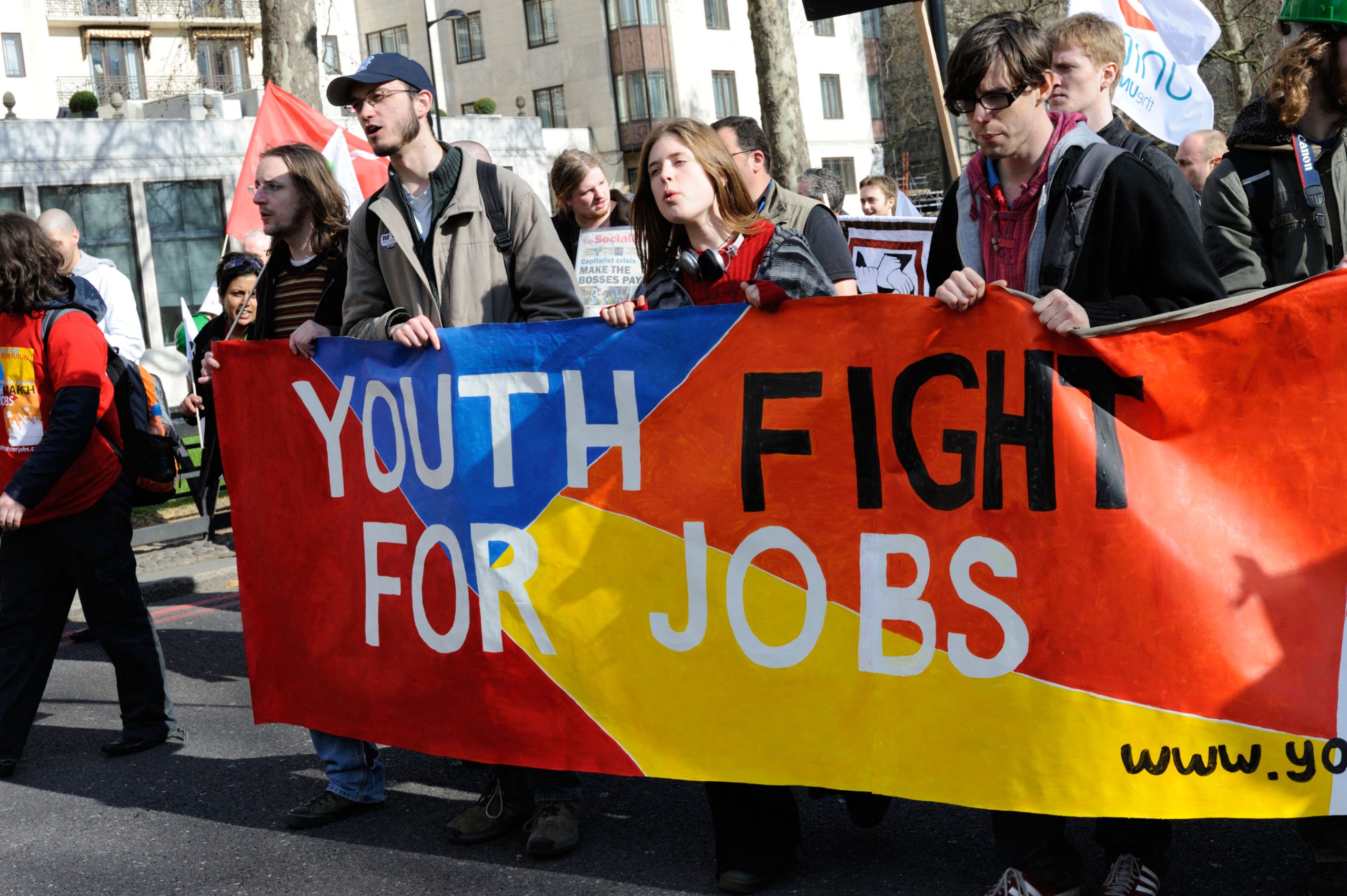
Family businesses are calling for action in the Budget to reduce spiralling costs of taking on young workers, with more than a third (38 per cent) saying they have become a significant barrier to recruitment.

In its submission to the Treasury ahead of the Budget, Family Business UK (FBUK) sets out a package of measures to encourage businesses to recruit, invest and grow, including a reduction in employer National Insurance Contributions (NICs) for younger workers, targeted incentives to help young people into work and reforms to the tax system to support long-term business ownership.

The call comes as youth unemployment stands at 16.2 per cent and around one million young people are not in education, employment or training (NEET). FBUK warns that rising employment costs, limited job opportunities, skills shortages and the growing impact of artificial intelligence are making it harder for young people to secure their first foothold in the labour market.

FBUK is now calling for a six-month employer NICs holiday for family businesses recruiting people aged 18 to 24, or up to 30 for those entering their first job. The organisation estimates that the measure could support around 100,000 recruits.

Neil Davy, chief executive of Family Business UK, said: “Family businesses want to invest, grow and create good, long-term jobs. But rising employment costs are making it harder for firms to take on staff, just when the country needs businesses to create more opportunities for young people.

“We need a practical package that makes it easier for employers to recruit and gives young people a better chance of getting into work. Cutting the cost of employing young people, supporting paid work experience and apprenticeships, and extending help to those at risk of unemployment would make a real difference.

“Family businesses account for 93 per cent of private sector firms in the UK and employ 15.8 million people. If we help these businesses create more opportunities for young people, the impact on employment and communities across the country could be transformational.”

FBUK’s proposals to address youth unemployment include:

  • Employer NICs relief: a six-month NICs holiday for family businesses taking on young people aged 18 to 24, or first-time employees up to the age of 30.
  • Paid internships: a six-month Family Business Internship Incentive, with grants of £3,000 to £5,000 for businesses offering structured placements to 18- to 30-year-olds, including training, mentoring and a named supervisor. A further payment could be made where placements lead to permanent jobs or apprenticeships.
  • An expanded Youth Guarantee: extending support to school and college leavers, young people at risk of unemployment and those outside the Universal Credit system, with a focus on careers advice, employability and job matching.
  • More apprenticeship support: extending starter-wage assistance to labour-intensive and socially important sectors, including retail, hospitality, leisure, education and care.
  • A more responsive Growth and Skills Levy: improving guidance on how funds can be used and making it easier for businesses to transfer funding through their supply chains and local business networks.

FBUK is also calling for a more predictable approach to minimum wage policy. It wants the Government to assess the employment consequences of planned alignment between the National Minimum Wage for younger workers and the National Living Wage, and publish a youth-employment impact assessment before each further step towards equalisation. It also proposes a fixed three-year cycle for reviewing employment wage policy, giving employers greater certainty when planning recruitment and investment.

Alongside employment, the submission calls for Chancellor John Healey to use the Budget to reverse his predecessor’s controversial changes to inheritance tax for family firms. It calls on the Treasury to restore 100 per cent Business Property Relief (BPR) with no upper threshold, introduced by Labour Chancellor Denis Healy in 1976, reversing the changes that FBUK says continue to undermine investment, recruitment and succession planning among family-owned businesses.

Although the Government increased the threshold for inheritance tax to apply to family firms’ assets from £1 million to £2.5 million following a fierce backlash, FBUK says the changes have not resolved the fundamental problem. A survey of more than 530 family-business leaders by FBUK found that 58 per cent expected to be affected by the reforms, 24 per cent had paused or cancelled planned investment, and 23 per cent had reduced headcount or paused recruitment.

FBUK argues that family businesses should not face a tax burden on transferring ownership that puts them at a disadvantage compared to publicly listed, private equity-backed and overseas businesses. It warns that money diverted from productive investment to meet inheritance tax liabilities could otherwise support jobs, training, innovation and growth.

The submission also calls for business energy costs to be reduced, by extending to businesses the approach recently taken for households, under which 75 per cent of the costs of obligations to use renewable energy are shifted from energy bills to general taxation. Three in ten family firms identify energy costs or volatility as their main barrier to growth, with retail, hospitality and leisure businesses particularly exposed.

FBUK is further urging the Government to undertake wholesale reform of business rates, moving towards a more progressive system in which different portions of a bill are charged at different rates. Its research finds that 43 per cent of family-owned businesses identify business rates as the tax having the greatest impact on their operations.

Other recommendations include ruling out a one-off or annual wealth tax, providing greater certainty over the tax system, improving access to scale-up finance and introducing incentives to encourage long-term investment in UK private businesses. FBUK also proposes a Community Investment Tax Relief to encourage family businesses to invest in local assets, infrastructure and community initiatives, with an initial targeted pilot potentially focused on youth employment.

Neil Davy added: “Family businesses are long-term investors in the UK economy. They create jobs, support local supply chains and sustain communities, often across generations. But they need a tax and regulatory environment that gives them the confidence to keep investing in Britain.

“Restoring Business Property Relief in full, reducing employment and energy costs, and reforming business rates would help unlock that investment. The Budget should be an opportunity to back the businesses that already contribute £422 billion in tax each year and generate £985 billion in economic value, helping them create jobs and deliver growth across the country.”


FBUK welcomes Soho Communications as first PR and communications corporate Partner

Family Business UK (FBUK) is delighted to announce that Soho Communications has become the first PR and communications agency to join its Corporate Partnership programme.

Soho Communications is a boutique PR agency based in Soho Square, London, specialising in corporate and consumer PR, media campaigns, brand building and profile raising for organisations and senior executives. The agency is led by CEO James Chapman, former political editor of the Daily Mail and director of communications at HM Treasury under George Osborne.

The agency works with a wide range of organisations across business, finance, hospitality, retail, recruitment and professional services, helping clients to build their reputations, communicate complex issues and influence the public and policy debate.

Soho has already worked closely with FBUK through its PR and communications campaign on Agricultural Property Relief (APR) and Business Property Relief (BPR), representing farmers and family businesses affected by the proposed changes to inheritance tax.

The campaign helped persuade the Government to increase the threshold at which the new inheritance tax rules would apply from £1 million to £2.5 million, a change which took around a third of businesses that would otherwise have been affected out of scope.

FBUK has established partnerships with carefully selected and highly respected organisations that provide compelling professional services, expertise and support to family businesses.

In welcoming Soho Communications to the FBUK Corporate Partner network, Neil Davy, CEO FBUK, said:

“We’re delighted to welcome Soho Communications as our first PR and communications partner.
“Effective communication is increasingly important for family businesses, whether they are making the case for their contribution to the economy, navigating major policy changes or telling the stories behind successful multi-generational businesses.

“James and the Soho team have demonstrated a strong understanding of the issues facing family businesses and the ability to turn complex policy arguments into compelling campaigns that reach policymakers, the media and the wider public. We look forward to working with them as we continue to champion the contribution of family businesses and ensure their voice is heard.”James Chapman, CEO of Soho Communications, said:

“We are delighted to become the first PR firm to join FBUK’s Corporate Partner programme. Family businesses are one of the great strengths of the British economy, providing jobs, investment and long-term commitment to the communities in which they operate.

“Our work with FBUK and the businesses affected by the changes to APR and BPR showed what can be achieved when strong policy arguments are combined with powerful human stories and an effective media campaign. We are very pleased to deepen our relationship with Neil and the FBUK team and to bring our communications expertise to its members.

“Family businesses have an important story to tell about the contribution they make to Britain’s economy and society, and we look forward to helping FBUK ensure that story is heard more widely.”