Family Business Week 2026 – championing family firms driving local growth

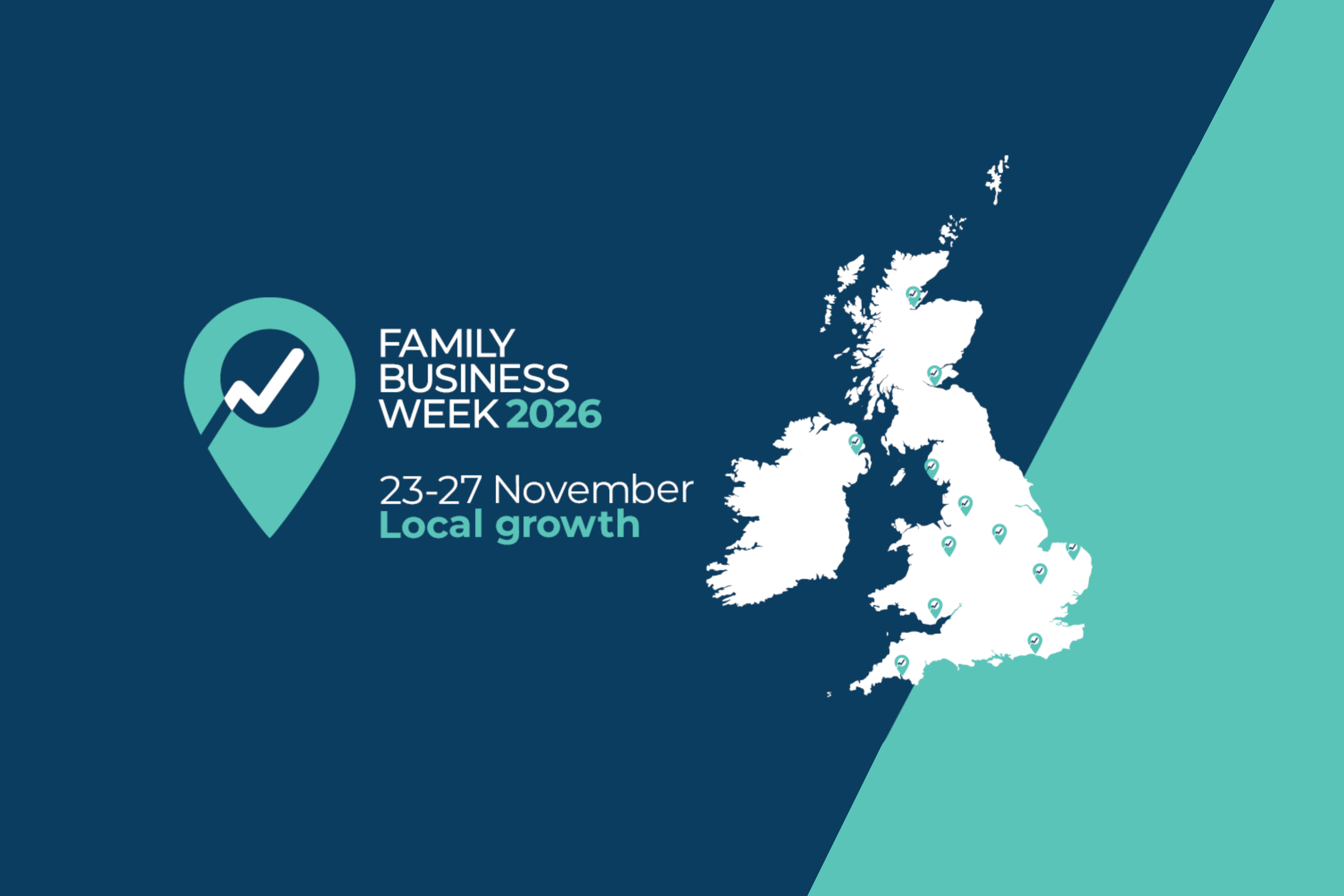
Family Business UK is calling on businesses, policymakers and partners to celebrate the family-owned firms creating jobs, investing locally and strengthening communities during Family Business Week, taking place from 23–27 November 2026.

Under the theme “Supporting local growth across the UK”, this year’s campaign will put the spotlight on the people and businesses making a lasting difference in towns, cities and regions nationwide.
Throughout the week, Family Business UK will share success stories and showcase how family-owned firms support local supply chains, invest in high streets and contribute to community and charity initiatives. The campaign will encourage wider recognition of the long-term economic and social contribution these businesses make.

Rooted in the places where they operate, many family businesses take a long-term view, supporting resilience, continuity and local prosperity. Built over generations, they create opportunities, retain local knowledge and help strengthen the communities people call home.

FBUK CEO, Neil Davy commented:
“Family businesses are part of the fabric of our communities. Their commitment reaches beyond the business itself — to the people they employ, the suppliers they work with and the places they call home. Family Business Week is an opportunity to celebrate that contribution and tell the stories behind it. We encourage family firms across the UK to get involved, share their experiences and show what long-term commitment to a community can achieve.”
Family business owners, employees, senior leaders, NextGen family members, advisers and policymakers are invited to take part by attending an event, hosting an activity or sharing their own family business story.

The Family Business Week events programme offers opportunities to go behind the scenes of family businesses, join inspiring conversations, share experiences and connect with peers across the sector. A digital marketing toolkit is available to help family businesses join the conversation and highlight how their business is contributing to local growth.
To find out more, explore opportunities to get involved and access campaign resources, visit the Family Business Week webpage.
“Family businesses ready to back the next generation,” says FBUK.

Family Business UK welcomes Alan Milburn’s final report on young people and work and calls on the Government to implement its recommendations in full, as one complete package. 

Alan Milburn’s independent review, From a Welfare State to a Working State: A new settlement for the next generation, has been published today. It sets out a ten-year plan to reduce the number of young people not in education, employment or training (NEET). The plan is built on a “give and get” bargain: the Government makes it easier, cheaper and less risky to hire young people, and employers create more first chances in return. 

Family businesses employ 15.8 million people across the UK and have a long record of giving young people their first job. Many of the review’s proposals reflect what Family Business UK (FBUK) has called for in our Policy Agenda and recent Budget Submission. 

Commenting on the report, Neil Davy, CEO, Family Business UK said: 

“We welcome Alan Milburn’s report and its recognition that tackling the crisis of youth unemployment requires urgent action from Government. 

“With around one million young people not in education, employment or training, Britain cannot afford to leave another generation behind. Family businesses, which employ 15.8 million people across the UK, are natural partners in addressing this challenge. 

“Our latest Family Business Pulse found that 55% of family businesses expect to increase employment over the coming year. The appetite to create jobs for young people is there, but rising employment costs, skills shortages and increasing regulatory burdens are making recruitment more difficult. 

“The Government must now match the ambition of this review with decisive action. That means implementing its recommendations as a comprehensive package, reducing the cost and risk of employing young people, and working directly with employers to create meaningful opportunities. 

“Family businesses stand ready to play their part, but Government must create the conditions that allow them to do so.” 

What the review means for family businesses 

  • Lower employment costs. The review recommends doubling the employer National Insurance threshold for 21 to 24-year-olds from £5,000 to £10,000, starting in retail and hospitality. We strongly welcome this. 38% of family businesses tell us rising employment costs are a barrier to recruitment, and any relief should be open to employers in every sector. 
  • Apprenticeships. Fully funding apprenticeships for under-25s through the Growth and Skills Levy, and ending the Treasury’s share of levy funds, reflects what we have long called for. Funding must now be simple to access and flexible enough to work for businesses of every size. 
  • Support to hire. New hiring grants, with extra support for smaller firms and for young people facing greater barriers, will help with the upfront cost and risk of taking someone on. Almost one in five (19%) family businesses say better support for employing people with health conditions would do most to help them recruit. 
  • A guarantee for every young person. We welcome a guarantee covering all NEET 18 to 24-year-olds, not only Universal Credit claimants, as we have called for. It will only succeed if businesses are supported to provide the opportunities behind it. 
  • Skills that lead to jobs. More further education places are welcome, but qualifications must lead to real jobs. 28% of family businesses cite a shortage of suitably skilled candidates, so work-readiness needs to run right through education. 
  • Putting jobs first in policy. A new Youth Opportunity Test for major tax, spending and regulatory decisions is a welcome step. 28% of family businesses now see regulation and administration as a barrier to recruitment, up from 19% the previous quarter. Changes such as the Employment Rights Act must be properly assessed for their impact on entry-level jobs. 

Working together for the next generation 

Family businesses think in generations. They invest for the long term, train people and stay rooted in their communities. That makes them natural partners in giving young people their first step into work. 

We will be working with Government, and with our Members, to make sure the review’s recommendations turn into real opportunities for young people in every part of the UK.

Read the full Milburn Review on GOV.UK


KPMG becomes a Gold Partner

Family Business UK (FBUK) is delighted to announce that KPMG UK has strengthened its commitment to the family business sector by becoming a Gold Partner, building on its previous support as a Bronze Partner.

This partnership reflects KPMG’s long-standing dedication to supporting family-owned businesses across the UK and its recognition of the vital role they play in driving economic growth, creating employment and sustaining communities for future generations.

As a Gold Partner, KPMG will work closely with Family Business UK to provide members with valuable insights, expertise and support across the issues that matter most to family businesses, including succession planning, governance, growth, leadership development and long-term sustainability.

Family businesses are a cornerstone of the UK economy, often balancing commercial success with a commitment to family values, legacy and responsible stewardship. Through this strengthened partnership, FBUK and KPMG will continue to help family businesses navigate the opportunities and challenges that come with planning for future generations.

Commenting on the partnership, Shashi Prashad, Head of Family Business at KPMG UK, said:

“Family businesses are defined by their long-term outlook, agility, strong values and commitment to future generations. Those qualities resonate strongly with KPMG. Having worked alongside family businesses through decades of growth, change and transition, we understand the opportunities and challenges that come with balancing family, ownership and business. We are delighted to partner with Family Business UK and support its members as they build successful businesses and lasting legacies for generations to come.”

Neil Davy, Chief Executive of Family Business UK, added:

We’re delighted that KPMG has strengthened its partnership with Family Business UK by becoming a Gold Partner.

KPMG has been a valued supporter of our work and this next step gives us even more opportunities to work together, combining our expertise to deliver valuable insights, events and practical support for family businesses across the UK.

We look forward to building on what we’ve already achieved together and helping more family businesses thrive.

Making regulation work better for small businesses

A new joint report from the Small Business Institute and Family Business UK sets out practical steps to reduce duplication, improve consistency and help small businesses navigate regulation.

Duplicated paperwork, inconsistent advice and unnecessary barriers to growth can make complying with regulation a significant challenge for small businesses. For owners managing the day-to-day demands of running a firm, these pressures take time and resources away from investing, employing and growing.

Our new report, produced jointly with the Small Business Institute, brings together insights from more than 870 businesses across the UK to explore their experiences of regulation and enforcement, and identify practical solutions.

FBUK members contributed directly to the research, sharing their experiences of navigating regulation and enforcement. Their input helped shape the report’s findings and recommendations, ensuring these reflected the practical challenges facing family businesses.

Business owners want a system that upholds standards while making it easier to understand and meet their obligations.

Turning business experience into policy action

The findings and recommendations helped inform the Government’s Small Business Regulatory Taskforce. The Government has now accepted 14 of the Taskforce’s 15 recommendations.

This marks an important step towards reducing the regulatory and administrative burdens facing smaller businesses. Through our contribution to this work, FBUK has helped ensure that the experiences of family businesses inform the changes needed.

The next priority is translating these commitments into meaningful improvements for businesses: less time spent providing the same information, clearer advice and greater confidence that rules will be applied consistently.

Four priorities for a better system

The report identifies four key priorities for change:

Giving family businesses more time to grow

For family businesses, the time and money spent navigating unnecessary complexity are resources that could otherwise support investment, skills and local employment.

With small businesses making up more than 99% of the UK business population, getting regulation right matters to communities and economies across the country.

FBUK will continue to champion a proportionate, consistent and supportive approach to regulation, working with government and partners to ensure that reform delivers practical benefits for family businesses.

Read the joint report from the Small Business Institute and Family Business UK

Interest rate rise adds to cost pressures facing family businesses

Family Business UK has warned that a 0.25 percentage point increase in interest rates will add to concerns for family firms facing persistent inflation and rising operating costs.

FBUK’s latest Pulse Survey shows a gradual increase over the past year in family businesses’ reliance on external finance alongside retained earnings to support investment and growth. Higher borrowing costs therefore risk putting further pressure on the resources available to invest, recruit and expand.

Responding to the announcement, Fiona Graham, Chief Operating Officer at Family Business UK, said:

“Our latest Pulse Survey shows a gradual increase over the past year in family firms’ reliance on external finance alongside retained earnings to support investment and growth. Today’s interest rate rise will therefore be a concern for many businesses already grappling with persistent inflationary pressures and rising operating costs.

“Family businesses take a long-term approach to investment and generally value stability and predictability. While a quarter-point rise alone is unlikely to change business plans overnight, policymakers should remain mindful of the cumulative impact of higher borrowing costs on investment, recruitment and growth.

“This is particularly important at a time when many family firms are already navigating significant policy and cost pressures, including changes to Business Property Relief.”

FBUK continues to call for the conditions that enable family businesses to plan with confidence, invest for the long term and support jobs and growth in their communities.