Family Business Week 2026 – championing family firms driving local growth

Family Business UK is calling on businesses, policymakers and partners to celebrate the family-owned firms creating jobs, investing locally and strengthening communities during Family Business Week, taking place from 23–27 November 2026.

Under the theme “Supporting local growth across the UK”, this year’s campaign will put the spotlight on the people and businesses making a lasting difference in towns, cities and regions nationwide.
Throughout the week, Family Business UK will share success stories and showcase how family-owned firms support local supply chains, invest in high streets and contribute to community and charity initiatives. The campaign will encourage wider recognition of the long-term economic and social contribution these businesses make.

Rooted in the places where they operate, many family businesses take a long-term view, supporting resilience, continuity and local prosperity. Built over generations, they create opportunities, retain local knowledge and help strengthen the communities people call home.

FBUK CEO, Neil Davy commented:
“Family businesses are part of the fabric of our communities. Their commitment reaches beyond the business itself — to the people they employ, the suppliers they work with and the places they call home. Family Business Week is an opportunity to celebrate that contribution and tell the stories behind it. We encourage family firms across the UK to get involved, share their experiences and show what long-term commitment to a community can achieve.”
Family business owners, employees, senior leaders, NextGen family members, advisers and policymakers are invited to take part by attending an event, hosting an activity or sharing their own family business story.

The Family Business Week events programme offers opportunities to go behind the scenes of family businesses, join inspiring conversations, share experiences and connect with peers across the sector. A digital marketing toolkit is available to help family businesses join the conversation and highlight how their business is contributing to local growth.
To find out more, explore opportunities to get involved and access campaign resources, visit the Family Business Week webpage.

“Family businesses ready to back the next generation,” says FBUK.

Family Business UK welcomes Alan Milburn’s final report on young people and work and calls on the Government to implement its recommendations in full, as one complete package. 

Alan Milburn’s independent review, From a Welfare State to a Working State: A new settlement for the next generation, has been published today. It sets out a ten-year plan to reduce the number of young people not in education, employment or training (NEET). The plan is built on a “give and get” bargain: the Government makes it easier, cheaper and less risky to hire young people, and employers create more first chances in return. 

Family businesses employ 15.8 million people across the UK and have a long record of giving young people their first job. Many of the review’s proposals reflect what Family Business UK (FBUK) has called for in our Policy Agenda and recent Budget Submission. 

Commenting on the report, Neil Davy, CEO, Family Business UK said: 

“We welcome Alan Milburn’s report and its recognition that tackling the crisis of youth unemployment requires urgent action from Government. 

“With around one million young people not in education, employment or training, Britain cannot afford to leave another generation behind. Family businesses, which employ 15.8 million people across the UK, are natural partners in addressing this challenge. 

“Our latest Family Business Pulse found that 55% of family businesses expect to increase employment over the coming year. The appetite to create jobs for young people is there, but rising employment costs, skills shortages and increasing regulatory burdens are making recruitment more difficult. 

“The Government must now match the ambition of this review with decisive action. That means implementing its recommendations as a comprehensive package, reducing the cost and risk of employing young people, and working directly with employers to create meaningful opportunities. 

“Family businesses stand ready to play their part, but Government must create the conditions that allow them to do so.” 

What the review means for family businesses 

  • Lower employment costs. The review recommends doubling the employer National Insurance threshold for 21 to 24-year-olds from £5,000 to £10,000, starting in retail and hospitality. We strongly welcome this. 38% of family businesses tell us rising employment costs are a barrier to recruitment, and any relief should be open to employers in every sector. 
  • Apprenticeships. Fully funding apprenticeships for under-25s through the Growth and Skills Levy, and ending the Treasury’s share of levy funds, reflects what we have long called for. Funding must now be simple to access and flexible enough to work for businesses of every size. 
  • Support to hire. New hiring grants, with extra support for smaller firms and for young people facing greater barriers, will help with the upfront cost and risk of taking someone on. Almost one in five (19%) family businesses say better support for employing people with health conditions would do most to help them recruit. 
  • A guarantee for every young person. We welcome a guarantee covering all NEET 18 to 24-year-olds, not only Universal Credit claimants, as we have called for. It will only succeed if businesses are supported to provide the opportunities behind it. 
  • Skills that lead to jobs. More further education places are welcome, but qualifications must lead to real jobs. 28% of family businesses cite a shortage of suitably skilled candidates, so work-readiness needs to run right through education. 
  • Putting jobs first in policy. A new Youth Opportunity Test for major tax, spending and regulatory decisions is a welcome step. 28% of family businesses now see regulation and administration as a barrier to recruitment, up from 19% the previous quarter. Changes such as the Employment Rights Act must be properly assessed for their impact on entry-level jobs. 

Working together for the next generation 

Family businesses think in generations. They invest for the long term, train people and stay rooted in their communities. That makes them natural partners in giving young people their first step into work. 

We will be working with Government, and with our Members, to make sure the review’s recommendations turn into real opportunities for young people in every part of the UK.

Read the full Milburn Review on GOV.UK


KPMG becomes a Gold Partner

Family Business UK (FBUK) is delighted to announce that KPMG UK has strengthened its commitment to the family business sector by becoming a Gold Partner, building on its previous support as a Bronze Partner.

This partnership reflects KPMG’s long-standing dedication to supporting family-owned businesses across the UK and its recognition of the vital role they play in driving economic growth, creating employment and sustaining communities for future generations.

As a Gold Partner, KPMG will work closely with Family Business UK to provide members with valuable insights, expertise and support across the issues that matter most to family businesses, including succession planning, governance, growth, leadership development and long-term sustainability.

Family businesses are a cornerstone of the UK economy, often balancing commercial success with a commitment to family values, legacy and responsible stewardship. Through this strengthened partnership, FBUK and KPMG will continue to help family businesses navigate the opportunities and challenges that come with planning for future generations.

Commenting on the partnership, Shashi Prashad, Head of Family Business at KPMG UK, said:

“Family businesses are defined by their long-term outlook, agility, strong values and commitment to future generations. Those qualities resonate strongly with KPMG. Having worked alongside family businesses through decades of growth, change and transition, we understand the opportunities and challenges that come with balancing family, ownership and business. We are delighted to partner with Family Business UK and support its members as they build successful businesses and lasting legacies for generations to come.”

Neil Davy, Chief Executive of Family Business UK, added:

We’re delighted that KPMG has strengthened its partnership with Family Business UK by becoming a Gold Partner.

KPMG has been a valued supporter of our work and this next step gives us even more opportunities to work together, combining our expertise to deliver valuable insights, events and practical support for family businesses across the UK.

We look forward to building on what we’ve already achieved together and helping more family businesses thrive.

Government takes forward key recommendations developed with Family Business UK to cut red tape

Family Business UK has welcomed government commitments to simplify licensing and reduce duplicate reporting, following its work with other leading business groups on the Small Business Regulatory Taskforce.

FBUK CEO Neil Davy represented the organisation on the Taskforce and represented the family business sector in a series of meetings over the summer. Alongside the Small Business Institute, the research and policy arm of Small Business Britain, FBUK delivered its regulatory enforcement workstream, examining how regulation affects businesses in practice.

The joint report drew on four focus groups involving 30 businesses, alongside survey evidence from both organisations, including FBUK’s Family Business Pulse.

Businesses described repeated requests for information, inconsistent requirements across local authorities and compliance burdens that increase sharply as firms grow. FBUK’s survey findings showed that 39% of respondents identified regulatory thresholds as creating additional compliance burdens as their business grows, while 31% highlighted the impact of managing multiple compliance systems, processes or formats.

The workstream called for a more joined-up regulatory system, consistent licensing and inspection processes, and requirements designed around the resources available to smaller businesses.

Progress on licensing and reporting

The Government’s response takes forward several priorities identified through this work.

It has accepted the recommendation to digitise and standardise licence applications, with plans to expand a digital licensing pilot to more local authorities and an additional licence type. This responds to concerns about businesses having to navigate different processes and repeatedly submit the same information when operating across council boundaries.

Ministers have also accepted the ambition for businesses to “tell government once”, with further work to explore how information can be shared across services. A delivery roadmap will follow next year’s Spending Review, subject to funding decisions.

Alongside this, the Office for National Statistics will work with business representatives on a roadmap to reduce survey burdens, including greater use of existing administrative data. The Government has also backed more proportionate construction procurement and the reuse of supplier credentials.

Neil Davy, CEO of Family Business UK, said:

“Family businesses have told us clearly that repeated requests for the same information, inconsistent licensing processes and confusing requirements take valuable time and money away from investment and growth.

“Having worked alongside other leading business groups on the Regulatory Taskforce, we welcome the Government’s commitment to take forward key recommendations we helped develop, including simplifying licensing and reducing duplicate reporting.

“The priority now is delivery. Family businesses need to see these commitments translate into fewer forms, faster decisions and a more consistent experience across regulators and local authorities. Further action is also needed to address the regulatory cliff edges that can discourage businesses from growing.

“With the Budget approaching, today’s announcement is a welcome step towards giving family businesses more time and confidence to invest, create jobs and support their communities.

“We now look to the Chancellor to follow suit when he stands at the Despatch Box on Budget Day, with a clear message of support for family businesses and the policies they need to invest and grow.”

Further action needed

While the response represents welcome progress, it stops short of the full package proposed in the joint report.

FBUK will continue to press for consistent inspection standards and action on regulatory cliff edges that discourage growth, alongside clear accountability for delivery and discussions are ongoing with government and business partners to ensure that reform delivers practical improvements for family businesses, freeing up time and resources to invest, create jobs and contribute to local growth.

Family businesses call on Chancellor to cut employment costs and tackle youth unemployment

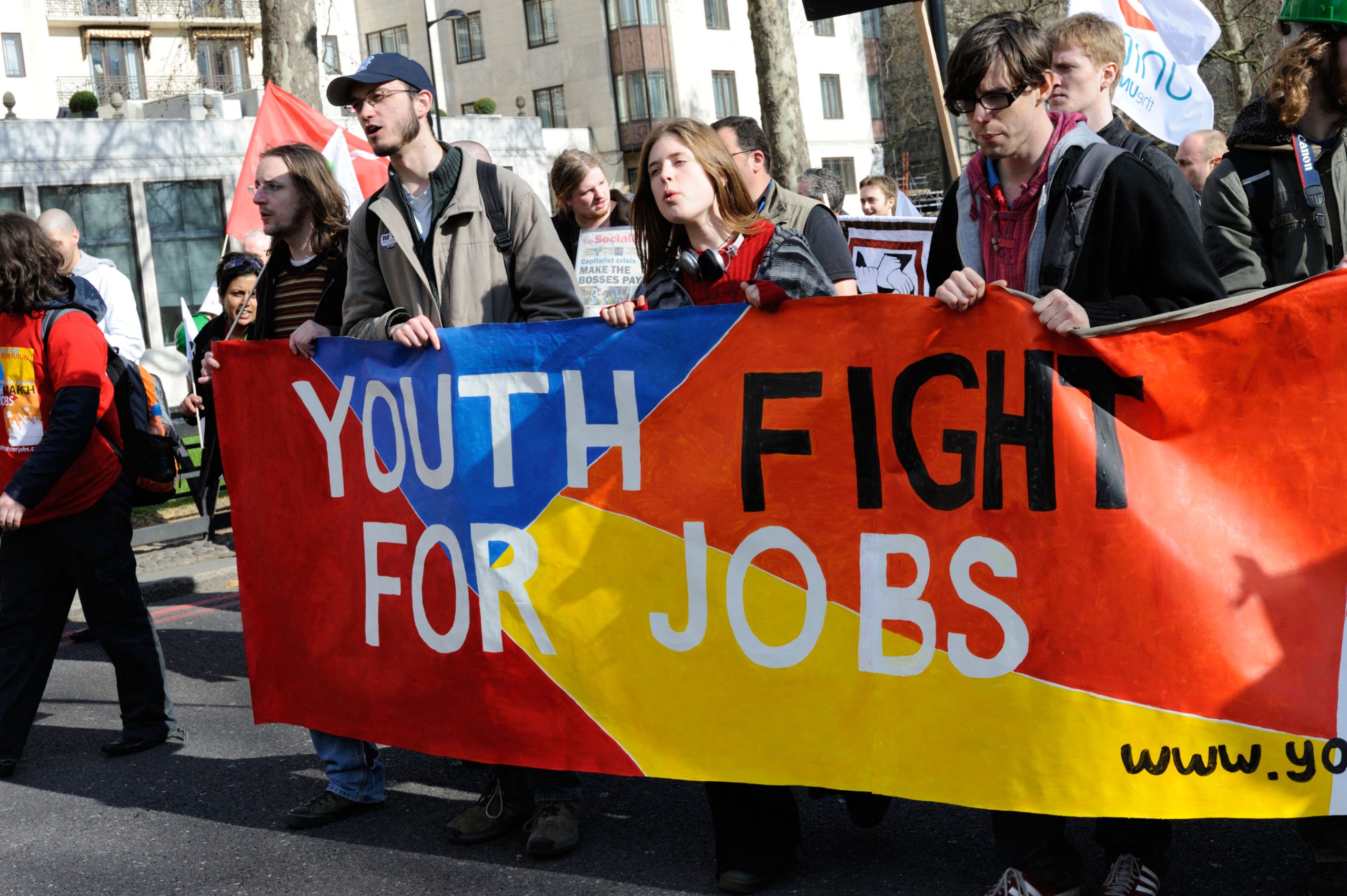
Family businesses are calling for action in the Budget to reduce spiralling costs of taking on young workers, with more than a third (38 per cent) saying they have become a significant barrier to recruitment.

In its submission to the Treasury ahead of the Budget, Family Business UK (FBUK) sets out a package of measures to encourage businesses to recruit, invest and grow, including a reduction in employer National Insurance Contributions (NICs) for younger workers, targeted incentives to help young people into work and reforms to the tax system to support long-term business ownership.

The call comes as youth unemployment stands at 16.2 per cent and around one million young people are not in education, employment or training (NEET). FBUK warns that rising employment costs, limited job opportunities, skills shortages and the growing impact of artificial intelligence are making it harder for young people to secure their first foothold in the labour market.

FBUK is now calling for a six-month employer NICs holiday for family businesses recruiting people aged 18 to 24, or up to 30 for those entering their first job. The organisation estimates that the measure could support around 100,000 recruits.

Neil Davy, chief executive of Family Business UK, said: “Family businesses want to invest, grow and create good, long-term jobs. But rising employment costs are making it harder for firms to take on staff, just when the country needs businesses to create more opportunities for young people.

“We need a practical package that makes it easier for employers to recruit and gives young people a better chance of getting into work. Cutting the cost of employing young people, supporting paid work experience and apprenticeships, and extending help to those at risk of unemployment would make a real difference.

“Family businesses account for 93 per cent of private sector firms in the UK and employ 15.8 million people. If we help these businesses create more opportunities for young people, the impact on employment and communities across the country could be transformational.”

FBUK’s proposals to address youth unemployment include:

  • Employer NICs relief: a six-month NICs holiday for family businesses taking on young people aged 18 to 24, or first-time employees up to the age of 30.
  • Paid internships: a six-month Family Business Internship Incentive, with grants of £3,000 to £5,000 for businesses offering structured placements to 18- to 30-year-olds, including training, mentoring and a named supervisor. A further payment could be made where placements lead to permanent jobs or apprenticeships.
  • An expanded Youth Guarantee: extending support to school and college leavers, young people at risk of unemployment and those outside the Universal Credit system, with a focus on careers advice, employability and job matching.
  • More apprenticeship support: extending starter-wage assistance to labour-intensive and socially important sectors, including retail, hospitality, leisure, education and care.
  • A more responsive Growth and Skills Levy: improving guidance on how funds can be used and making it easier for businesses to transfer funding through their supply chains and local business networks.

FBUK is also calling for a more predictable approach to minimum wage policy. It wants the Government to assess the employment consequences of planned alignment between the National Minimum Wage for younger workers and the National Living Wage, and publish a youth-employment impact assessment before each further step towards equalisation. It also proposes a fixed three-year cycle for reviewing employment wage policy, giving employers greater certainty when planning recruitment and investment.

Alongside employment, the submission calls for Chancellor John Healey to use the Budget to reverse his predecessor’s controversial changes to inheritance tax for family firms. It calls on the Treasury to restore 100 per cent Business Property Relief (BPR) with no upper threshold, introduced by Labour Chancellor Denis Healy in 1976, reversing the changes that FBUK says continue to undermine investment, recruitment and succession planning among family-owned businesses.

Although the Government increased the threshold for inheritance tax to apply to family firms’ assets from £1 million to £2.5 million following a fierce backlash, FBUK says the changes have not resolved the fundamental problem. A survey of more than 530 family-business leaders by FBUK found that 58 per cent expected to be affected by the reforms, 24 per cent had paused or cancelled planned investment, and 23 per cent had reduced headcount or paused recruitment.

FBUK argues that family businesses should not face a tax burden on transferring ownership that puts them at a disadvantage compared to publicly listed, private equity-backed and overseas businesses. It warns that money diverted from productive investment to meet inheritance tax liabilities could otherwise support jobs, training, innovation and growth.

The submission also calls for business energy costs to be reduced, by extending to businesses the approach recently taken for households, under which 75 per cent of the costs of obligations to use renewable energy are shifted from energy bills to general taxation. Three in ten family firms identify energy costs or volatility as their main barrier to growth, with retail, hospitality and leisure businesses particularly exposed.

FBUK is further urging the Government to undertake wholesale reform of business rates, moving towards a more progressive system in which different portions of a bill are charged at different rates. Its research finds that 43 per cent of family-owned businesses identify business rates as the tax having the greatest impact on their operations.

Other recommendations include ruling out a one-off or annual wealth tax, providing greater certainty over the tax system, improving access to scale-up finance and introducing incentives to encourage long-term investment in UK private businesses. FBUK also proposes a Community Investment Tax Relief to encourage family businesses to invest in local assets, infrastructure and community initiatives, with an initial targeted pilot potentially focused on youth employment.

Neil Davy added: “Family businesses are long-term investors in the UK economy. They create jobs, support local supply chains and sustain communities, often across generations. But they need a tax and regulatory environment that gives them the confidence to keep investing in Britain.

“Restoring Business Property Relief in full, reducing employment and energy costs, and reforming business rates would help unlock that investment. The Budget should be an opportunity to back the businesses that already contribute £422 billion in tax each year and generate £985 billion in economic value, helping them create jobs and deliver growth across the country.”