Saving a great pie favourite

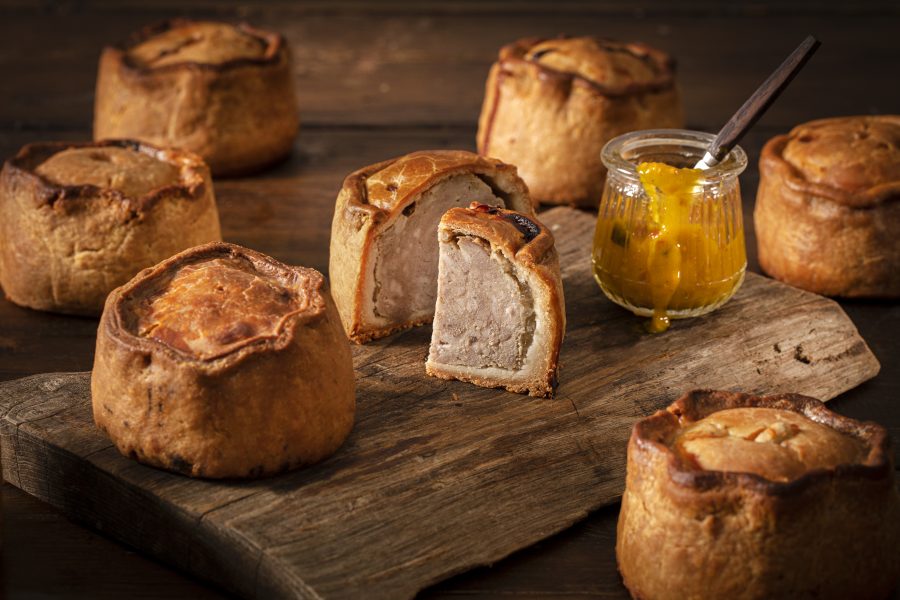
The Melton Mowbray Pork Pie is one of the UK’s most iconic food products. When the future and integrity of the Melton Mowbray pie looked in jeopardy twenty years ago, it was Samworth Brothers along with other pie devotees that safeguarded its future.

The Samworth family and Samworth Brothers have a long association with pork pies. A previous Samworth family business owned the Pork Farms brand. However, their involvement stepped up a gear in 1986 when Samworth Brothers acquired the Leicester pie maker Walker & Son, followed by the purchase in 1992 of Melton Mowbray’s ‘Ye Olde Pork Pie Shoppe’ and the accompanying Dickinson & Morris brand.

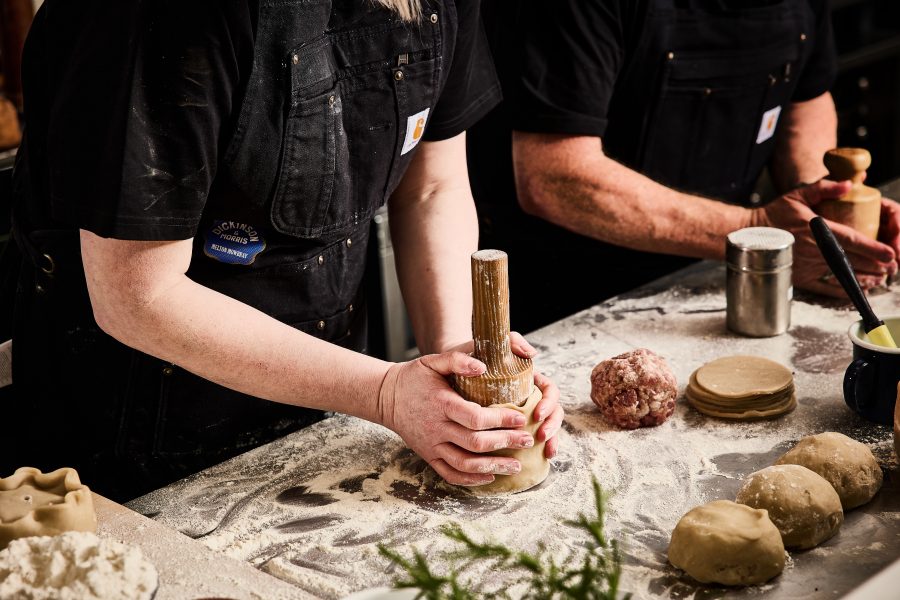
A pie maker called John Dickinson had opened the Melton “Pie Shoppe” in 1851. His grandmother Mary Dickinson is credited as the first pie maker to use the distinctive wooden “dolly”, around which the pastry of a Melton Mowbray pork pie is raised.

As well as their unique bow shape, a result of baking the pies free-standing, Melton Mowbray pork pies are made with fresh pork, which is naturally grey when cooked, contrasting with the pink hue of other pies whose pork is cured with nitrates. Melton Mowbray pork pies also feature chopped pork, rather than the minced meat used in other types of pork pie.

The battle to save Melton Mowbray pies

It was in the late 1990s that Samworth Brothers supported the push to safeguard the Melton Mowbray pork pie. Matthew O’Callaghan, then a local councillor and now Chairman of the Melton Mowbray Pork Pie Association, another key player in the battle, said

“A number of us were concerned that Melton Mowbray pies were increasingly being produced with no reference to the traditional recipe and provenance.”

Matthew and others ramped up the campaign when they reported one “Melton Mowbray” pie made in Wiltshire (for a very well-known UK retailer), and featuring pink meat, to Trading Standards! After a stand-off, a solution was found. “We had a chap down from DEFRA who suggested we go for the newly introduced EU Protected Names Status,” says Matthew.

Samworth Brothers Chairman, Mark Samworth remembers the years of campaigning.

“We all realised this was a classic British food that needed to be safeguarded for the future. Just like the French with their champagne or the Italians with Parma ham.”

However, this wasn’t the end of the battle. A legal tussle ensued with a large national pie maker that claimed the pie was generic and, regarding the protected area boundary, involved a visit to the High Court followed by the Appeal Court. This led eventually, in 2008, to the Melton Mowbray pork pie achieving EU Protected Geographic Indication (PGI) status. After Brexit this protection has been continued with the UK’s new Geographical Indication (GI) scheme.

The Future

It may be more than 170 years old, but the Melton Mowbray pork pie continues to be a contemporary hit. The Dickinson & Morris brand has all-year-round listings in Harrods, Fortnum & Mason and Selfridges and recently launched its “For Impeccably Good Taste” campaign, appearing on TV and digital channels across the nation. Younger consumers love products such as D&M’s Melton Mowbray Sharing Pie and the highly popular Mini Melton Mowbray pork pies.

In 2024 Ye Olde Pork Pie Shoppe in Melton Mowbray underwent a major refurbishment which added a new tasting room and the world’s first ever pork pie museum. For Samworth Brothers’ Chairman Mark Samworth, the march of the Melton Mowbray pork pie continues.

“We are proud to support British food and farming.”

“One of the reasons we have heavily invested in both Leicestershire and Cornwall is because of the food heritage of these counties. It is not just about protecting and preserving these food traditions, but also making them relevant and exciting to new consumers.”

What can we learn from Sweden’s abolition of IHT?


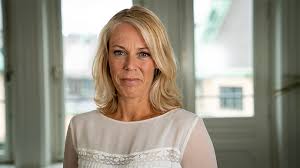
Annelie Karlsson | CEO and Founder of Family | Business Network Sweden

More than 20 years ago, Sweden took a bold step and abolished inheritance and gift taxes. Annelie Karlsson, CEO and Founder of Family Business Network Sweden tells the story behind it

“I recall it vividly. My mother passed away in November 2004 and her estate transferred to my father without tax.”

As of that year, spouses could inherit without incurring inheritance tax, sparing many from the tragic consequence of having to sell their homes. The reform was a humane and pragmatic decision, led by forward-thinking Social Democratic policymakers.

Originally scheduled for full repeal on 1 Jan 2005, inheritance and gift taxes were abolished earlier on 17 Dec 2004, in response to the devastating tsunami in South East Asia, which claimed the lives of many Swedes. The expedited timeline was a compassionate gesture to ease the burden on grieving families.

Of course, Sweden’s tax landscape was not always so accommodating. When FBN Sweden was founded three decades ago, Stefan Persson, the then principal owner of H&M, faced a pivotal decision: should he keep the company’s headquarters in Sweden or not?

At an FBN board meeting, he presented letters from foreign governments competing to offer the most favourable tax conditions for growth. Swedish policymakers responded late but wisely, offering tax relief in exchange for moving the company from the main stock exchange to the OTC list. This allowed H&M to retain capital for expansion, benefiting not only the company but also Swedish pension savers and the broader welfare system.

At the same time, FBN members were engaging with policymakers on the parliamentary tax committee. One family business, which had built rental housing in central Stockholm, told them that inheritance tax payments could have financed the construction of 200 new apartments! This, it seems, prompted even the most left-leaning politicians to reconsider the tax’s unintended consequences.

The then Minister for Enterprise Ibrahim Baylan spoke at an FBN conference and explored some of these broader implications. He noted that ownership taxes diverted time and resources from strategic business development and primarily enriched tax consultants rather than the state. Tax revenues, he said, were minimal and in the worst cases, business ownership simply relocated abroad – shifting decision-making and employment beyond Sweden’s borders.

Subsequent research has confirmed the positive impact of tax reform on Sweden’s entrepreneurial ecosystem. Today, the country boasts a world-class business climate. Studies from the Research Institute of Industrial Economics show that family firms contribute significantly to productivity and resilience. They outperform non-family firms and retain more employees during downturns.

According to the National Institute of Economic Research, this translates to roughly two percentage points higher employment. Former Prime Minister Stefan Löfven and current Social Democratic leaders have acknowledged this. They have praised family businesses for sustaining the economy during the financial crisis and the COVID-19 pandemic. Despite pressure from more radical factions, they have refrained from proposing inheritance, gift, or wealth taxes in their election platform, recognising that such taxes yield little revenue, distort incentives, and undermine the foundations of welfare financing.

Senior MP Lars Mejern (Social Democrat) has encouraged family business owners to take a more active role in public discourse, emphasising their long-term perspective:

“Politicians have the longest time horizon when newly elected, then it quickly shrinks. But families think in generations, not quarters.”

The gradual abolition of inheritance and gift taxes in Sweden stands as a landmark in modern fiscal policy. Family businesses are grateful for the decision which has shaped beneficial conditions for businesses with a long-term perspective.

Together with policymakers, Swedish family business owners remain committed to building the world’s best welfare system – anchored in a resilient, world-class business sector.

What might be in this Year’s Budget?

Chris Romans | Chair of the FBUK | Tax Committee

It wasn’t long after the Chancellor had delivered last year’s Budget that speculation began about the
possibility of further tax rises this autumn.

The so-called “£22bn black hole” identified by the Government at the start of its term, was followed by significant tax and National Insurance increases being announced at its first Budget. These included a 1.2 percentage point increase in employer National Insurance contributions (NICs), VAT on private school fees, and a 50% restriction in inheritance tax (IHT) business relief and agricultural property relief (BR/APR).

This year, a predicted shortfall in the UK’s public finances could be largely driven by a combination of slow economic growth, global trade disruption, and a commitment to increasing defence spending.

All of this means that, if the Government is to meet its selfimposed fiscal rules without meaningful cuts to public spending, taxes may have to rise. The questions are: which ones and by how much?

Around two-thirds of the Government’s current tax revenue comes from the “Big Three”: income tax, NICs and VAT. In 2023–24, these generated around £650bn worth of revenue. A percentage point increase in any one of them could raise between £8bn and £10bn per year. However, this would require the Government to break a key election promise to avoid tax increases for “working people”.

If the Chancellor sticks to this pledge, the options left might be characterised as “tinkering around the edges”, albeit some may still have significant effect. At the time of writing, the below measures are receiving most speculation.

Reducing the dividend tax-free allowance: a reduction or removal of the £500 tax-free dividend allowance. This would raise around £70m per £100 reduction and lead to additional compliance requirements for those previously just within the allowance.

Increasing the dividend tax rate: raising the existing rate (39.35%) for additional rate taxpayers to 45% applicable to other income. Those opposing this increase may argue that cash paid in dividends has already been taxed to corporation tax at up to 25%, leading to an overall effective tax rate of 58.75%.

Reduced relief on pension contributions: either by charging employer NICs on contributions to an employee’s pension or restricting tax relief to a maximum rate rather than marginal rates. This could be very complex to implement for public sector defined benefit schemes and is likely to have a significant impact on them.

Freezing income tax allowances: already frozen until 2028, these could be frozen until 2030 with no immediate cash impact on the electorate. It would also arguably keep the Government aligned with its manifesto pledge, but would be at odds with the Chancellor’s 2024 Budget speech, where she concluded that extending the threshold freeze would hurt working people.

Introducing a wealth tax: much has been written about wealth taxes and the potential that a 1% or 2% tax on assets over £10m could raise as much as £24bn per year. There have been concerns raised that the assumptions in these figures are potentially unrealistic, especially considering the risk that such a tax could hasten an exit of talent and wealth creators from the UK. Increasing the CGT rate: aligning CGT with income tax would almost certainly reduce revenues (at least in the first instance) as CGT operates on a “Laffer curve”. Increasing the rate to 45% would mean people looking to limit CGT arising, most straightforwardly by simply not disposing of assets, but also by taking steps such as leaving the UK before making a disposal or owning assets through companies. All these options potentially lead to a counterintuitive fall in tax revenue. However, the Government may take the view= that a small increase, say to potentially 28%, may be a minor enough adjustment for most taxpayers to maintain their typical behaviour.

Further IHT reform: extending the scope of IHT by removing the exemption for gifts from income, increasing the qualification period for business relief from two years or increasing the exempt gifting rule from seven years. Ultimately, funding future UK spending commitments, including the pension triple lock, public sector pensions and the promised increase in defence spending, would seem to require a lift
in tax revenue unless the Chancellor sanctions further borrowing. If this is not to come from income tax or NICs, an alternative is to expand the scope of VAT.

Currently, the UK charges the full rate of VAT on less than half of goods and services and has one of the narrowest VAT bases in the world.

A key issue with expanding the scope of VAT is that it’s a regressive tax whereby those on lower incomes are impacted the most by any increase. This could be politically challenging and could also be inflationary in the short-term.

It’s clear that there is no easy solution here. The Government continues to make growth its number one priority and this should raise revenue over time, but it won’t happen overnight. The Autumn Budget may well include adjustments to existing measures in order to stimulate that growth.

For businesses, a commitment to full expensing of certain capital expenditure and to “generous” Research and Development (R&D)mtax credits are certainly welcome, but there are a number of barriers
to growth that the Chancellor could consider reviewing:

1) BR/APR: it is clear that concerns over a potential 20% future inheritance tax liability will restrict investment. FBUK’s survey has demonstrated the negative impact of this policy change, potentially reducing investment at affected businesses by an average of 16% and employment by 9%, together reducing GVA by £14.8bn and reducing government tax receipts by £1.9bn by the end of this Parliament.

2) Income cliff edges: for higher rate taxpayers, moving from a salary of £100,000 to £125,000
increases their effective tax rate from 42% to 62% (45% to 67.5% for Scottish taxpayers), due to the gradual reduction in the personal allowance between these amounts. Similar issues occur with the loss of Child Benefit and free nursery places in England.
Effective tax rates of over 100% have been evidenced.

3) VAT threshold: similarly, small businesses that supply to individuals, or VAT-exempt businesses, are not incentivised to grow their revenue above the VAT threshold of £90,000 as going above this means they effectively need to increase prices for their customers by 20%.

Bringing this all back to family businesses, FBUK continues to lobby on fiscal policy on behalf of the family businesses it supports. With no surprise, the number one issue is presently IHT business relief, and FBUK still hopes the Government will consult on the proposed changes as the draft legislation is progressed, and further consider the negative impact they could have.

What it takes to lead the family and the business

Sophie Asburton is a partner Alembic Strategy, who are  delivery partners of FBUK’s Future Leaders Programme. Sophie is also co-leader of a family business with her husband.


I’ve sat in rooms – fires lit, flipcharts covered, coffee cooling – where future leaders of family businesses have told me things they’ve never said out loud. Not to their parents, their siblings and, sometimes, not even themselves.

They’ve said things like:
“My sister doesn’t want my job. She just doesn’t want me to be good at it.”
“I’m running the business but Mum won’t call me CEO in case it upsets the others.”
“Some of the family would rather the business fail than see it succeed under my direction.”

These are real people, in real businesses, trying to lead through a minefield of emotion, expectation and legacy. I understand more than I used to because I’ve lived some of it myself.

When I married into my husband’s family business, I walked in thinking I was emotionally intelligent, grounded, clear-eyed, and yet I ran headfirst into my own blind spots. The assumptions, the subtle hierarchies, the ways in which trust is earned, or withheld, based on a history you weren’t even around for.

That experience changed how I work with others. It’s also shaped the design of FBUK’s new Future Leaders Programme.

The Hidden Work of Family Business Leadership

This new programme isn’t just about business strategy. It’s about becoming the kind of leader who can hold all the contradictions of family and business without being pulled apart by them.

Leading a family business is different. You’re not just managing staff, you’re managing siblings. You’re not just working with a Board, you’re negotiating with a parent who still calls you “darling” in meetings. There’s no HR manual for that.

Yet, you’re also running a business that must succeed commercially. Family dynamics don’t pause for that. The tension is real and sometimes painful. But it’s also where the growth happens.

What it Feels Like

The programme is built for the intersection where leadership, legacy and love collide. Participants tell us that it feels like a pause button for your life. It’s immersive, reflective and quietly transformational.
We mix structured sessions with honest conversations. We explore practical leadership tools: how to
chair meetings, navigate conflict and get clear on your role. But we also go deeper: what kind of impact do you want to have in the world? What kind of legacy are you inheriting and what kind of legacy do you want to leave? And yes, there are moments of laughter, frustration and shared relief. When people sit in a room with others navigating similar dynamics, they stop feeling alone and start feeling equipped.

From Self-Doubt to Self-Definition

Many future leaders come in carrying their quiet fears:

“I’ve only ever worked in the family business.”

“I don’t even know who I report to.”

“I run a department now but how am I supposed to run the whole thing?”

By the time they leave, they’re not fixed (none of us are ever fixed) but they are more grounded. They’ve
named their fears, tested ideas, and reconnected to purpose.

The FBUK Future Leaders Programme is for you if…

• You’re already leading or preparing to.
• You want to find your way through complexity with clarity.
• You’re ready to stop surviving and start shaping the future.

It’s where the next generation starts becoming the kind of leaders we all need – people who can carry legacy without being weighed down by it.

Family Councils

Family Business UK recently published an updated guide to Family Councils, written by Peter Leach, Principal Consultant at Sylvan Family Business Advisers. Martin Greig spoke to Peter Leach about how to build a successful Family Council.

As family businesses grow and mature, having an effective platform for governance is crucial to ensure open and constructive communication, and provide a platform for resolving conflict and educating family members on roles and responsibilities.

“The Family Council plays a very important role in the governance structure of the business,” says Peter Leach, the man widely regarded as the founding father of family business thinking in the UK. “But it’s not right for everyone.

“For some, the name Family Council is a little grandiose, they don’t like it. I have one client who calls it the Family Dog Walk. But, what is important,” says Peter, “is for all family businesses to have the appropriate forum to sit and talk about what’s important.”

Culture Eats Everything

Years ago, academics and family business advisers looked at the issue differently. They thought that if you had a Board and Family Council that would fix all the problems. They were “structuralists”, believing that putting all the right governance structures in place was the answer. What they didn’t account for was culture.

“To run a successful family business, you need the right culture,”

says Peter. “We used to think that if you have a Board, a Family Council, Trustees, shareholder agreements, all that stuff, everything would work. But it only works if the culture is right for it.

“In theory it’s brilliant, but it’s a bit like having a successful operation and thepatient dies. That’s because culture eats everything, culture eats structure” – thinking that Peter Leach attributes to the American academic Peter Drucker and Canadian family business consultant Matt Wesley.

Head or Heart

Culture in a family business is made up of two elements – affinity, which is the family’s heart, and alignment, which is the family’s head; and, depending on the family and circumstances, both are needed indifferent measures to be successful.
“If families have lots of affinity and low alignment, they are disjointed everybody’s happy until there’s a crisis,” says Peter, “but, with strong alignment and low affinity, families become transactional.

“The Family Council is predominantly there to balance the alignment and the affinity in order to have a sufficiently strong culture. Without a good measure of both, any kind of governance structure, especially a Family Council, won’t work.”

Never Ending Process

Setting up a Family Council requires careful thought and consideration and, once up and running, its task is never complete. It is “always a work in progress,” says Peter.

Adaptability and flexibility are the watchwords in a structure for which there are no templates. Even more importantly, family members must be comfortable with the structures and processes created.

“Ultimately,” says Peter “the Family Council must ensure there is enough affinity (heart) for the family to survive the highs, lows and disasters that will inevitably happen.”

The Family Council guide is free to download from the Member Resources centre on our website.

Family Business to National Role Model: The Timpson Story

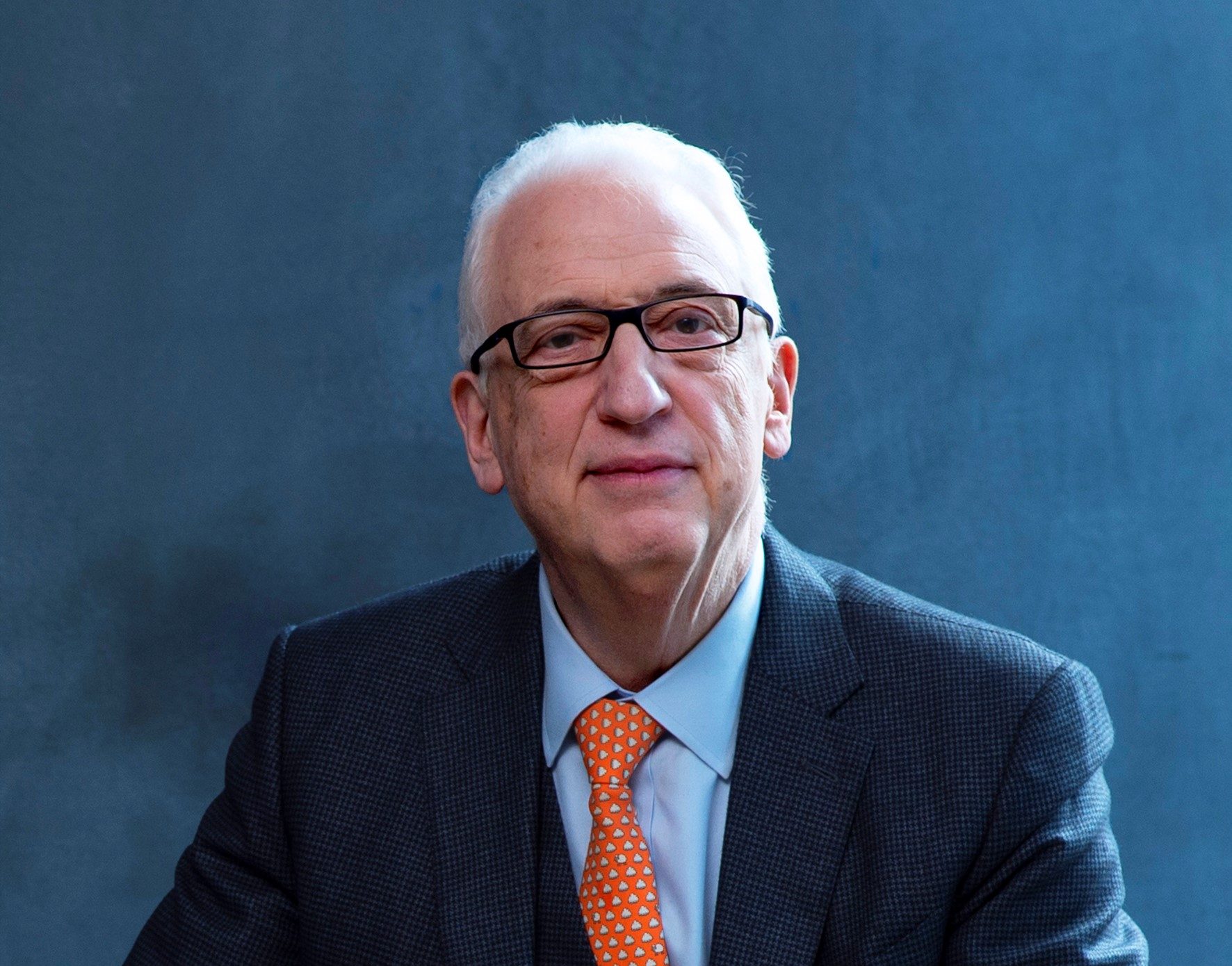
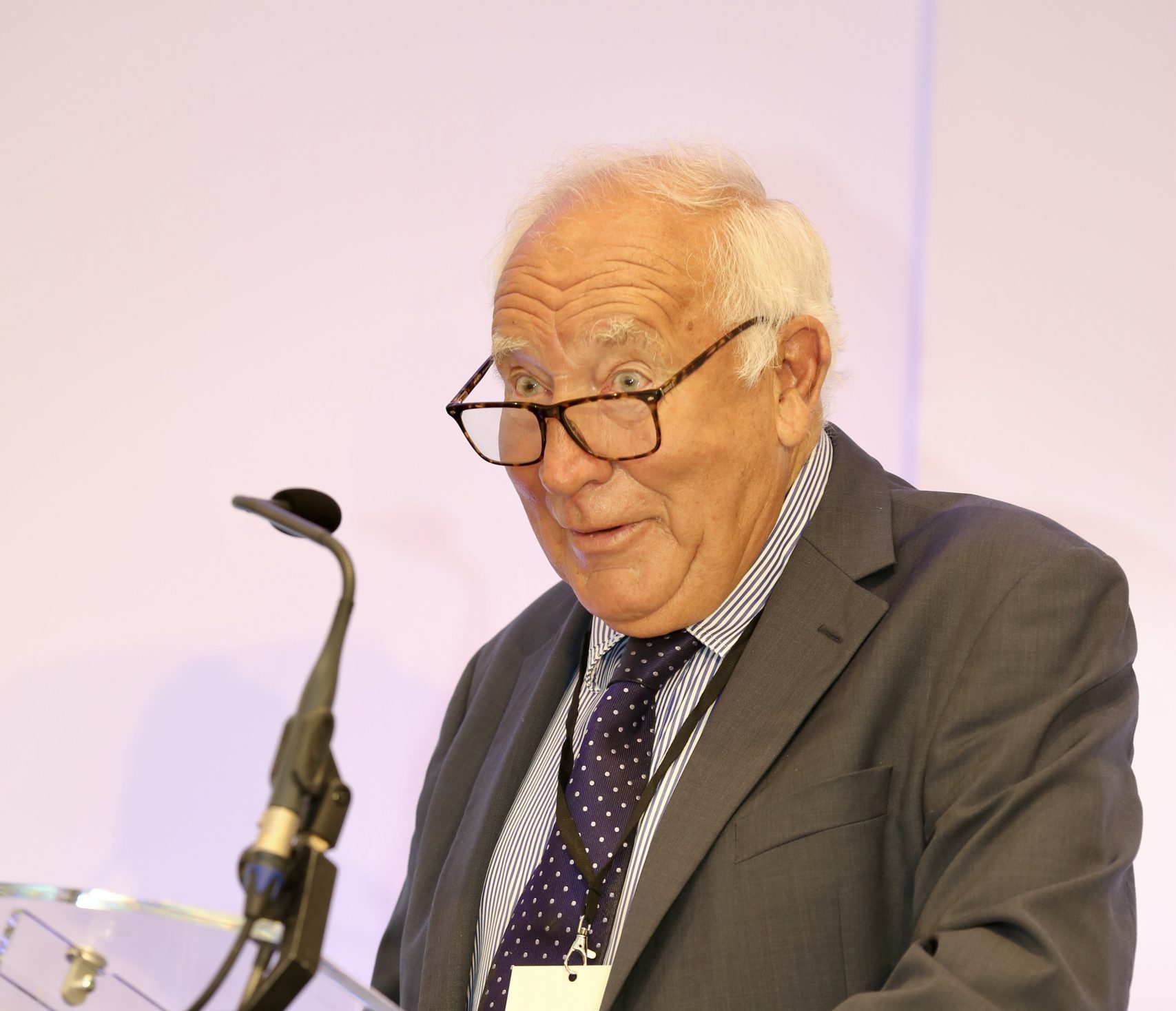
Sir John Timpson CBE is one of the UKs most successful family business entrepreneurs. Sir John delivered the opening keynote speech at our 2025 Annual Conference. Afterwards, Sir John spoke to FBUK’s Martin Greig.


For the last 27 years, Sir John Timpson CBE, has not told anyone what to do, at least not in his capacity as Chairman and Director of a family business which has become one of Britain’s largest and most successful.

Not telling people what to do is one of just three rules that all employees of Timpson Group are expected to observe. The other two are: Look the part (wear the uniform, turn up on time) and put the money in the till!

These rules are fundamental to Sir John’s philosophy of upside down management – a philosophy he introduced years ago when he removed the company’s Head Office (the building remains but it is no longer called the Head Office) and the role of managers was transformed in one of supporting and empowering front-line colleagues to deliver outstanding customer service.

“We do things differently at Timpson. We are a retail services businesses which is about people serving people. We have a lot of very good day to day managers and they succeed by looking after colleagues, not by telling them what to do.”

Every Timpson shop displays a notice carrying a message from Sir John:

The colleagues in this shop have my complete authority to do whatever they want to give you an amazing service.
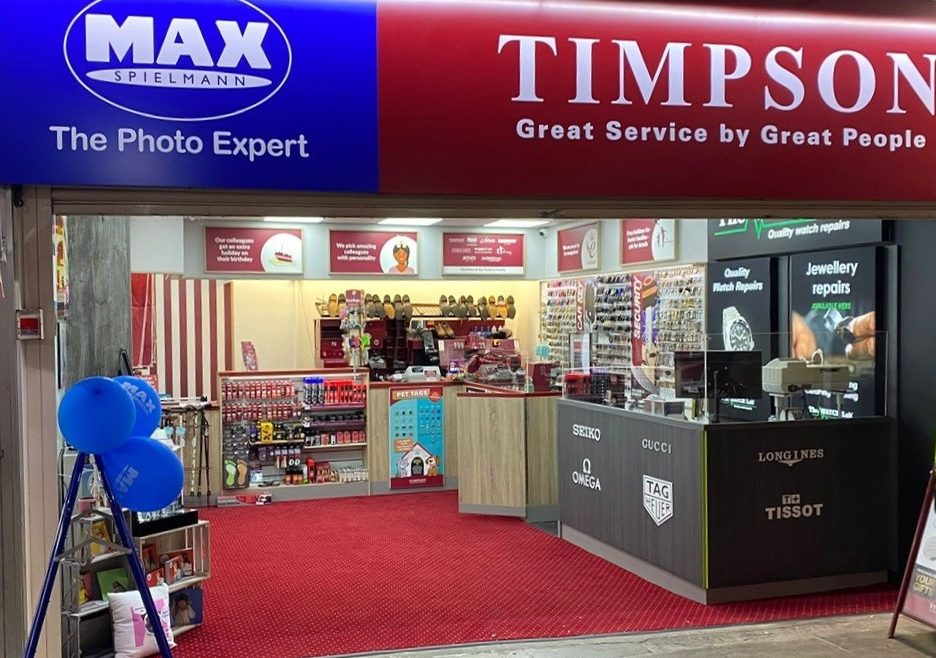
timpson family business

It is a message that conveys a culture of trust in people and values that runs through the heart of Timpson Group – a culture which has been pivotal in creating one of the country’s best-known, and loved, family business.

History

Sir John became a Director of Timpson in 1969. His first role in the business was buying women’s fashion shoes – a “juicy role” as he recalls, not too high up in the business but one he found great fun. “You might think I have not got an ounce of fashion style in me but I worked out how to do it. It was like playing a game, like doing a crossword puzzle every day. And I think I was quite good at it.

“But I am someone who works on instinct and I had not realised how much I do that until someone drew a cartoon of me. Everyone else [in the picture] was sitting looking at budgets and marketing reports while I was just sitting looking into a crystal ball.

Cartoon characters are very important at Timpsons (more about that below). What isn’t very important however, are budgets and marketing reports. In fact, they do not exist. The family business does not produce budget forecasts, there are no KPIs, they do not advertise or conduct market research and Board meetings last no longer than two hours.

“When I was at Barclays, Board meetings went on for two days with lots of people reporting on decks that went on and on. We just do not do that sort of stuff. I mean, we do not do budgets because I cannot see the point of them.”

Instead, at 82 years of age, Sir John spends his time visiting hundreds of colleagues at Timpson shops up and down the country getting to know them and hearing how things are going where it matters most.

“It is the thing the makes the difference. Our success depends on the people who work in our shops. Everything else we do is really just backing them up – doing the things that makes it as easy as possible for them to deliver the service.”

Culture and Values

To help reward colleagues and create a special culture within the business, Timpson runs a myriad of schemes to say “well done” and “thank you.” From offering personal loans to those in financial trouble, incentives to stop smoking, meals out, football tickets, scratch cards, paying for driving lessons, a free weekly lottery with prizes of up to £1,000 and a programme to make colleagues “Dreams Come True.”

When this particular scheme was launched in 2013, Timpson committed to making one colleague’s dreams come true. Every month it now funds many more including everything from dream holidays to weddings in Las Vegas and several divorces. “They have never been cheap dreams” quips Sir John.

Timpson also employs a Director of Happiness. A “magic angel” in Sir John’s words who, despite her title, spends most of her time supporting colleagues who are in distress.

Understanding this unique culture is key to Timpson’s continuity. Maintaining it is so important that the company no longer hires external candidates into area management teams preferring instead to promote those who already understand what makes the company tick.

“We are still smarting from an appointment we made several years ago” recalls Sir John, “a person from another business who brought new ideas and an old style of management. That person cost us a lot of money and upset many colleagues in the process.”

Positive Personalities
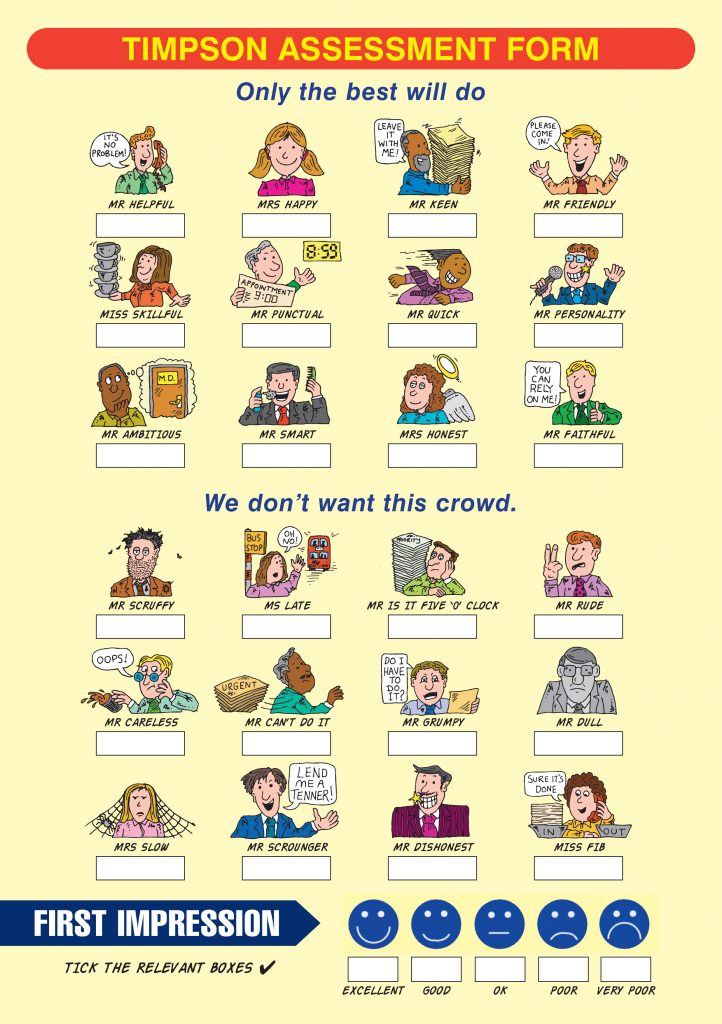
Timpson family business assessment form

Timpson has also stopped hiring skilled key cutters and shoe repairers preferring to hire people with positive personalities that fit with the culture and values of the business.

Sir John has devised a set of Mr Men cartoon characters for the purpose of interviewing prospective candidates. Rather than grill them on their work history and the detail in their CV, the interviewer simply ticks the box of the Mr Man character most like the person sitting opposite them. “It may not be a process that gains the approval of most HR Directors, but it works for us” says Sir John.

The process has been crucial in enabling Timpson to proactively recruit ex-offenders, something for which Sir John and his son James have, quite rightly, won many plaudits. About 500 colleagues have joined Timpson directly from Prison. Many have been with the business for more than 10 years and several have progressed to important management roles.

Sir John believes that being a family business has helped them to have the courage and vision to employ ex-offenders.

“I met a guy recently who said to me, this is the only job I have ever had. I went to prison at 18 and I came out at 33. My way out was the scheme you were running, and I have been with the business ever since.

“We now have a loyal employee that nobody else would touch, and he is great. He is on the area team and on his way up the ladder. It is all about hiring the right personalities.”

Total Control

Timpson Group is now a 6th generation family business, founded in 1865 or 1869, depending on how you measure it. The company is totally family-owned.

But like with many families, the Timpson family had a bust up. Theirs, in 1973, took place in the Board room and resulted in much of the equity in Timpson being sold to United Drapery Stores. For the following 10 years, Timpson was no longer a family business.

“It was very unpleasant” recalls Sir John. “But it happened. This was the reality of being in business. You thought it was the end of the world but, actually, it did us a lot of good.

“As a result, I managed to get 100% of the equity back and it hastened our decisions to change the business. So, yes it was painful. But it would have been even more painful if my wife had not told me to fight it.”

Perhaps because of what happened in the past or because of his profound love for the business, or both, owning 100% of the equity in Timpson is important to Sir John.

“To remain in charge of a long-standing family business you need to be in control of the equity – and total control means 100%, and despite the unwelcome prospect of inheritance tax I will do whatever I can to ensure that total family control remains for generations to come.”

Several years ago, Sir John made a TV programme about Timpson with the entrepreneur and Dragon’s Den star Peter Jones. During the programme Peter Jones asked Sir John “what’s your exit strategy?” “I’m going to die” replied Sir John!

Is that still his plan? “Yes,” he says emphatically. “Absolutely! What else is it going to be? Can you imagine selling this business to someone else who is just going to screw it up?”


This article was first published in the FBUK Magazine. You can read and download the full magazine below.


Read FBUK Magazine.

FBUK September Magazine Published

The latest edition of FBUK’s magazine has been published and is now available to download.

Full of insights, analysis, feature interviews, Member news and highlighting important Member anniversaries, the magazine is now published every three months.

Download September’s Magazine

Following his keynote address to the FBUK Annual Conference in June, the magazine profiles Sir John Timpson, one of the UKs best loved and most successful family entrepreneurs. You can read that article online too.

In addition you’ll find:

  • Views from the leaders of European Family Business and FBN Sweden on how these regions are dealing with and have dealt with inheritance tax for family businesses,
  • An Autumn Budget look ahead from Chris Romans, Chair of FBUK’s Tax Committee,
  • Mark Samworth, Chairman of Samworth Brothers on saving the unique status of an iconic pork pie,
  • Peter Leach on Family Councils
  • And we celebrate with FBUK Members who’ve received prestigious awards

Get Involved

Do you have news about you or your family business you’d like us to cover? Perhaps there’s an issue you’d like to read about or you sharing your views on an important subject? Drop us a line and contact the team.

Advertise With Us

Would you like to advertise your business and services to some of the UK’s premier family business owners? You can find more information below about securing space in future editions of the magazine. And, if you’d like to talk to us about other advertising, sponsorship and partnership opportunities, we would love to hear from you.

Download More Information

Family Business Week 2025 Launches

Family Business Week is back for 2025.

Returning in November this year, FBW25 will shine a light on the vital role played by family businesses in creating sustainable, long-term growth and opportunities in every corner of the UK – and beyond.

24 – 28 November – find out more

This year’s theme, Global Legacies: Expanding Horizons for UK Family Businesses highlights the ambition and resilience of family firms as they look beyond borders to shape a connected, global future.

Growth Through International Trade

Around 11.5% of UK businesses export to more than 200 companies around the world. Those exports of goods and services are worth almost £840 billion to the economy.

But, despite the clear challenges of trading internationally, the potential for growth is enormous.

To succeed on the international stage family businesses need the right support – from policymakers, trade bodies, and partners to unlock exports, access new markets, and drive sustainable growth.

Events Through The Week

Join us for a week of events, insights, and stories from Westminster to shop floors as we showcase how family businesses power inclusive, long-term economic growth.

Whether you’re a business owner, policymaker, or partner, this is your chance to get involved, be inspired, and help shape the future of UK family businesses.

Head to the FBUK Events Page to find the latest events and to register your interest.

FBUK Events