FBUK congratulates new prime minister

Family Business UK has extended its congratulations to Andy Burnham MP on his appointment as prime minister.

Following years of uncertainty and change, punctuated by five prime ministers in the last four years, Britain’s family businesses will be looking to the new administration to provide the clarity and stability needed to unlock long-term investment and employment across the country.

There was much to welcome in the Prime Minister’s first remarks outside Downing Street that point towards meaningful plans that align with the priorities set out in our Policy Agenda including;

  • greater devolution of power to UK regions
  • a focus on place-based growth
  • tackling youth unemployment
  • reforming procurement to support British industry

The Prime Minister also promised to set out a ten-year plan around a new economic and political model hinting at a long-term outlook and echoing the long-term approach taken by family business leaders.

Neil Davy, CEO of Family Business UK, said:

“Family businesses have faced a prolonged period of political and economic uncertainty which has made it difficult to plan, invest and make the long-term decisions on which their success depends.

“There are real opportunities for government and family businesses to work closely on creating genuine opportunities for young people, backing British businesses and incentivising investment, and empowering our nations and regions. We look forward to working constructively with the new Prime Minister and his new administration to turn these shared priorities into action.”


Click here to read more in depth comment on how the new Government can back family businesses.

Family firms want new prime minister to reverse Inheritance Tax changes and tackle soaring business costs

Britain’s family businesses want the new Prime Minister to use his first 100 days in office to reduce the cost and complexity of doing business and reverse changes to Inheritance Tax, according to new data from Family Business UK. 

According the research, more than half (55%) of large family businesses1, and 45% of all family firms, want the new Prime Minister to address falling confidence, investment and employment by reversing the changes to BRP and APR, and rule out increasing other taxes on business ownership, succession and investment (in particular Capital Gains Tax and Corporation Tax). 

The poll of almost 500 UK family businesses2 also found; 

  • 38% of large family firms want action to reduce energy costs, 
  • 34% of medium and large family firms want to see a reform of business rates to support investment and growth, 
  • 30% of medium and 34% of large family firms want action to cut the burden of additional administration and compliance, 
  • 29% of medium and 34% of large family firms would like to see the early publication of a credible plan for growth and investment, 
  • 25% of smaller family businesses3 want action to cut employment costs and taxes. 

Neil Davy, CEO Family Business UK said: “With his pledge to be a pro-business leader, the first 100 days in office offer the new Prime Minister a golden opportunity to embrace the power and scale of Britain’s family business sector and give firms confidence to invest and grow for the future. 

“Central to that are the changes to Inheritance Tax reliefs. That single policy change continues to present a material challenge to Britain’s family businesses and serve as a drag on both growth and employment across the country as firms pull back on investment. 

“Our latest insights send a clear message to the new administration to reverse this policy change and end speculation by making an early commitment to rule out additional tax rises on business ownership, succession and investment. 

“These two steps would give family business owners renewed confidence that this administration is prepared to work with, and not against them.  

“But the challenges faced by family businesses go beyond inheritance and other ownership taxes. As our research shows, high energy costs and the incremental rise in business taxes and regulation are strangling the very firms the government needs to deliver a growing economy. 

“The new Prime Minister’s plans for greater devolution and place-based growth should prioritise family businesses and put them at the heart of that mission. They are an economic powerhouse in every part of the country. Built around a long-term vision, a commitment to people and local communities, and a willingness to invest over decades, they will be critical partners in delivering the regional growth and investment the Prime Minister wants. 

“It’s what sets family businesses apart and makes them one of this country’s greatest economic assets. Government policy, led by the new Prime Minister, must reflect that.” 

New PM must back family businesses

Neil Davy, CEO Family Business UK. 

For family businesses, the last two years of this government have been challenging. They have been forced to adapt to almost constant uncertainty and daily speculation about the next policy in line for change or tax to be increased.

When Labour was elected in 2024, it was with a promise to be the most business-friendly government with a clear priority to create the conditions for economic growth. We, along with other business organisations, were encouraged.

But the promise has not yet been delivered and for Britain’s five million private and family-owned companies, the reality has been notably different. The ending of long-standing and well-understood rules on Inheritance Tax relief remain a penalty on family ownership and an existential threat to five million British businesses.

For the new prime minister there is a golden opportunity to change that and reset relations with family firms. His plans for greater devolution and place-based growth should prioritise family businesses and put them at the heart of that mission. To succeed, he must commit to fully reverse the changes to Inheritance Tax.

Business Property Relief and Agricultural Property Relief exist for a very clear purpose – they incentivise the business investment and long-term stewardship our country needs. But the changes to BPR and APR have achieved the opposite, forcing businesses to prioritise the short-term and tear up longstanding plans for investment and jobs.

Worse, they have created a two-tier tax system in which family businesses are penalised — they must plan for a future liability while their non-family and foreign-owned competitors do not. That simple truth continues to weigh heavily on Britain’s family business sector.

Our latest research shows that more than half of all family firms will still be affected by the change and, for those with more than fifty employees, the impact rises significantly. There is simply no downside to the immediate reversal of this policy change.

Secondly, the new prime minister must commit to stopping the inexorable tax increases on all business and be relentless in creating the policies and conditions that instil confidence to invest, expand and create jobs, particularly those for young people who are bearing the brunt of these tax changes.

Ensuring the next generation have both the skills and the opportunities takes a long-term approach is central to family businesses and critical for the future of local communities and a healthy economy.

However, a public commitment to stick to Labour’s Manifesto commitments on tax does not fill me with confidence that the incoming chancellor will take a pragmatic and proportionate approach to tax.

Next, the new prime minister must support growth for scale-up family businesses – particularly the medium-sized businesses often forgotten by policymakers. There are 10,000 mid-market, scale-up family businesses in the UK contributing more than £140 billion to the UK economy and employing close to one million people. Imagine the growth and tax receipts that could arise from this cluster of businesses if they were incentivised rather than penalised.

Finally, strengthening local communities. In every part of the country family businesses are often cornerstone businesses on local high streets and communities. It is their long-term outlook and pride in place, underpinned by family values and a sustainable business model that makes them a critical part of the social fabric on which our communities and regional economies are built.

Sadly, family businesses are mis-understood by policymakers, too often dismissed as just ‘lifestyle’ businesses. But family firms are the beating heart of our economy built around a long-term vision, a commitment to people and local communities, and a willingness to invest over decades. It is what sets them apart and makes them one of this country’s greatest economic assets.

Government policy, led by the new prime minister, must reflect that.

FAMILY first approach in new FBUK policy agenda

FBUK has published a new policy agenda for family businesses. Coming ahead of local elections around the UK and ongoing geopolitical uncertainty, Building Britain for Generations highlights key areas for policymakers, prioritising stability, long-term growth, investment and stewardship – all traits of family businesses.

The policy agenda calls for government, politicians and all policymakers to adopt a ‘FAMILY first’ approach that encompasses:

  • Fair taxation system
  • Accessing finance and business support
  • Mid-sized family business focus
  • Investing in local communities
  • Lowering the cost of doing business
  • Younger generation focus

FBUK Policy Agenda - Building Britain for Generations

The policy agenda, which was launched at an event in London, proposes a comprehensive set of recommendations that place the UK’s five million family businesses, and the benefits of family ownership, at the heart of efforts to grow the economy and tackle critical issues including youth unemployment.

Policy asks include:

  • Appointing a family business czar in every devolved nation and region to support long-term investment in communities and support greater fiscal devolution,
  • Targeted measures to tackle youth unemployment including an exemption from employer NICs for all family businesses offering Level 4 and above apprenticeships in AI, leadership and management,
  • A clear ‘tax roadmap’ – that gives family businesses confidence about the direction of travel, removes the fear of sudden, damaging surprises and enables long-term investments,
  • Full reinstatement of 100% Inheritance Tax reliefs (BPR and APR) for family firms, with no thresholds,
  • A simplified procurement system that places greater weight on long-term investment and delivery, regional investment and social cohesion.

The new policy agenda also calls on government to adopt a new definition of medium-sized businesses to support the forgotten engine of the UK economy. This should be companies with revenues between £10million-£100million and between 50-499 employees (mid-size is currently defined as fewer than 250 employees and less than £54million revenue).

FBUK research shows there are 10,000 mid-sized family businesses in the UK which employ 1.5 million people and create £140 billion economic output. But these established businesses remain largely invisible to policymakers and are held back by a policy environment designed for either small or large companies.

Neil Davy, CEO Family Business UK said:

“Family businesses are established pillars of Britain’s towns and cities in a way that global brands can never be – they have built a brand, reputation and workforce there, and often it’s the family name above the door.

“Yet the current policy system often favours foreign investment over established, British family businesses with the lure of lucrative tax breaks and other incentives not available to family firms. That has to change if the UK is serious about a robust domestic economy that delivers sustainable, long-term growth.”

The new family business policy agenda, which is launched on the eve of the most significant change to the taxation of British family businesses in 50 years (BPR and APR), also highlights the ongoing impact of the change to inheritance tax reliefs on family businesses:

  • The majority of family businesses (57%) say they will still be materially affected by IHT (despite changes announced by government on 23 Dec),
  • Just 1 in 10 family businesses believe they will escape the tax entirely,
  • Just 74% of family businesses are confident they can remain family-owned in 10 years’ time (down from 91% in the next 3 years) with increasing concerns that the burden of IHT will force businesses to sell up or sell assets – often to foreign-owned corporations – creating further instability for the domestic economy.

But FBUK’s research also shows the positive impact that fully reinstating BPR and APR could have, with almost half (48%) of Britain’s large family businesses saying they would reverse hiring decisions and actively recruit more staff.

Neil Davy continues:

“Recent, sudden policy shifts have forced Britain’s family businesses to pause and recalculate long-terms plans for the future. Some have reduced jobs, other have cut investment and, for the first time, some are asking whether keeping the business in the family is still viable.

“This is a consequence of a choice made by the Government-whether it intended to or not. This policy agenda sets out how it can make a different one. The asks are not complicated, nor are they concessions to a special interest. They are simply the conditions under which a critical part of the British economy will be allowed to thrive.”

Majority of family businesses still hit by IHT change

Majority of family businesses still affected by new rules on inheritance tax despite changes to the policy

Investment and jobs continue to be cut in response to the new tax

Only 74% of firms confident they will remain family-owned in 10 years


The majority (57%) of family businesses say they will still be affected by changes to inheritance tax according to a new survey commissioned by Family Business UK. The findings, which come one month before the policy change takes effect, show that just one in ten family business owners believe they will not be affected at all by the changes to inheritance tax.

The study, which polled 559 owners and senior decision makers in family businesses located across the UK, in all sectors of the economy, shows that changes to Business Property Relief (BPR) and Agricultural Property Relief (APR) will still have a material impact on Britain’s family-owned businesses.

More than half of family businesses (55%) taking part in the survey, with 10-49 employees, say they will continue to be affected by inheritance tax. That proportion increases to almost two-thirds (64%) for businesses with 100-249 employees. Businesses in manufacturing (64%); the IT and telecoms sector (54%); and the retail, catering and leisure sector (52%) will be most affected.

Amendments to BPR and APR were announced just before Christmas increasing the level at which family businesses must start paying inheritance tax from £1 million to £2.5 million. Married couples will also be able to transfer unused allowances effectively allowing them a total of £5 million. Two fifths of family businesses taking part in the latest FBUK survey (42%) describe these amendments as positive but almost one in three (31%) say it will have no impact on them.

FBUK is calling on government to act urgently on the following:

  1. pause the introduction of the policy to allow for a full, independent review of the policy, and publish a full impact assessment leading to,
  2. full reversal of the policy – reinstating 100% Business Property and Agricultural Property Relief, with no upper thresholds, to support the family business sector and unlock investment in jobs, skills and economic growth.

Neil Davy, CEO FBUK said:

“Next month, for the first time in a generation, family business owners will have to pay inheritance tax based on the value of their business and business assets. Since the change was first announced in October 2024, we have seen significant numbers of family businesses cut investment and jobs. Many owners have also told me that they are openly questioning the long-term future of their business. For a government committed to growing the economy this can’t be the outcome it envisaged.

“At a time when the UK desperately needs the economy to grow, this is the wrong policy at the wrong time. We are ready to work constructively with government to achieve a positive outcome that prevents further investment and jobs being lost.”

Matthew Ayres, 4th generation Managing Director of Bennie Group said:

The new inheritance tax rules force family businesses like ours to gamble on the future. Instead of focusing our energy on innovation, growth and serving our customers, we are being pushed into a defensive position. A position where we spend time and resources on complex tax planning that many other types of businesses never have to consider. It is an unnecessary distraction that pulls leadership attention away from investing, hiring and building for tomorrow.

“Family businesses succeed when we look outward; at markets, opportunities, and long‑term value creation. This policy turns us inward, encouraging risk‑averse behaviour and short‑term protectionism. It is completely out of line with the UK’s need for a clear economic growth strategy. If government wants businesses to invest with confidence, it cannot keep introducing policies that create uncertainty, drive up costs, increase risk, and divert efforts away from productivity and innovation.”

According to the latest research from FBUK, more than 70% of family businesses taking part in the survey have already taken steps to mitigate the impact of changes to inheritance tax. Of those taking steps:

  • 27% said they have paused or cancelled investment,
  • 23% have reduced headcount or paused recruitment,
  • 20% have intentionally held back the growth of the business,
  • 21% have cut or reduced charitable donations.

(respondents were asked to select all options that apply)

The majority of family businesses (77%) say they also plan to take further steps over the next three years. Of those planning to take further action:

  • 26% plan to take out insurance to cover the cost of inheritance tax,
  • 23% will further reduce headcount or pause recruitment,
  • 20% plan to reduce investment,
  • 10% said they plan to close the business and liquidate assets, and a further 10% plan to sell their business entirely.

According to the study just 74% of family businesses surveyed say they are confident they will remain family owned in ten years’ time, down from 91% in the next three years. Owners cite various reasons for their drop in confidence but highlight increasing costs and regulation, a weak economic outlook and, given the changes to inheritance tax, difficulty in finding family members willing to take on the business.

Lizzy Rudd, Chair of Berry Bros. & Rudd, Britain’s oldest fine wine and spirits merchant said;

“As a 327-year-old family business, we have always strived to be stewards for future generations. As a B Corp we also place great value on employing people, considering the wider community and the environment in all that we do. How are we expected to continue to build value for the long term when our children will one day have to pay inheritance tax on this value – a value which is on paper and not in our pockets unless business assets or the business itself is sold?

“Changes to inheritance tax are a very real threat to the future success of the business. In addition to the higher costs of operating right now, these changes are an additional burden for family businesses at the very time the Government should be encouraging us to invest. This tax will drive behaviour that I don’t believe the Government really want, neither does it really understand the principles on which we operate.”

James Reed, Chairman and Chief executive of recruitment giant Reed, one of Britain’s biggest family businesses, said:

“Family businesses are the backbone of our economy and generally excellent employers, so there is a good reason that for decades it has been possible to pass them safely from generation to generation.

“The changes to the way they are taxed coming into effect in April put all that at risk. Great British companies will be broken up and sold off to foreign owners and private equity.

“Ultimately, this isn’t good business because we know that once job losses and reduced economic activity are taken into account, this change will actually mean the exchequer collecting less money overall.

“My concern is that this will end up being a lose-lose for everyone, which is why Labour Chancellor Denis Healey introduced business property relief in the first place.”


Research was conducted for FBUK by Censuswide, among a sample of 559 owners and senior decision makers in family businesses. The data was collected between 16th January 2026 and 2nd February 2026. Censuswide is a member of the Market Research Society (MRS) and the British Polling Council (BPC), and a signatory of the Global Data Quality Pledge. Censuswide adheres to the MRS Code of Conduct and ESOMAR principles.

FBUK Publishes Economic & Fiscal impact of changes to BPR

125,700 Jobs and £9.4billion GVA Threatened by Inheritance Tax Change for Family Businesses.
Analysis Indicates £1.3billion Net Fiscal Loss to Government
Family Businesses Call on Government to Consult on the Changes

FBUK Publishes Economic & Fiscal impact of changes to BPR

Changes to the rules on Inheritance Tax for family-owned businesses could lead to a significant reduction in economic activity and lower tax revenues, as companies plan to cut investment and jobs according to new analysis.

Findings from an independent study by CBI Economics, the CBI’s economic consultancy division, on behalf of Family Business UK (FBUK) indicate that, over the term of this Parliament, the decision to cap Business Property Relief (BPR) at £1million could lead to more than 125,000 jobs losses (125,678) and reduce the value of goods and services produced across the economy (GVA) by £9.4billion.

Taken together, these reductions could mean that capping BPR at £1m could result in a net fiscal loss to the Exchequer of £1.3bn between 2026/27 and 2029/30. This is significantly lower than the £1.4bn gain in revenues estimated by the Office for Budget Responsibility (OBR) over the same period from the policy change to BPR alone.

The analysis by CBI Economics, part of which involved a survey of 234 family businesses, finds that over a fifth of family businesses (27%) with assets valued at over £1m expect to transfer the ownership of their business between 2026/27 and 2029/30 in a way that would incur Inheritance Tax. This is expected to lead to nearly 5,000 businesses making adjustments that have an impact on their activity.

To mitigate the additional tax liability the most common response from family business owners was to downsize, cut investment or reduce headcount.
The analysis indicates an:

  • average reduction in investment of 16.5%
  • average reduction in headcount of 10.2%
  • average loss of turnover of 7.4%

Fifteen percent (15%) of family businesses that expect to incur an Inheritance Tax liability say they will sell the business entirely, 9% say they will draw out extra cash from the business in the form of dividends (incurring additional tax at 39.5%), 6% would sell assets and shares to non-family investors and 4% would close, liquidate or relocate overseas.

The analysis shows that even for companies currently below the new £1million threshold for BPR, there is a striking impact on how they behave and plan to mitigate future impacts from Inheritance Tax.

Amongst these businesses:

  • 55% expect investment to reduce with a quarter expecting it to fall by more than 20%, producing an average net reduction of investment of 12.2%
  • headcount would reduce by 9%
  • turnover could fall by 5.8%

Neil Davy, CEO of Family Business UK said:
“Just as we’ve seen among the farming community in relation to APR, changes to BPR announced in the budget will fundamentally remove incentives among owners of family firms to invest in their businesses, and in many cases threaten their viability.

“The CBI Economics research concludes this will come at the expense of jobs, investment, and tax receipts into the Treasury. Downsizing of businesses, asset disposures, complete sale or liquidation are very real unintended consequences of this policy.

“Given a typical business will employ more people than an average farm, there’s a case to make that capping BPR may be even more damaging to the employment figures and the wider economy than capping APR.

“There’s a fundamental misconception that family business owners are hugely wealthy individuals, with large quantities of liquid assets or cash. Nothing could be further from the truth.

“As with farmers, owners of family businesses typically have more than 90% of their personal wealth directly tied-up in the business, allocated to fund growth and investment. To cover this tax liability, business owners will be forced to take money out of the business otherwise allocated to investment, typically via dividends (taxed at 39.5%). Added to IHT, this effectively creates double taxation.

“A common misconception is that BPR is a personal tax relief. In reality this is a tax on businesses, which no other model of business ownership is subject to.

“Government data, published alongside the Budget, forecasts that changes to Inheritance Tax on family business could raise £520m a year from BPR and APR, by the end of the Parliament. Based on data for 2021-22 the Government estimates that around 550 family businesses will be impacted by the change to BPR each year.

“FBUK believes that these figures significantly underestimate the impact of the change. The CBI Economics data support this, predicting the total number of businesses effected expected to change hands for 2026-2027 to be 1,647. Between 2026-27 and 2029-2030 is figure is 4,941, or 8.3% of all family businesses with assets valued at over £1m (59,814).

“Taking the Government’s own definition of SMEs, far from affecting a small number of those with the broadest shoulders, a cap of £1m will also affect many small and medium sized businesses who the Government are claiming to support. And without indexation, the £1m cap also means that more SMEs will fall within scope over time.”

William Lees-Jones, Managing Director of JW Lees said:

“The proposed changes will be a real blow to companies like JW Lees. It has always been our philosophy to invest our profits back into growing our family company resulting in significant investment and the creation of a large number of jobs.

“For us to have to divert funds into dividends to pay Inheritance Tax would be challenging and would inevitably reduce future investment in the company. It would also place our business at a considerable disadvantage to our competitors who tend to be listed or owned by private equity, sometimes overseas.

“We would urge the government to consult with businesses to look at all the potential unintended consequences of these proposed changes.”

Stuart Paver, Chair of Pavers Shoes added:

“Life was simple before the budget. I received shares from my parents, I held onto them and helped grow the business, reinvesting in the long-term growth of the company and then handed it on. But now I must spend time and money looking at how I can avoid leaving a huge burden to the next generation and the outcome is very unlikely to match the Chancellor’s desire for a growing economy.”

Lizzy Rudd, Chair of Berry Bros & Rudd said:
“We are a 326 year old family business, the oldest fine wine and spirits merchant in the UK and one of the oldest businesses in the UK.

“Throughout our long history we have always reinvested in the business rather than giving profit to shareholders. We pride ourselves in being a business that cares about our colleagues, our communities and our planet, and we follow the B Corp principles, having just applied for certification. This means we invest for the long-term for the benefit of all our stakeholders and have a reputation and heritage that is well known across the world”.

“Having Business Property Relief and being able to pass our shares down to the next generation without incurring Inheritance Tax has meant that we didn’t need to accumulate wealth outside the business, allowing us to continue to invest, providing employment and bringing people together from all over the world to the heart of London to share food, wine and conversation together.

“Inheritance Tax will threaten the future of the business and force us to think short-term to maximise returns to shareholders in order to build wealth outside the business to pay a future tax liability”

ENDS.

About Family Business UK (FBUK)
Family Business UK is the largest organisation dedicated to advocating for, promoting, and championing family businesses. It is movement of some of the most innovative, and best-known family businesses across the country, including a number of household names and global companies.

FBUK works to showcase the role and contribution family businesses make to communities across the country, and our wider economy.

FBUK is a not-for-profit organisation.

About CBI Economics
CBI Economics is the economic consultancy division of the CBI. We offer a suite of independent client services including bespoke economic analysis and business surveys. With unrivalled policy knowledge and business insights combined with economic expertise, we can develop a compelling narrative to help you achieve your desired outcomes – whether that be lobbying policy change, building a case for investment or demonstrating the impacts of your business on the economy, on society and on the environment.

CBI Economics conducted a survey following the changes to Business Property Relief (BPR) announced at the Budget. This survey attracted 234 responses from family businesses. The survey first determined the businesses that would be affected by the changes to BPR between April 2026, when the changes come into force, and April 2030. Affected businesses are those over £1 million in value and who are anticipating a share transfer or change of ownership in the period specified.

Businesses were asked how they expected the changes to affect their investment plans, turnover and headcount.

Primary survey data was integrated with additional secondary data collected from official and third-party sources. These informed the inputs to CBI Economics’ in-house economic and fiscal models, which were used to estimate the total economic impacts in Gross Value Added and Full Time Equivalent jobs, along with net fiscal impacts to the Exchequer. Total economic impact was derived primarily using the anticipated reductions in turnover, with CBIE’s dynamic economic model capturing the further implications this would have for supply chains and employee spending.

Westminister debates family businesses and BPR

Westminister debates family businesses and BPR

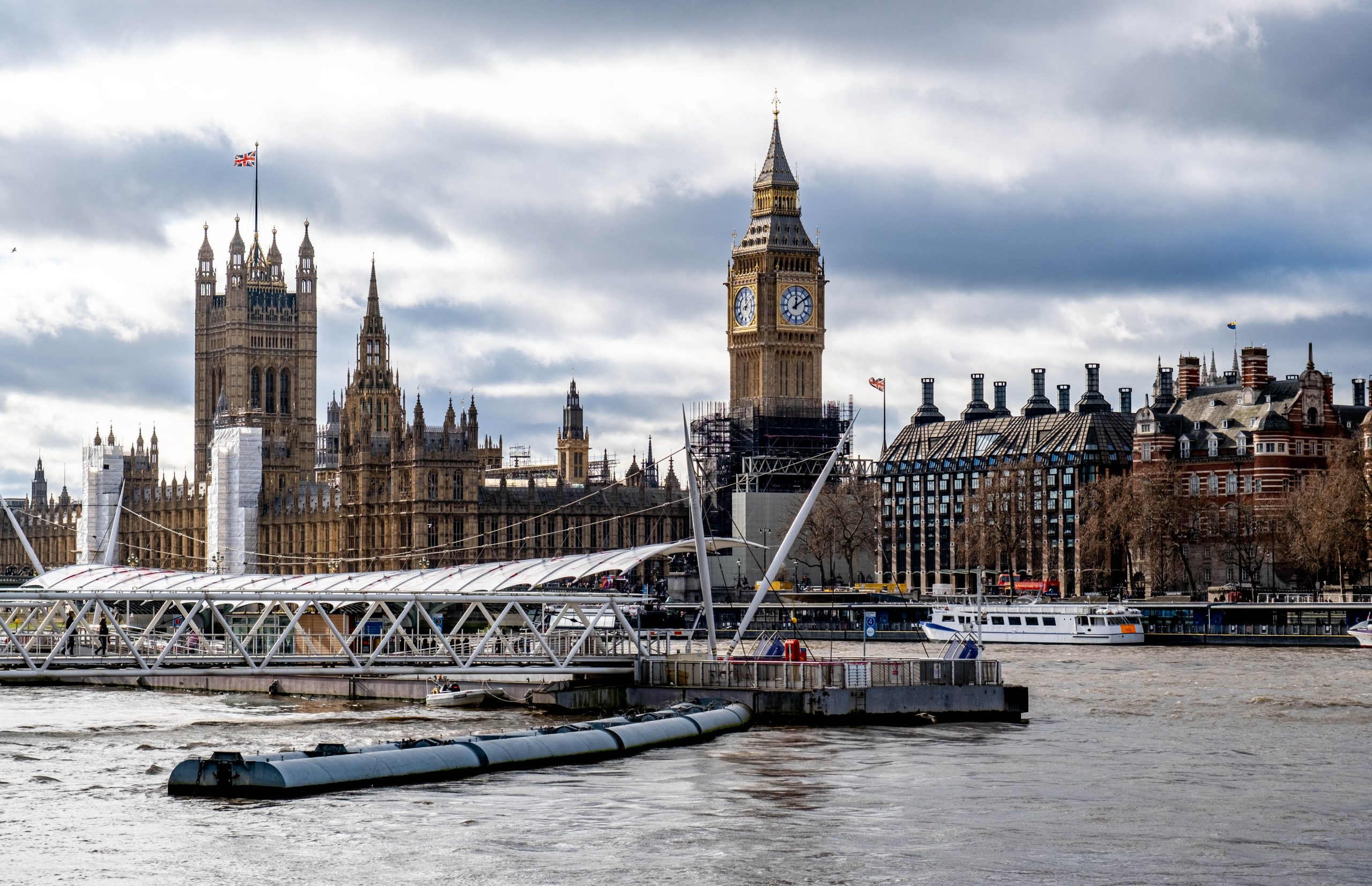
Family businesses have taken centre stage in Parliament ahead of the Budget, with MPs debating Business Property Relief (BPR) and its essential role supporting family-owned firms across the country.

A Westminster Hall debate led by Harriet Cross, Conservative MP for Gordon and Buchan heard from MPs about how BPR and APR (Agricultural Property Relief) is being used to support businesses and family-owned farms in their constituencies.

The debate, which took place less than two weeks ahead of the Labour’s first budget, gave MPs a chance to raise their serious concerns with Government.

Opening the debate, Harriet Cross MP underlined the important role played by BPR and APR incentivising family businesses up and down the country.


Will Forster, Liberal Democrat MP for Woking, told Members about the importance of family businesses to local economies like Woking.


Nigel Huddlestone, the Shadow Financial Secretary, said the Government must hear the concerns and fears MPs had expressed on behalf of their constituents about potential changes to inheritance tax relief, including BPR.

Huddleston reminded the House that prior to the election, family businesses believed they had received assurances on BPR from the Labour party and called for those assurances to be reiterated.

Responding for the Government, James Murry, the Exchequer Secretary to the Treasury acknowledge that many Members had raised their uncertainties ahead of the budget, including on BPR.

He acknowledged the ongoing debate and the work of Family Business UK in calling for BPR to be retained.

The Budget will take place on 30 October.

You will be able to read Family Business UK’s response after the Chancellor has delivered the Budget to Parliament.

You can read FBUK’s pre-budget submission here.

Visit our Back Family Businesses campaign page here.

FBUK warns of Threat to Family Businesses

FBUK warns of Threat to Family Businesses

Family Business UK (FBUK)  has warned how a vocal minority of commentators risk undermining Britain’s family businesses in the run up the Budget on 30 October.

In a letter to the editor of The Daily Telegraph, FBUK CEO Neil Davy, urges the Government to speak directly to family business owners to understand the importance of supportive policies and how businesses can deliver the Government’s growth agenda.

Below is the full text of the letter.

Ill-informed commentary puts jobs and growth at risk.

Sir, the Government was always going to face difficult choices on tax. But, it must be wary of making policy decisions that penalise businesses based on seemingly unfounded opinion (“Reeves told to charge capital gains tax after death.” 9 September).

Britain’s 4.8 million family-owned businesses are a case in point. Supported by policies that allow them to thrive across generations, they employ half the UKs private sector workforce and contribute more than a quarter of government tax receipts.

Family businesses are well placed to support the Government’s growth agenda. But a vocal minority would have the Government pull the rug from under them, risking a significant loss of jobs in every constituency across the country, lower tax receipts and threatens the future of otherwise successful businesses.

Contrary to the views of a minority of commentators, Business Relief, or Business Property Relief (BPR) is not a loophole that protects the wealthy. Nor is it a policy that benefits the privileged few. It is a policy that underpins the very model of family business ownership, and successful multi-generational businesses.

It has been retained by successive governments for 50 years for the simple reason they understood it gives family business owners the confidence to make long-term investments in their business and the communities they serve.

Many of Britain’s biggest and best-known brands are highly successful multi-generation family businesses. Those who run them have every right to be angry and alarmed by the IFS’ suggestion that future generations are not quite up to the task, or that the ultimate goal of all private businesses – including family businesses – is to sell and cash-in.

On behalf of all family businesses, I urge the Chancellor and her advisers to ignore these voices and speak directly to the owners of the family businesses whose future risks being threatened by ill-informed voices, about how they can – and want to – support delivery of the growth, jobs, and opportunity your government has promised.

Neil Davy
CEO, Family Business UK.