FBUK meets Scottish policymakers

With elections on the horizon, one message is coming through loud and clear:

politicians want to hear from family businesses – and they are ready to listen.

Matt Jaffa, FBUK Policy Director


Following our visit to meet Welsh politicians at the Senedd in January, Family Business UK’s policy and public affairs team has continued engagement across the Nations & Regions with a productive trip to Edinburgh.

The Scottish Parliament elections on 7 May are expected to bring significant political shifts. With the economy ranking as the top concern for Scottish voters, the voice of business – and particularly family business – has never been more important.

Our visit to the Scottish Capital began with a roundtable hosted by the Business Growth Fund and led by the Scale Up Institute. Senior advisers from the Treasury joined us to discuss growth, investment, and the tax policies needed to support thriving businesses.

We were particularly pleased to have FBUK Member Ross McAlpine join us for this session to share his perspective on the impact of Business Property Relief (BPR) on investment, growth and tax receipts.

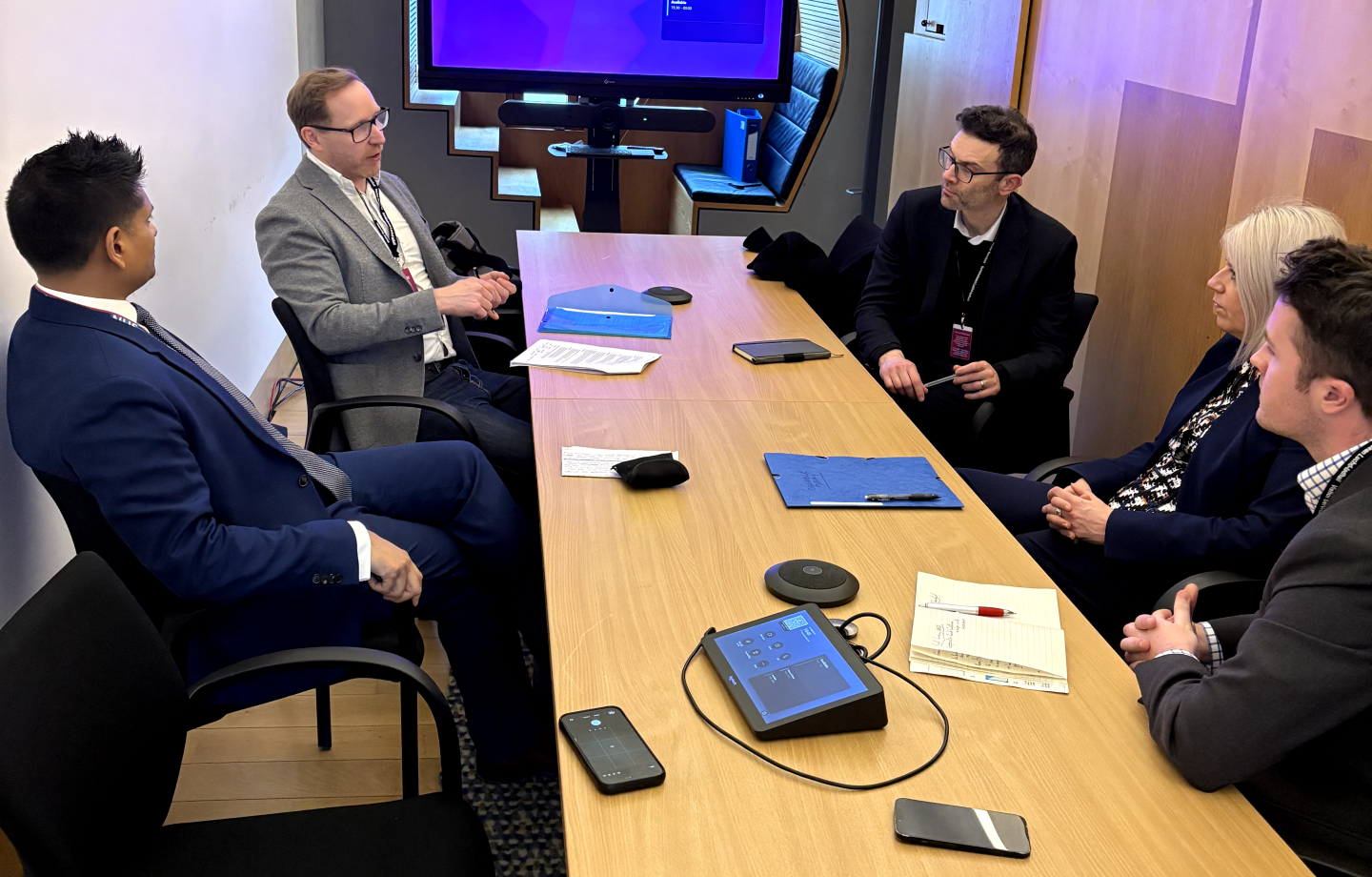
FBUK Member Ross McAlpine joins Matt Jaffa and Tom Ridgway meeting Sue Webber MSP and Dr Sandesh Gulhane MSP

While Scotland holds various tax raising powers, BPR and APR remain UK-wide tax policies administered from Westminster. This made the roundtable and our subsequent discussions an important opportunity to inform MSPs and their teams about the realities facing family firms.

Following this session, we joined four Members of the Scottish Parliament to explore key FBUK priorities. When we sat down with those Members, one thing became abundantly clear: politicians want to hear directly from family business owners. Hearing Ross share his lived experience had a powerful impact – so much so that MSPs immediately arranged a follow-up constituency visit to his business.

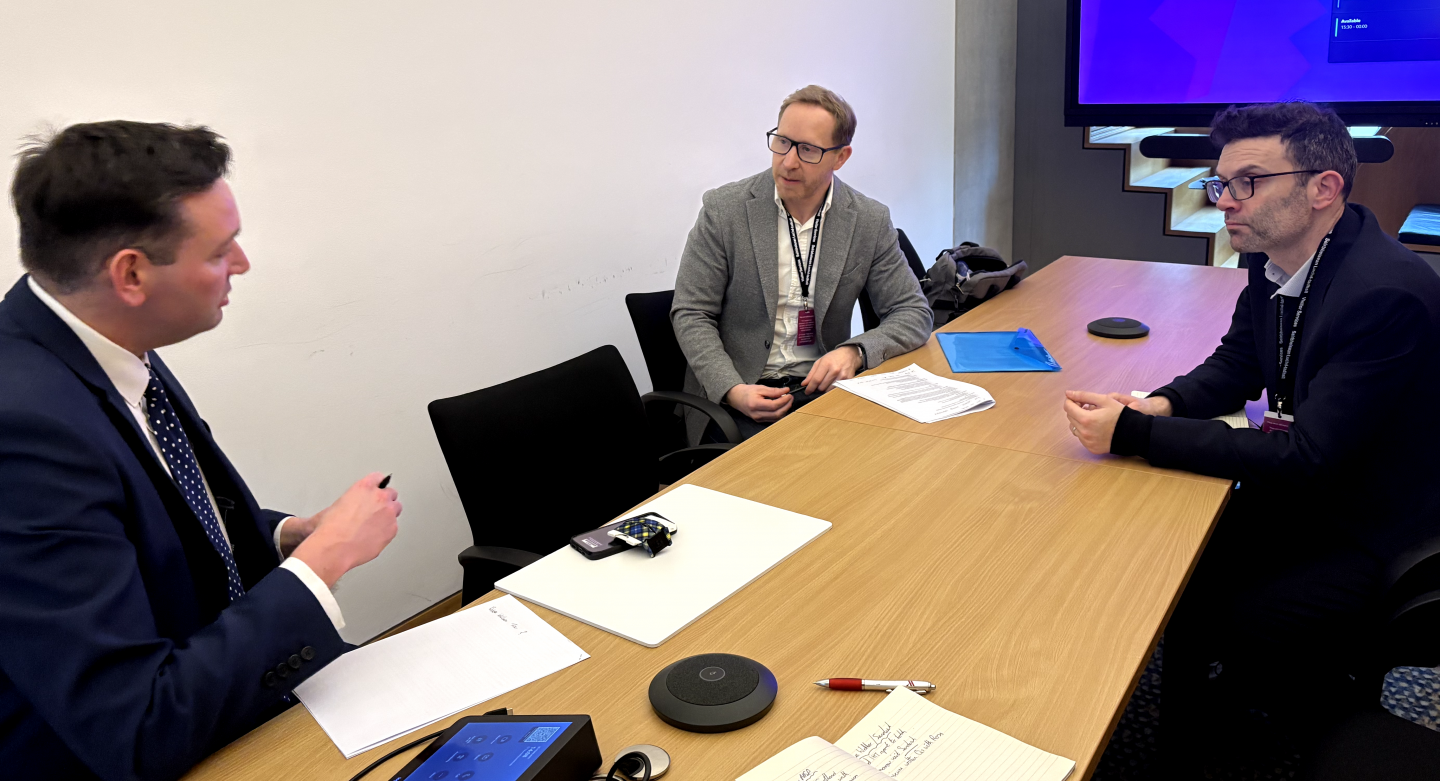
Ross McAlpine and Matt Jaffa meet Miles Briggs MSP

At FBUK, we will always champion our members in the corridors of power. But the most influential voice is yours – the voice of real family business experience. So, our call to action for members across Scotland, Wales, Northern Ireland, and England is simple:

Speak up and make sure your voice is heard.

How you can get involved:

  1. Join us for political meetings and roundtables (in-person and virtual),
  2. Take part in policymaking sessions with civil servants, such as our recent meeting with officials from the Treasury,
  3. If you’re visiting London let us know – we’ll contact your local MP and try our level best to arrange a meeting in Westminster,
  4. Tell us if you’d like support arranging a constituency visit – just as we facilitated a mayoral visit for a member this week.

Policy Summit

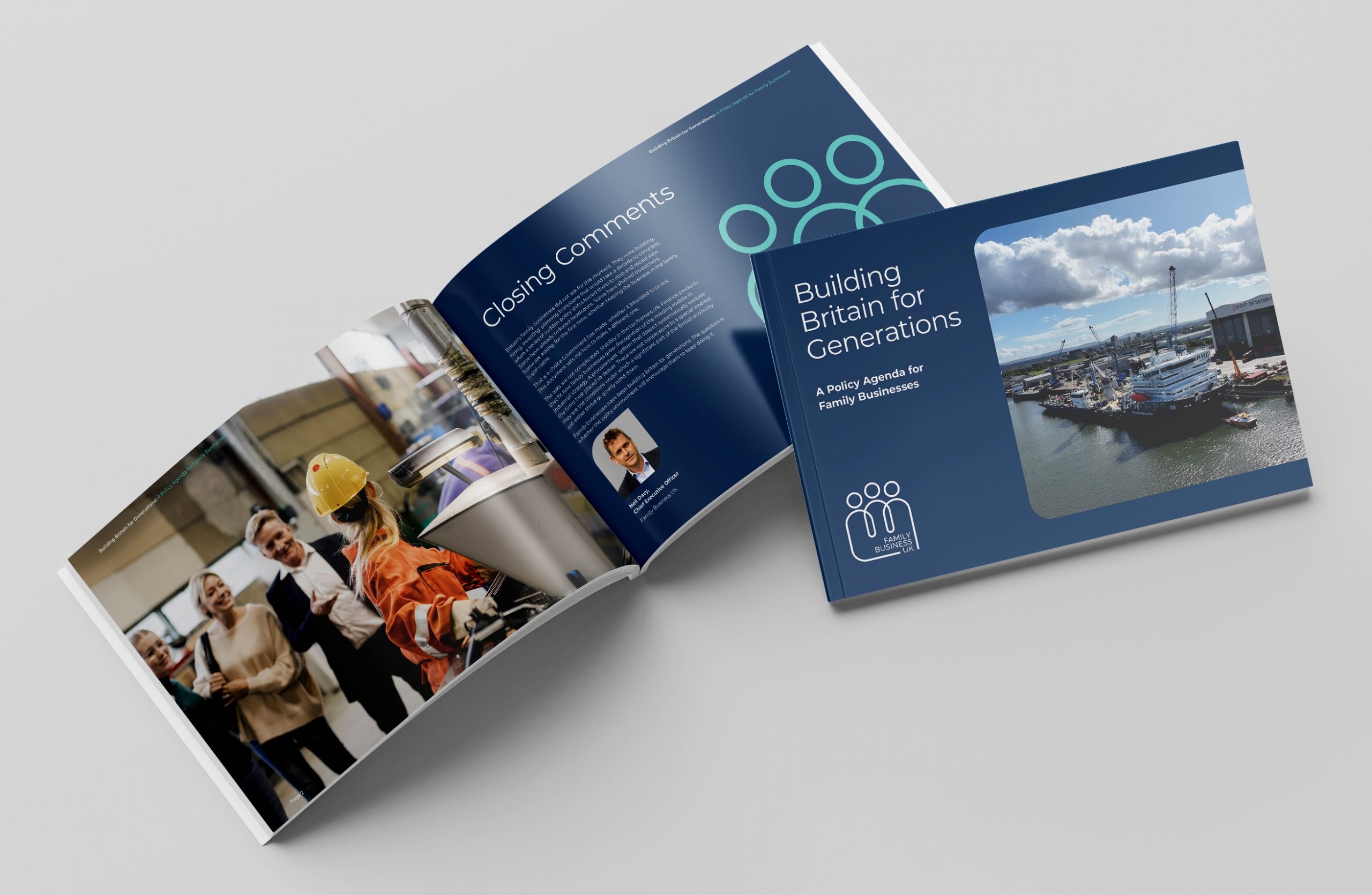
Ahead of that, join us at our inaugural policy summit: Building Britain for Generations, taking place in London on the 31st March which will provide a unique opportunity for FBUK Members to engage with policymakers, industry leaders, and key stakeholders on the pressing issues shaping family business thinking.

FBUK welcomes Lords report on IHT

FBUK Policy Director Matt Jaffa examines a key House of Lords report into inheritance tax reforms and finds that it echoes 15 months of warnings from Family Business UK


The House of Lords has published its report into the inheritance tax changes announced in the Autumn Budget 2024 – including changes to BPR and APR.

The  109‑page inquiry report: Inheritance tax measures: unused pension funds and agricultural and business property reliefs, and its conclusions echo many of the arguments FBUK has made over the last 15 months. Having given written and oral evidence to the inquiry, FBUK receives 12 name check references in the report.

In short: the Lords agree with what FBUK and our Members have said:

  • the policy is ill-considered,
  • lacked prior consultation
  • risks damaging the UK’s family business sector.

Commenting on the report, FBUK CEO Neil Davy said:

We welcome this report and urge the Government to immediately implement all its recommendations on BPR and APR. The damning criticism of the Government’s processes in formulating these policies highlight serious shortcomings which can only be properly addressed with a full consultation with family businesses and reversal of this damaging policy.

The fact the Lords acknowledge that these deficiencies result from the Government’s failure to properly consult with us and family businesses across the country before announcing the measures, shows precisely why and how the Government got this wrong.

Whilst we welcome the Government listening to arguments we have put forwards and the subsequent amendments it has made to these policies, they do not go far enough to protect thousands of jobs and hundreds of millions of pounds worth of investment delivered by British family businesses.

This is now the third high-profile committee in Parliament to reach a conclusion that this policy is deeply damaging to the family business sector which employs more than 15 million people and makes a significant contribution to the economic success of the country.

The Government must heed these warnings and reverse these policies, before they are implemented in April, to give Britain’s family businesses back their confidence to invest for the future and deliver the growth that remains this Government’s number one priority.


Some key takeaways from the report:

Unrealistic Deadlines

The report is clear: forcing estates to make their first Inheritance Tax payment within six months, including tax on unused pension funds, simply isn’t workable. The Committee recommends extending the deadline to 12 months.

The Committee found that Personal Representatives (PRs) and Pension Scheme Administrators (PSAs) lack the full information needed to calculate IHT accurately. Its message to Government is not to prioritise an April 2027 start date over getting the policy and the processes right.

BPR & APR: Government failed to assess the impact of the policy on family businesses

The Committee questions why the Government did not carry out a full impact assessment before announcing the policy change – a concern FBUK has raised repeatedly.

The Committee recommends cross departmental research (to include the Department for Business, Department for the Environment, Food and Rural Affairs and HMRC) to fully understand the consequences of the reforms.

The report calls for Government to measure the impact of the reforms over the next seven years. FBUK believe that seven years is too long a period of time, which for many family businesses with older owners, is not practical.

Impact of a death on company valuations.

In his oral evidence to the Committee, Steve Rigby, Chair of FBUK, warned of the devastating effect the sudden death of a key individual can have on the valuation of a business. The Committee has now taken this on board and is calling on the Government to examine this issue.

Valuations system not fit for purpose

FBUK highlighted that valuations can vary wildly between assessors, creating delays and financial risk for families trying to meet IHT deadlines.

The report urges the Government to assess levels of staffing and expertise within HMRC’s valuation teams before April 2026, given the expected surge in administrative workload.


This report is the third major Parliamentary committee, alongside the Environment Committee and the Welsh Affairs Committee, to question the Government’s approach to these policy changes.

As the Finance Bill makes its way through Parliament to pass the legislation, this report will give Members of Parliament extra ammunition to press the Government for further changes to the policy.

What happens next?

FBUK will be analysing the full detail of the report and briefing the Government in the coming days, but our position remains unchanged: we continue to call for a full reversal of the policy.

At the bare minimum, a comprehensive review is now essential to design a fairer, more workable system that protects jobs, growth and the long term resilience of the UK’s family business sector. And we will continue to put the voice of Members to Ministers and Parliamentarians as the Finance Bill continue its journey through the legislative process.

FBUK welcomes U-turn on audit reform

The Government has dropped plans to bring forward a Bill on Audit and Corporate Governance Reform.

This is both an important and extremely welcome step in a long, drawn out process which began following the collapse of Carillion in 2018. Since then, FBUK has long argued against proposals that would have placed an enormous burden on large private and family businesses.

After years of anticipation and debate, ministers have concluded that the proposed expansion of the Public Interest Equity (PIE) regime – a far more onerous reporting and compliance framework – would have imposed substantial financial and administrative burdens on business without commensurate benefits.

Why this matters to family businesses

For many large UK family firms – for generations the backbone of regional economies and employment – the threat of being classified as part of the PIE regime carried serious implications – triggering heightened reporting requirements and regulatory oversight which, in practice, favours scale over substance.

This change of direction means leaders can instead focus on meaningful disclosures that genuinely serve investors, employees and customers, rather than box-ticking exercises.

Fiona Graham, Chief Advocacy Officer at Family Business UK, said: 

This move recognises that good corporate reporting should be about clarity and usefulness, not complexity and volume. When stakeholders are overwhelmed with data that obscures rather than informs decision-making, transparency is undermined.

For years, we have worked with policymakers to ensure audit reforms strike the right balance between accountability and proportionality. This move shows that the clear, evidence-based arguments we have consistently presented have laid the ground for this U-turn.

We welcome the government’s renewed focus on proportionate reporting that supports growth and without the cost and complexity that risked holding businesses back.

A better regulatory focus

In making its announcement, the Government has signalled a clear pivot towards simplifying corporate reporting and reducing red tape, rather than pressing ahead with overly burdensome legislation. The Department for Business and Trade says the move will support growth and cut unnecessary costs for large enterprises – a message fully aligned with business concerns across the UK.

At a time when companies face rising economic challenges, the threat of additional compliance costs tied to unnecessary reporting and compliance would have acted as a disincentive to growth, particularly for businesses approaching the proposed threshold. Pulling back on this aspect of the Bill ensures that UK companies remain competitive both domestically and internationally.

Finance Bill second reading: what you need to know

On Tuesday afternoon (16 December 2025), MPs in the House of Commons will debate and vote on the second reading of the Finance Bill – an important moment in the Bill’s journey through Parliament.

The second reading is the first substantive opportunity for MPs to debate the Bill as a whole and to decide whether it should proceed to the next stages of Parliamentary scrutiny. If a majority of MPs vote in favour, the Bill will move on to further stages where individual clauses can be examined and amended in greater detail.

Why this matters to family businesses

The Finance Bill gives legal effect to the Chancellor’s Autumn Budget proposals and contains a number of tax measures that will influence business planning in the years ahead. For family-owned businesses, changes to Inheritance Tax (IHT) and Business Property Relief (BPR) are the most significant.

What the second reading debate covers

At second reading, MPs will debate the overall principles and purpose of the Finance Bill, rather than individual measures or technical details. A treasury minister will open the debate, followed by speeches from opposition parties and backbench MPs. Crucially:

  • No amendments to the Bill can be made at second reading, so the vote is simply on whether the Bill should continue its passage through Parliament.
  • If the Bill passes, detailed examination and opportunities to propose changes will come at the committee and report stages in the New Year.

What happens next if the Bill passes?

Assuming a majority of MPs support the Bill at second reading:

  • It will enter the committee stage, where MPs can scrutinise individual clauses and propose amendments.
  • Following committee stage, the report stage offers further opportunities for changes to the Bill.
  • Finally, the Bill will return for a third reading before moving to the House of Lords.

The House of Commons rises for Christmas recess on 19 December so, any detailed scrutiny of the Bill will come in the New Year.

At the end of the second reading debate on Tuesday, the Government will set out the full timetable for the remaining stages of the Finance Bill, including key dates when crucial IHT legislation can be amended.

Is another rebellion on the cards?

In short no, not at this stage. Earlier in the month, Labour suffered a sizeable rebellion on Resolution 50 of the Finance Bill – the bit of legislation relating to the Government’s changes to IHT. We are seeing Labour MPs concerned about changes to IHT are increasingly speaking out – read FBUK’s analysis here.

Bills rarely fall at Second Reading, and so another rebellion on Tuesday is highly unlikely. However, MPs will have the opportunity to debate the broad principles of the Bill, including the government’s changes to BPR.

Write to your local MP

For family businesses concerned about the impact of new IHT rules, this means lobbying and engagement now is crucial to influencing the next stages.

This is your opportunity to write to your MP ahead of the debate on Tuesday. Download FBUK’s Finance Bill briefing for MPs here.

Find out who your local MP is here.

Family Business UK response to Spring Budget 2024

Fiona Graham, Chief Advocacy Officer at Family Business UK responding to the Spring Budget said:

“With challenges facing them on multiple fronts, the family business community has been waiting on tenterhooks about what support the Chancellor would offer to help kickstart the economy.

“While there were incremental improvements on full expensing and VAT thresholds, sadly today’s announcement lacked the strong long-term vision for family firms to help them grow and provide more opportunities within the communities in which they operate.  With the recent  appointment of a new SME Council by the Government, we hope to see continued engagement with the family business community and more policies  for long term support in due course.

“On pensions the Chancellor mentioned moving ahead with the Mansion House Reforms.

“In the election year it’s essential that some of existing reforms around defined benefit pension scheme surplus sharing and consolidation keep moving ahead, and don’t come to a halt because of the election.”

Read the 2024 FBUK Budget submission

You can find the full Spring Budget, and accompanying documents, here.

Beyond the Headlines

There were updates to existing policies within the accompanying documents which will be of interest to many family firms, including:

  • Further details on six Investment Zones in Greater Manchester, Liverpool City Region, North East of England, South Yorkshire, West Midlands and Tees.  Find out more here.
  • Levelling up funding and UK Community Renewal Fund updates.  Find out more here.
  • The Government’s response to changes around Agricultural Property Relief (APR) where land is being put to environmental uses.  FBUK has engaged with HM Treasury and HMRC on this issue, and the need to update legislation to ensure family landowners are not penalised for tackling part in environmental schemes, as promoted by other parts of Government policy.  You can find the response to the consultation here
  • The Chancellor also announced the Government’s intention to regulate the provision of Environmental, Social and Governance (ESG) rating providers.  More information here.
  • HM Treasury and DLUHC published their response to a consultation on Business Rates Avoidance and Evasion

Summary of Announcements

Tax

  • 2p cut to employee National Insurance, from ten percent to eight percent.
  • Self-employed National Insurance will be cut from eight percent to six percent.
  • The non-domiciled tax status will be scrapped and replaced with a residency-based system from April 2025, raising £2.7bn in tax revenue a year by 2028/29.
  • Fuel duty 5p cut will be maintained for a further 12 months.
  • Alcohol duty freeze extended until 1 February 2025.  Abolish the furnished holiday lettings regime.
  • Abolish stamp duty relief on the purchase of multiple dwellings in one transaction.
  • Reduce the higher 28 percent rate of Capital Gains Tax on property to 24 percent.
  • Fuel duty 5p cut will be maintained for a further 12 months.  

Business

  • Planned legislation for full expensing to apply to leased assets.
  • From April 1, increasing the VAT registration threshold from £85,000 to £90,000.
  • £200m of funding to extend the Recovery Loan Scheme as it transitions to the Growth Guarantee Scheme.
  • New powers for The Pensions Regulator and the Financial Conduct Authority to ensure better value from defined contribution (DC) pension schemes.
  • Introducing new requirements for DC and local government pension funds to disclose publicly their level of international and UK equity investment.
  • Introduce the British ISA with an additional £5000 tax free allowance for investments in UK equity.
  • £270m for advanced manufacturing, to be spent on innovative automotive and aerospace R&D projects.
  • Up to £120m more will be allocated to the Green Industries Growth Accelerator to build supply chains for new technology such as offshore wind and carbon capture.
  • Extend the energy profit levy, the “Windfall Tax”, to 2029 to raise an additional £1.5bn.
  • Abolish the energy profit levy if the energy market price falls back to a historic norm for a sustained period.

END.

Family Business UK Spring Budget Submission 2024

In the UK, we are sitting on an enormous resource of entrepreneurialism in the form of our family business sector. Family businesses make up 90 per cent of the UK’s total
private sector firms, employing 14 million people and contributing over £200 billion through tax receipts each year alone.

Now more than ever, the Prime Minister’s focus on long-term decisions is vital to support businesses in overcoming immediate challenges while delivering long-term
growth.

Family Business UK makes the following recommendations for inclusion in the Budget that can help support the family business sector in putting the UK
economy back on the road to recovery:

• Commit to maintain Business Property Relief (BPR) in full
• Bring Business Assets Holdover Relief (BAHR) eligibility into alignment with BPR, to enable a smooth transition in ownership between generations
• Replace the Apprenticeship Levy with a new, fit-for-purpose Future Skills Fund

To read the full Family Business UK submission for the Spring Budget 2024, please Click here to access the document.

Family Business UK Joins New Small Business Council

Family Business UK attended the first meeting of the new Small Business Council in Downing Street today, as the Government looks to remove barriers to growth faced by SMEs.

Chaired by Small Business Minister, Kevin Hollinrake, the Council will work alongside the PM’s Business Council to tackle the key issues facing smaller firms. The Council will include Family Business UK, Small Business Britain, and the Federation of Small Businesses.  The Council also includes SMEs themselves, with firms representing all corners of the UK covering sectors including manufacturing, construction, food and drink.

The Council will be a powerful voice for small businesses within Government and has been tasked with overseeing three key areas for small firms – Access to finance, skills and support as well as removing barriers.

Small Business Minister Kevin Hollinrake said:

“Small firms are at the heart of our communities and the engine of our economy – which is why the work of this council is so important. My own experience of working in a small business has given me crucial insights to the problems that SMEs face on a daily basis, from barriers to growth or access to finance.

“We’re giving small firms a big voice, so they can directly air their concerns to government without delay – only when we work together can we tackle some of the burning issues SMEs are facing – only then can we help boost jobs and grow the economy.”

Neil Davy, CEO of Family Business UK, said: 

“We are delighted to be part of the new Small Business Council, representing family businesses from across all regions and communities of the UK to highlight the unique challenges they face and the practical new ideas we have for generating economic growth. It is great to see this group reflect the different models of business that make up the UK economy.

“Family firms offer a unique perspective due to their long-term view, and we look forward to working with the Council to deliver support and advice to help SMEs learn, thrive and grow.”

You can find out more about the Council, including the full list of members here https://www.gov.uk/government/news/sme-council-membership-revealed-ahead-of-first-meeting