Manchester’s Moment: What it Means for Family Businesses

There was a certain symbolism in Family Business UK’s NowGen Community Roundtable taking place in Manchester on Thursday. 

On the same day voters went to the polls to elect the city’s next Mayor, family business leaders gathered in the heart of the city that has become the political and economic focal point of the new Government’s ambitions. Under Prime Minister Andy Burnham, Manchester is no longer simply one of Britain’s great cities. It is now home to No.10 North – the central hub for the Government’s devolution agenda and its ambition to deliver “growth in every postcode”.

That made Manchester the ideal place to discuss what comes next for Britain’s economy.

The city is now recognised as the UK’s fastest-growing major economy. While that success cannot be attributed solely to Andy Burnham’s near decade as Greater Manchester Mayor, there is a widely held view within the business community that his mayoralty demonstrated the value of meaningful engagement between government and business. Employers were seen not simply as stakeholders to consult, but as partners in delivering economic growth.

There are early signs that same approach is being carried into Government.

Within days of entering Downing Street, the Prime Minister invited FBUK to join the first discussions with leading business organisations on growth, investment, skills and jobs. For a sector that contributes so much to the UK’s economy and communities, it was an encouraging indication that family businesses will have a voice as the Government develops its economic agenda.

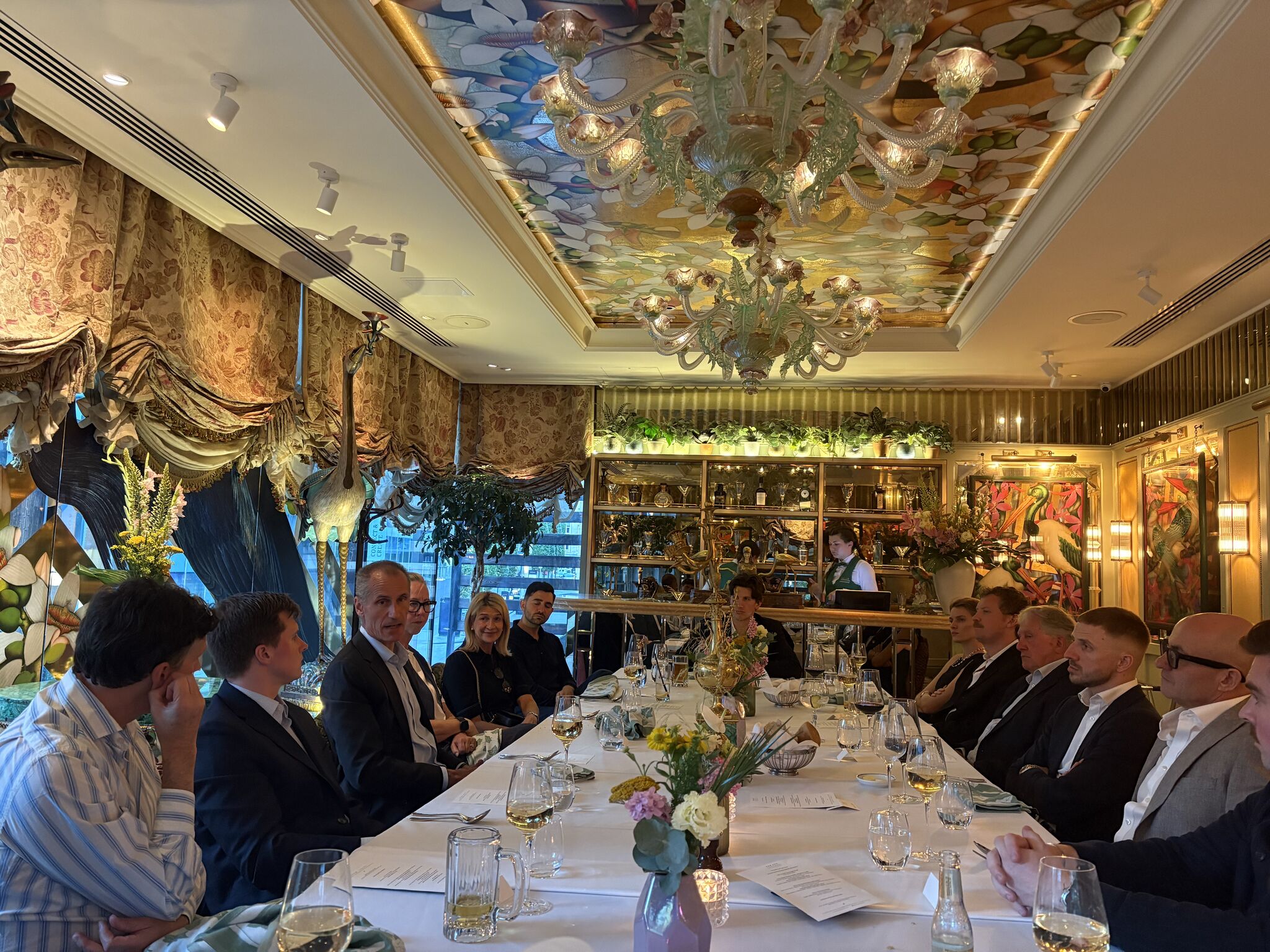
Our NowGen Community Roundtable, kindly hosted by Collinson Grant, reinforced why that partnership matters.

The discussion brought together family businesses from a wide range of sectors, sizes and generations to meet Bill Esterson MP, who spent eight years as Labour’s Shadow Business Minister before becoming Chair of the Energy Security and Net Zero Committee. As part of the Government’s efforts to rebuild confidence and strengthen its relationship with business, he took time to hear directly from family business leaders about the opportunities and challenges facing firms across the country.

Although every business around the table had its own story, there was one consistent theme.

Family businesses are rooted in the communities they serve. They create local jobs, invest for the long term and build relationships measured in generations rather than electoral cycles. Whether operating in manufacturing, hospitality, professional services or retail, they share a commitment to creating opportunities for local people and strengthening the places they call home.

That is precisely why family businesses are natural partners in delivering both devolution and the Government’s wider growth agenda.

If growth is genuinely to reach every postcode, it will depend on businesses that already have deep roots in the areas they call home. Family firms understand local labour markets, local supply chains and local communities better than almost anyone. They are uniquely placed to help translate national ambition into local economic success.

There was broad agreement that the new Government has made an encouraging start. Recent announcements aimed at tackling youth unemployment, including measures to remove financial barriers that can discourage some young people from taking up apprenticeships, recognise the important role employers play in creating opportunities for the next generation. Family businesses have long been at the forefront of providing apprenticeships, first jobs and long-term careers, making them natural delivery partners for this agenda.

Equally, the discussion highlighted areas where businesses will be looking for the Government to go further.

The decision to extend VAT relief on household energy bills was widely welcomed. However, many questioned why energy-intensive businesses facing the same prolonged period of high energy costs were not afforded similar support. For firms looking to invest, expand and recruit, competitive energy costs remain a vital part of the overall business environment.

Conversations also returned to Business Property Relief. The business community remembers the extensive engagement that took place before the previous Government entered office, only for subsequent reforms to leave many family businesses questioning whether Government fully understood the realities of long-term ownership, succession and investment. That experience inevitably means early optimism is tempered by caution.

Ultimately, confidence will not be judged by the tone of early engagement alone, but by the policy decisions that follow.

The Autumn Budget is likely to be one of the defining moments of the Prime Minister’s first year in office. It presents an opportunity to demonstrate that the Government’s reset with business is more than a change in rhetoric by creating the conditions that encourage businesses to invest, grow and create jobs with confidence.

Family Business UK’s Building Britain for Generations Policy Agenda provides a practical roadmap for doing exactly that. From supporting apprenticeships and employer-led skills, to encouraging investment, strengthening local economies and reducing unnecessary barriers to growth, it offers constructive proposals that align closely with the Government’s ambitions.

There is a genuine opportunity to forge a new partnership between Government and family businesses – one built on trust, stability and a shared commitment to long-term growth. If the Government wants to deliver growth in every postcode, family businesses stand ready to help make that ambition a reality.


Interest Rates held at 3.75%: FBUK calls for stability to support family business growth

Responding to the Bank of England holding interest rates at 3.75%: Matthew Jaffa, FBUK Policy Director, said:

“FBUK welcomes the Bank of England’s decision to hold the base rate at 3.75%. Family businesses are eager to invest, grow and create jobs, but rising cost pressures and ongoing geopolitical uncertainty have slowed the pace of expansion more than many would like.

“A sustained period of controlled inflation and lower interest rates is vital for family firms, whose long-term outlook and investment decisions are central to their success and contribution to the wider economy.”


Government announces further measures to tackle youth unemployment – but business confidence will be key

Tackling the growing number of young people outside education, employment or training (NEET) is rapidly emerging as a priority for the new Government. 

For FBUK, the focus is welcome. We have consistently called for a stronger drive to get young people into work, shaped around the needs of local employers.  

Nearly one million young people across the UK are NEET. This is a major social and economic challenge at a time when businesses continue to report skills shortages and difficulties recruiting. 

The Government is right to focus on getting more young people into work. This week’s announcements build on a substantial programme already underway – and underline something fundamental to its success: businesses will ultimately have to provide the jobs, apprenticeships and training places. 

For FBUK, there is much to welcome. The focus on apprenticeships, employer-led skills and creating opportunities close to home is the right one. With their deep roots in communities across the country, family businesses are obvious partners in turning that ambition into jobs and opportunities for young people. 

What is the Government already doing?  

The Government’s existing youth employment programme includes: 

  • £3,000 Youth Jobs Grants for employers recruiting eligible 18–24-year-olds who have been on Universal Credit and looking for work for at least six months. 
  • 300,000 work experience and training opportunities over three years. 
  • Jobs Guarantee, providing eligible long-term unemployed 18–24-year-olds with six months of paid employment. 
  • 50,000 additional youth apprenticeships, including fully funded training for eligible young people at smaller employers. Larger employers that have used their Growth and Skills Levy allocation will also not have to pay the usual 25% co-investment contribution when taking on additional apprentices aged 16-24.  
  • £2,000 hiring payment for smaller employers taking on a new apprentice aged 16–24 from October 2026. 
  • Existing National Insurance relief for employers taking on qualifying apprentices under 25. 

What has the Government announced this week?  

The Government has now added: 

  • A new apprenticeship bursary of up to £4,500 a year for Universal Credit households where the interaction between benefits and apprentice earnings could otherwise leave the household worse off. 
  • Thousands of additional college places to expand access to skills and training closer to home. 

Family businesses are an obvious part of the solution  

With around five million family businesses employing 15.8 million people, family firms are rooted in communities across the country and can provide the apprenticeships, first jobs and long-term careers needed to make the Government’s ambition a reality. 

Unlocking that potential means making it easier for businesses to take on and train young people. FBUK’s Building Britain for Generations policy agenda sets out practical steps to do that – including more flexible use of the Growth and Skills Levy, a greater focus on work-ready skills and stronger incentives for businesses to invest in apprenticeships. It also calls on Government to consider how rising employment costs could affect employers’ willingness to hire younger workers. 

But none of this works without employers. 

Hiring an inexperienced young person can be a risky investment. Businesses are absorbing higher employer National Insurance contributions, substantial minimum wage increases, employment rights reforms and wider increases in the cost and complexity of employing people. 

For family businesses, this sits alongside the uncertainty created by changes to Business Property Relief (BPR). 

The Prime Minister’s call for businesses to work with Government to get more young people into work is one family businesses are ready to answer. But, as FBUK CEO Neil Davy told the Prime Minister last week, that partnership will only succeed if Government creates the conditions for businesses to invest, grow and recruit. 

The new Government has an opportunity to strike a new deal. Family businesses can help deliver its ambitions on youth employment, skills and growth. In return, Government needs to rebuild business confidence – and reopening the conversation around BPR should be part of that partnership. 


Family Business UK joins prime minister’s first talks with business leaders

Family Business UK has joined Prime Minister Andy Burnham’s first talks with leading business organisations, as the new Government set out plans for a stronger partnership with businesses to drive investment, create jobs and deliver growth across the country.

Neil Davy, Chief Executive of Family Business UK, spoke with the Prime Minister alongside representatives from organisations including the British Chambers of Commerce, Federation of Small Businesses, Institute of Directors, Make UK and ScaleUp Institute.

The Prime Minister used the discussions to outline a new offer to British businesses, focused on greater certainty, clearer long-term direction, faster decision-making and giving businesses a stronger voice in shaping government policy.

A central part of the discussion was the role businesses can play in tackling rising youth unemployment and skills shortages. The Prime Minister called on employers to work with Government to restore the first rung on the career ladder for young people, while helping businesses develop the skilled workforce they need to grow.

Neil Davy, Chief Executive of Family Business UK, said:

“It was encouraging to be part of the Prime Minister’s first discussions with business organisations and to hear his commitment to building a stronger partnership between government and business.

“The Prime Minister is right to put tackling youth unemployment at the heart of that partnership. Family businesses invest in people for the long term, providing apprenticeships, training and that crucial first opportunity for young people to get into work and build a career.

“There is significant common ground with our recently published Policy Agenda, from creating a fairer system of taxation to creating those opportunities for young people by breaking down barriers to employment.

“We look forward to working with the Prime Minister and his Government to turn these shared ambitions into practical action and ensure family businesses can continue building Britain for generations.”

FBUK will continue working with the Prime Minister and the new Government to ensure family businesses have a strong voice as these priorities are taken forward.

During the roundtable discussion, Neil informed the Prime Minister and senior government officials that, if the Government wants to drive sustainable growth in every postcode and unlock the full potential of family businesses as partners in creating opportunities for young people, it must reopen the Business Property Relief (BPR) conversation and review the damage these changes are having on family-owned firms.

With family businesses operating in every part of the country, employing locally and investing for the long term, there is a significant opportunity to put them at the heart of the Government’s plans to tackle youth unemployment, unlock investment and deliver sustainable, place-based growth across the UK.

New PM must back family businesses

Neil Davy, CEO Family Business UK. 

For family businesses, the last two years of this government have been challenging. They have been forced to adapt to almost constant uncertainty and daily speculation about the next policy in line for change or tax to be increased. 

When Labour was elected in 2024, it was with a promise to be the most business-friendly government with a clear priority to create the conditions for economic growth. We, along with other business organisations, were encouraged. 

But the promise has not yet been delivered and for Britain’s five million private and family-owned companies, the reality has been notably different. The ending of long-standing and well-understood rules on Inheritance Tax relief remain a penalty on family ownership and an existential threat to five million British businesses. 

For the new prime minister there is a golden opportunity to change that and reset relations with family firms. His plans for greater devolution and place-based growth should prioritise family businesses and put them at the heart of that mission. To succeed, he must commit to fully reverse the changes to Inheritance Tax. 

Business Property Relief and Agricultural Property Relief exist for a very clear purpose – they incentivise the business investment and long-term stewardship our country needs. But the changes to BPR and APR have achieved the opposite, forcing businesses to prioritise the short-term and tear up longstanding plans for investment and jobs. 

Worse, they have created a two-tier tax system in which family businesses are penalised — they must plan for a future liability while their non-family and foreign-owned competitors do not. That simple truth continues to weigh heavily on Britain’s family business sector. 

Our latest research shows that more than half of all family firms will still be affected by the change and, for those with more than fifty employees, the impact rises significantly. There is simply no downside to the immediate reversal of this policy change. 

Secondly, the new prime minister must commit to stopping the inexorable tax increases on all business and be relentless in creating the policies and conditions that instil confidence to invest, expand and create jobs, particularly those for young people who are bearing the brunt of these tax changes. 

Ensuring the next generation have both the skills and the opportunities takes a long-term approach is central to family businesses and critical for the future of local communities and a healthy economy. 

However, a public commitment to stick to Labour’s Manifesto commitments on tax does not fill me with confidence that the incoming chancellor will take a pragmatic and proportionate approach to tax. 

Next, the new prime minister must support growth for scale-up family businesses – particularly the medium-sized businesses often forgotten by policymakers. There are 10,000 mid-market, scale-up family businesses in the UK contributing more than £140 billion to the UK economy and employing close to one million people. Imagine the growth and tax receipts that could arise from this cluster of businesses if they were incentivised rather than penalised.  

Finally, strengthening local communities. In every part of the country family businesses are often cornerstone businesses on local high streets and communities. It is their long-term outlook and pride in place, underpinned by family values and a sustainable business model that makes them a critical part of the social fabric on which our communities and regional economies are built. 

Sadly, family businesses are mis-understood by policymakers, too often dismissed as just ‘lifestyle’ businesses. But family firms are the beating heart of our economy built around a long-term vision, a commitment to people and local communities, and a willingness to invest over decades. It is what sets them apart and makes them one of this country’s greatest economic assets. 

Government policy, led by the new prime minister, must reflect that. 

Interest Rate Cuts – December 2025

Today’s cut in interest rates by the Bank of England is welcome news for family businesses, offering some relief after a prolonged period of high borrowing costs. However, inflation remains above the 2% target and unemployment is rising, with almost one million young people currently not in work, education or training.

These challenges are being compounded by the government’s changes to Inheritance Tax reliefs, which are undermining confidence and deterring family businesses from investing and taking on new staff at a time when the economy needs it most.


Hymans Robertson Personal Wealth joins FBUK as Corporate Partner

Family Business UK is pleased to announce Hymans Robertson Personal Wealth has joined its Corporate Partnership programme.

Serving clients from offices across the UK, Hymans Robertson Personal Wealth offers expert financial advice and wealth management to individuals, multi-generational families and family businesses.

Jeff Simpson, Head of Wealth & Private Office said:

“Supporting family businesses through succession planning, strategic wealth management, and intergenerational wealth planning has always been central to what we do.

“We’re delighted to become a Partner of Family Business UK. It will allow us to help more family business owners by sharing our expertise, collaborating with other professionals who understand the unique challenges these businesses face and help family businesses thrive now and for generations to come.

“We look forward to contributing to a community that champions the long-term success of family enterprises.”

FBUK’s Corporate Partners are critical allies of FBUK working with and supporting family businesses. These carefully selected, and highly respected organisations, provide outstanding professional services to family business owners across the country.

Neil Davy, CEO FBUK said:

“We are delighted that Hymans Roberson Personal Wealth has chosen to be part of our Corporate Partnership programme. Their work building trusted relationships to help their clients create a lasting impact, preserve values and build legacies mirrors our own work as the voice of Britain’s family businesses.

“We look forward to working with them in the months and years ahead, supporting FBUK Members prepare for the challenges they face.”

For further information on how Hymans Robertson Personal Wealth can support your family business, and to contact them, visit their page on our website.

Find out more about how FBUK supports family businesses through our carefully selected Corporate Partnerships, including Hymans Roberson Personal Wealth, visit www.familybusinessuk.org


Saving a great pie favourite

The Melton Mowbray Pork Pie is one of the UK’s most iconic food products. When the future and integrity of the Melton Mowbray pie looked in jeopardy twenty years ago, it was Samworth Brothers along with other pie devotees that safeguarded its future.

The Samworth family and Samworth Brothers have a long association with pork pies. A previous Samworth family business owned the Pork Farms brand. However, their involvement stepped up a gear in 1986 when Samworth Brothers acquired the Leicester pie maker Walker & Son, followed by the purchase in 1992 of Melton Mowbray’s ‘Ye Olde Pork Pie Shoppe’ and the accompanying Dickinson & Morris brand.

A pie maker called John Dickinson had opened the Melton “Pie Shoppe” in 1851. His grandmother Mary Dickinson is credited as the first pie maker to use the distinctive wooden “dolly”, around which the pastry of a Melton Mowbray pork pie is raised.

As well as their unique bow shape, a result of baking the pies free-standing, Melton Mowbray pork pies are made with fresh pork, which is naturally grey when cooked, contrasting with the pink hue of other pies whose pork is cured with nitrates. Melton Mowbray pork pies also feature chopped pork, rather than the minced meat used in other types of pork pie.

The battle to save Melton Mowbray pies

It was in the late 1990s that Samworth Brothers supported the push to safeguard the Melton Mowbray pork pie. Matthew O’Callaghan, then a local councillor and now Chairman of the Melton Mowbray Pork Pie Association, another key player in the battle, said

“A number of us were concerned that Melton Mowbray pies were increasingly being produced with no reference to the traditional recipe and provenance.”

Matthew and others ramped up the campaign when they reported one “Melton Mowbray” pie made in Wiltshire (for a very well-known UK retailer), and featuring pink meat, to Trading Standards! After a stand-off, a solution was found. “We had a chap down from DEFRA who suggested we go for the newly introduced EU Protected Names Status,” says Matthew.

Samworth Brothers Chairman, Mark Samworth remembers the years of campaigning.

“We all realised this was a classic British food that needed to be safeguarded for the future. Just like the French with their champagne or the Italians with Parma ham.”

However, this wasn’t the end of the battle. A legal tussle ensued with a large national pie maker that claimed the pie was generic and, regarding the protected area boundary, involved a visit to the High Court followed by the Appeal Court. This led eventually, in 2008, to the Melton Mowbray pork pie achieving EU Protected Geographic Indication (PGI) status. After Brexit this protection has been continued with the UK’s new Geographical Indication (GI) scheme.

The Future

It may be more than 170 years old, but the Melton Mowbray pork pie continues to be a contemporary hit. The Dickinson & Morris brand has all-year-round listings in Harrods, Fortnum & Mason and Selfridges and recently launched its “For Impeccably Good Taste” campaign, appearing on TV and digital channels across the nation. Younger consumers love products such as D&M’s Melton Mowbray Sharing Pie and the highly popular Mini Melton Mowbray pork pies.

In 2024 Ye Olde Pork Pie Shoppe in Melton Mowbray underwent a major refurbishment which added a new tasting room and the world’s first ever pork pie museum. For Samworth Brothers’ Chairman Mark Samworth, the march of the Melton Mowbray pork pie continues.

“We are proud to support British food and farming.”

“One of the reasons we have heavily invested in both Leicestershire and Cornwall is because of the food heritage of these counties. It is not just about protecting and preserving these food traditions, but also making them relevant and exciting to new consumers.”