High Court to hear IHT case in March

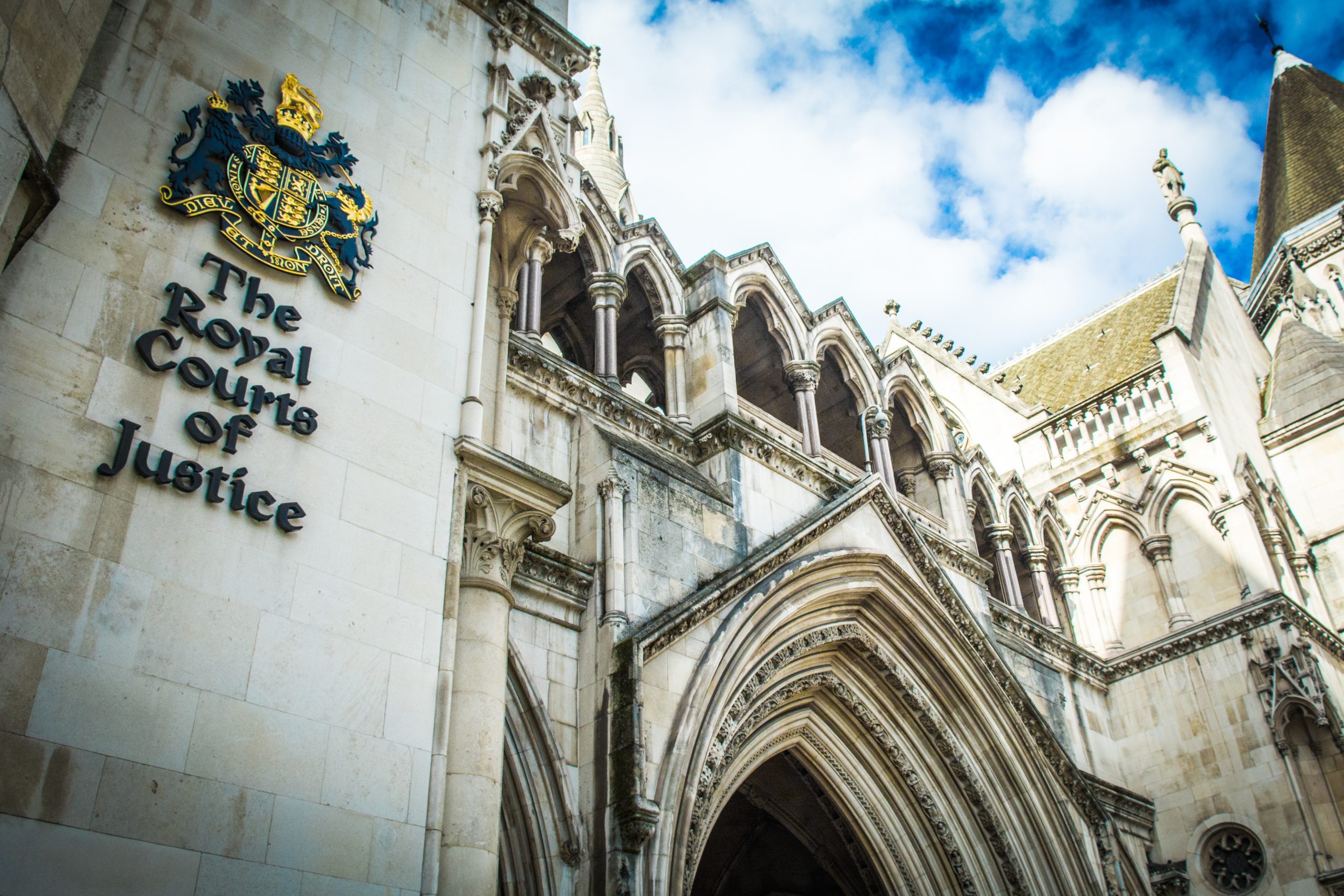
The High Court has scheduled an urgent two-day hearing at the Royal Courts of Justice on the Government’s changes to inheritance tax for family businesses and family farms.

The hearing is scheduled for the 17-18 March and will be heard by a panel of senior judges in the Divisional Courts.

The Claimants behind the Judicial Review against the changes to BPR and APR believe the Government acted unlawfully by failing to comply with prior promises to consult properly with affected taxpayers, and undertaking only a limited technical consultation in relation to certain narrow aspects of their APR and BPR changes.

Commenting on the announcement, Fiona Graham, COO Family Business UK said:

“Family businesses have known for some time that a High Court hearing on the changes to BPR and APR was imminent. Owners will welcome this clarification that it will now be heard in March.

“The changes to BPR and APR for all family-owned businesses pose a material challenge to their long-term prospects. In the face of that uncertainty, businesses have paused and cancelled investment and jobs as a result of the policy change.

“Family businesses crave certainty—it underpins their long-term approach. We will continue to support our Members and all family businesses to ensure they have the clarity they need to thrive as a multi-generational business.

FBUK meets Scottish policymakers

With elections on the horizon, one message is coming through loud and clear:

politicians want to hear from family businesses – and they are ready to listen.

Matt Jaffa, FBUK Policy Director


Following our visit to meet Welsh politicians at the Senedd in January, Family Business UK’s policy and public affairs team has continued engagement across the Nations & Regions with a productive trip to Edinburgh.

The Scottish Parliament elections on 7 May are expected to bring significant political shifts. With the economy ranking as the top concern for Scottish voters, the voice of business – and particularly family business – has never been more important.

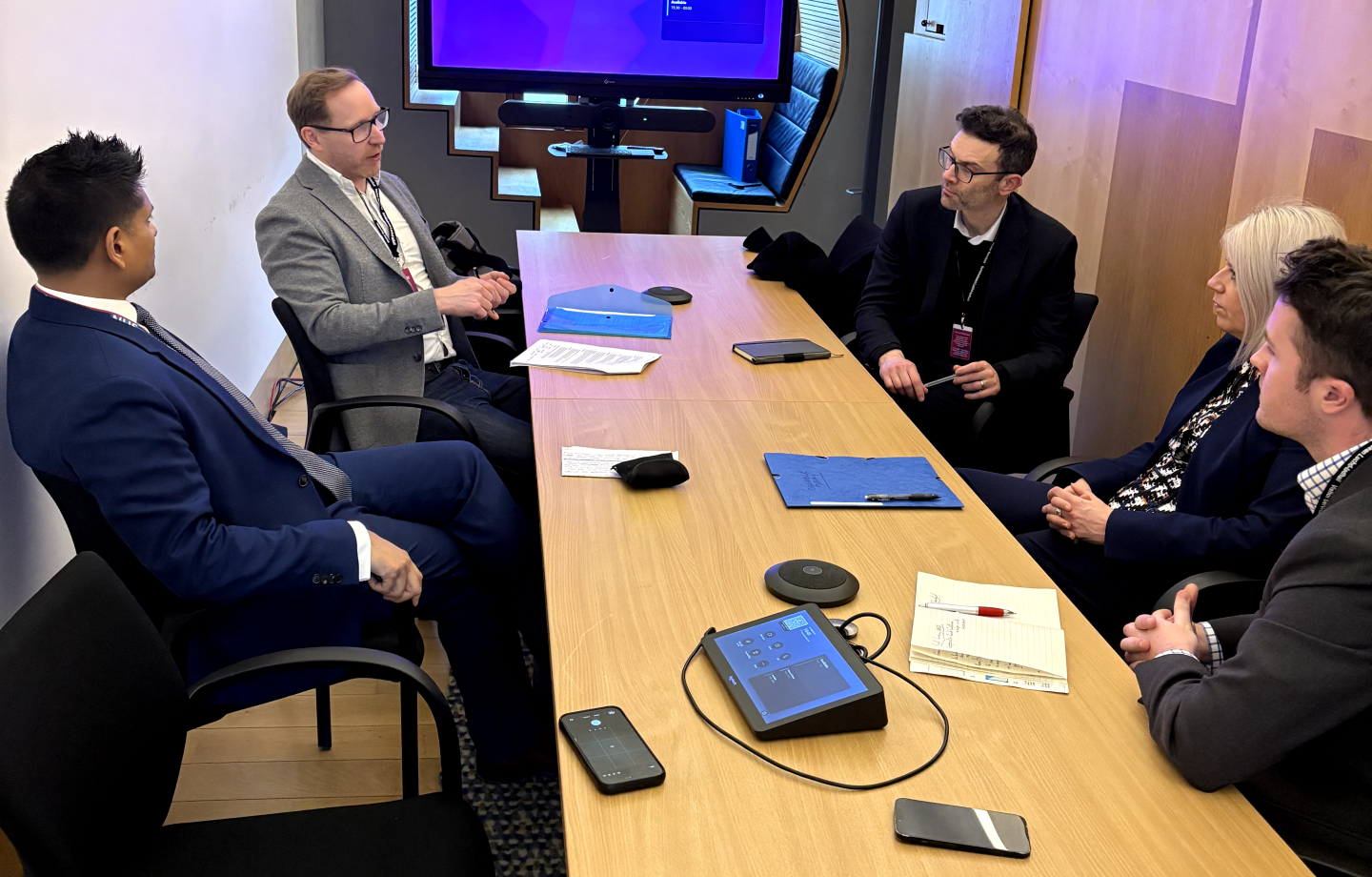
Our visit to the Scottish Capital began with a roundtable hosted by the Business Growth Fund and led by the Scale Up Institute. Senior advisers from the Treasury joined us to discuss growth, investment, and the tax policies needed to support thriving businesses.

We were particularly pleased to have FBUK Member Ross McAlpine join us for this session to share his perspective on the impact of Business Property Relief (BPR) on investment, growth and tax receipts.

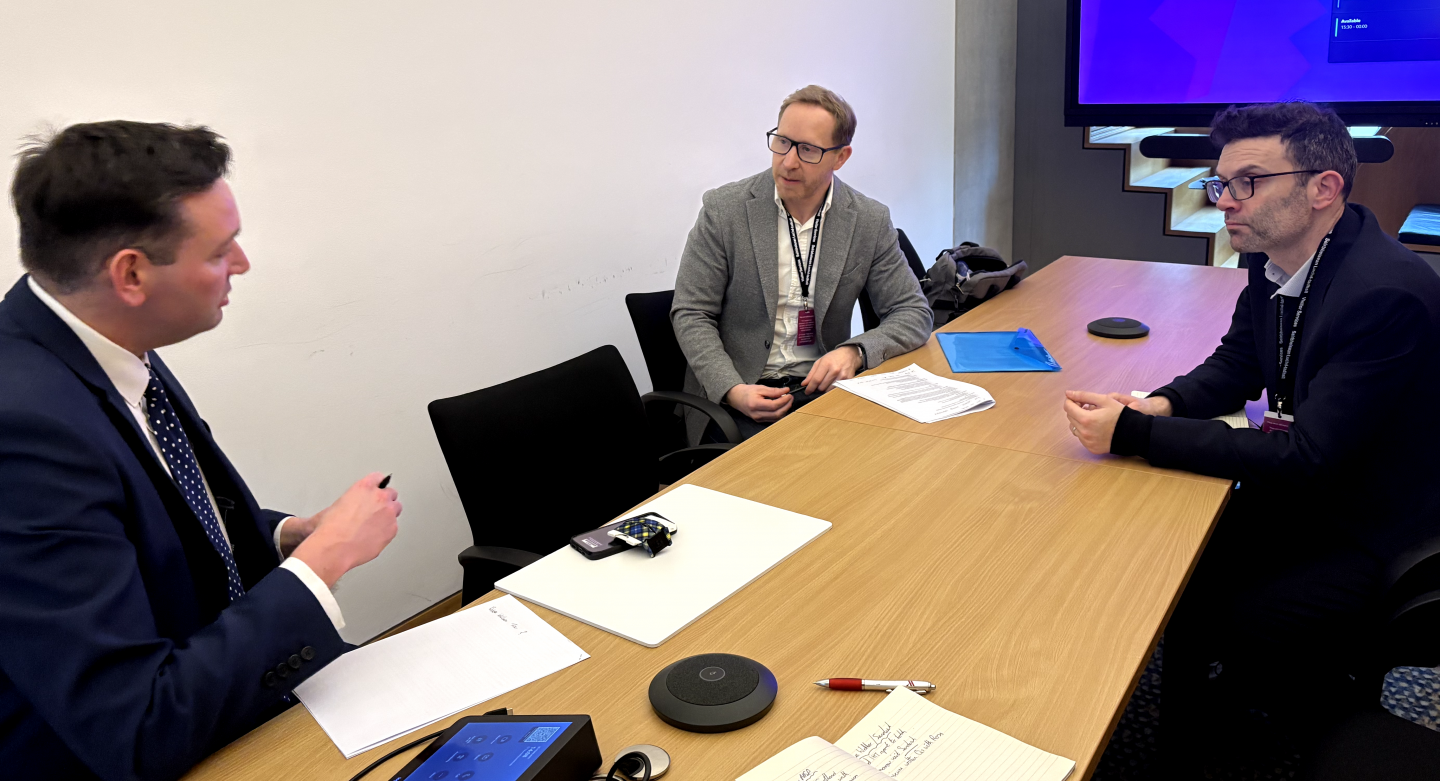
FBUK Member Ross McAlpine joins Matt Jaffa and Tom Ridgway meeting Sue Webber MSP and Dr Sandesh Gulhane MSP

While Scotland holds various tax raising powers, BPR and APR remain UK-wide tax policies administered from Westminster. This made the roundtable and our subsequent discussions an important opportunity to inform MSPs and their teams about the realities facing family firms.

Following this session, we joined four Members of the Scottish Parliament to explore key FBUK priorities. When we sat down with those Members, one thing became abundantly clear: politicians want to hear directly from family business owners. Hearing Ross share his lived experience had a powerful impact – so much so that MSPs immediately arranged a follow-up constituency visit to his business.

Ross McAlpine and Matt Jaffa meet Miles Briggs MSP

At FBUK, we will always champion our members in the corridors of power. But the most influential voice is yours – the voice of real family business experience. So, our call to action for members across Scotland, Wales, Northern Ireland, and England is simple:

Speak up and make sure your voice is heard.

How you can get involved:

  1. Join us for political meetings and roundtables (in-person and virtual),
  2. Take part in policymaking sessions with civil servants, such as our recent meeting with officials from the Treasury,
  3. If you’re visiting London let us know – we’ll contact your local MP and try our level best to arrange a meeting in Westminster,
  4. Tell us if you’d like support arranging a constituency visit – just as we facilitated a mayoral visit for a member this week.

Policy Summit

Ahead of that, join us at our inaugural policy summit: Building Britain for Generations, taking place in London on the 31st March which will provide a unique opportunity for FBUK Members to engage with policymakers, industry leaders, and key stakeholders on the pressing issues shaping family business thinking.

FBUK welcomes Lords report on IHT

FBUK Policy Director Matt Jaffa examines a key House of Lords report into inheritance tax reforms and finds that it echoes 15 months of warnings from Family Business UK


The House of Lords has published its report into the inheritance tax changes announced in the Autumn Budget 2024 – including changes to BPR and APR.

The  109‑page inquiry report: Inheritance tax measures: unused pension funds and agricultural and business property reliefs, and its conclusions echo many of the arguments FBUK has made over the last 15 months. Having given written and oral evidence to the inquiry, FBUK receives 12 name check references in the report.

In short: the Lords agree with what FBUK and our Members have said:

  • the policy is ill-considered,
  • lacked prior consultation
  • risks damaging the UK’s family business sector.

Commenting on the report, FBUK CEO Neil Davy said:

We welcome this report and urge the Government to immediately implement all its recommendations on BPR and APR. The damning criticism of the Government’s processes in formulating these policies highlight serious shortcomings which can only be properly addressed with a full consultation with family businesses and reversal of this damaging policy.

The fact the Lords acknowledge that these deficiencies result from the Government’s failure to properly consult with us and family businesses across the country before announcing the measures, shows precisely why and how the Government got this wrong.

Whilst we welcome the Government listening to arguments we have put forwards and the subsequent amendments it has made to these policies, they do not go far enough to protect thousands of jobs and hundreds of millions of pounds worth of investment delivered by British family businesses.

This is now the third high-profile committee in Parliament to reach a conclusion that this policy is deeply damaging to the family business sector which employs more than 15 million people and makes a significant contribution to the economic success of the country.

The Government must heed these warnings and reverse these policies, before they are implemented in April, to give Britain’s family businesses back their confidence to invest for the future and deliver the growth that remains this Government’s number one priority.


Some key takeaways from the report:

Unrealistic Deadlines

The report is clear: forcing estates to make their first Inheritance Tax payment within six months, including tax on unused pension funds, simply isn’t workable. The Committee recommends extending the deadline to 12 months.

The Committee found that Personal Representatives (PRs) and Pension Scheme Administrators (PSAs) lack the full information needed to calculate IHT accurately. Its message to Government is not to prioritise an April 2027 start date over getting the policy and the processes right.

BPR & APR: Government failed to assess the impact of the policy on family businesses

The Committee questions why the Government did not carry out a full impact assessment before announcing the policy change – a concern FBUK has raised repeatedly.

The Committee recommends cross departmental research (to include the Department for Business, Department for the Environment, Food and Rural Affairs and HMRC) to fully understand the consequences of the reforms.

The report calls for Government to measure the impact of the reforms over the next seven years. FBUK believe that seven years is too long a period of time, which for many family businesses with older owners, is not practical.

Impact of a death on company valuations.

In his oral evidence to the Committee, Steve Rigby, Chair of FBUK, warned of the devastating effect the sudden death of a key individual can have on the valuation of a business. The Committee has now taken this on board and is calling on the Government to examine this issue.

Valuations system not fit for purpose

FBUK highlighted that valuations can vary wildly between assessors, creating delays and financial risk for families trying to meet IHT deadlines.

The report urges the Government to assess levels of staffing and expertise within HMRC’s valuation teams before April 2026, given the expected surge in administrative workload.


This report is the third major Parliamentary committee, alongside the Environment Committee and the Welsh Affairs Committee, to question the Government’s approach to these policy changes.

As the Finance Bill makes its way through Parliament to pass the legislation, this report will give Members of Parliament extra ammunition to press the Government for further changes to the policy.

What happens next?

FBUK will be analysing the full detail of the report and briefing the Government in the coming days, but our position remains unchanged: we continue to call for a full reversal of the policy.

At the bare minimum, a comprehensive review is now essential to design a fairer, more workable system that protects jobs, growth and the long term resilience of the UK’s family business sector. And we will continue to put the voice of Members to Ministers and Parliamentarians as the Finance Bill continue its journey through the legislative process.

Finance Bill second reading: what you need to know

On Tuesday afternoon (16 December 2025), MPs in the House of Commons will debate and vote on the second reading of the Finance Bill – an important moment in the Bill’s journey through Parliament.

The second reading is the first substantive opportunity for MPs to debate the Bill as a whole and to decide whether it should proceed to the next stages of Parliamentary scrutiny. If a majority of MPs vote in favour, the Bill will move on to further stages where individual clauses can be examined and amended in greater detail.

Why this matters to family businesses

The Finance Bill gives legal effect to the Chancellor’s Autumn Budget proposals and contains a number of tax measures that will influence business planning in the years ahead. For family-owned businesses, changes to Inheritance Tax (IHT) and Business Property Relief (BPR) are the most significant.

What the second reading debate covers

At second reading, MPs will debate the overall principles and purpose of the Finance Bill, rather than individual measures or technical details. A treasury minister will open the debate, followed by speeches from opposition parties and backbench MPs. Crucially:

  • No amendments to the Bill can be made at second reading, so the vote is simply on whether the Bill should continue its passage through Parliament.
  • If the Bill passes, detailed examination and opportunities to propose changes will come at the committee and report stages in the New Year.

What happens next if the Bill passes?

Assuming a majority of MPs support the Bill at second reading:

  • It will enter the committee stage, where MPs can scrutinise individual clauses and propose amendments.
  • Following committee stage, the report stage offers further opportunities for changes to the Bill.
  • Finally, the Bill will return for a third reading before moving to the House of Lords.

The House of Commons rises for Christmas recess on 19 December so, any detailed scrutiny of the Bill will come in the New Year.

At the end of the second reading debate on Tuesday, the Government will set out the full timetable for the remaining stages of the Finance Bill, including key dates when crucial IHT legislation can be amended.

Is another rebellion on the cards?

In short no, not at this stage. Earlier in the month, Labour suffered a sizeable rebellion on Resolution 50 of the Finance Bill – the bit of legislation relating to the Government’s changes to IHT. We are seeing Labour MPs concerned about changes to IHT are increasingly speaking out – read FBUK’s analysis here.

Bills rarely fall at Second Reading, and so another rebellion on Tuesday is highly unlikely. However, MPs will have the opportunity to debate the broad principles of the Bill, including the government’s changes to BPR.

Write to your local MP

For family businesses concerned about the impact of new IHT rules, this means lobbying and engagement now is crucial to influencing the next stages.

This is your opportunity to write to your MP ahead of the debate on Tuesday. Download FBUK’s Finance Bill briefing for MPs here.

Find out who your local MP is here.

FBUK Magazine Edition 3 Published

Hot off the press, the latest edition of the Family Business UK magazine has been published and is available to download digitally.

Coming at a pivotal moment for family businesses, with important policy changes creating an uncertain outlook, this edition explores some of the key issues you should consider when planning for the journey ahead.

Download the FBUK Magazine

In this edition you’ll find:

  • Steve Rigby – the Chair of FBUK on his ‘North Star’ for FBUK,
  • Views from Westminster including:
    • Gareth Thomas MP the Minister for Services, Small Businesses and Exports,
    • Andrew Griffith MP the Shadow Secretary of State for Business and Trade,
    • Daisy Cooper MP the Deputy Leader of the Liberal Democrats and the Party’s Treasury Spokesperson,
  • William Lees-Jones – Managing Director of JW Lees on campaigning against the changes to BPR,
  • Sarah Dean – Chair of Noble Foods on leading with purpose and the importance of staying true to your values,
  • FBUK Corporate Partners Farrer & Co, Clarion and PwC give their tips on what you need to do to plan for the changes to BPR and APR.
  • We mark 500 years of family business history with FBUK Members Neville Trust (150 years) and Morning Foods (350 years),
  • Caroline Platt shares her lessons from conquering daring adventure challenges and
  • Holly Thallon Steenson on her journey into the family business.

All this, and you can read about our latest research looking at the impacts of the changes to BPR and APR.

Get Involved

If you’ve got news to share, an issue you think we should be covering or perhaps you fancy writing an article yourself, reach out and get in touch with a member of the team.

Advertise in the FBUK Magazine

Would you like to advertise your business and services to some of the UK’s premier family business owners? You can find more information below about securing space in future editions of the magazine. And, if you’d like to talk to us about other advertising, sponsorship and partnership opportunities, we would love to hear from you. You can contact a member of the team here.

Download our media pack

More Than 160,000 Family Businesses Call on Government to Consult on Inheritance Tax Change.

More Than 160,000 Family Businesses Call on Government to Consult on Inheritance Tax Change.

Embargo: 00:00 Monday 16 December 2024

Thirty two Trade Associations, representing more than 160,000 UK family-owned businesses and farms, have written to the Chancellor calling for a full and formal consultation on changes to Inheritance Tax announced in the Budget.

In an open letter, led by Family Business UK, the Trade Associations warn that changes to Business Property Relief (BPR) and Agricultural Property Relief (APR) will starve their members and the economy of investment, lead to forced, premature business sales and result in job losses right across the country.

Independent economic modelling commissioned by Family Business UK and conducted by CBI Economics suggests that far from raising revenue, the changes to BPR alone could result in a £1.25 Billion net fiscal loss to the Exchequer, lead to more than 125,000 job losses and reduce economic activity (GVA) by £9.4 Billion over the course of the Parliament.

The leaders of 32 Trade Associations* who have signed the letter represent family-owned businesses in all areas of the UK economy including builders, bakers, retailers, farmers, manufacturers, mechanics, food producers, funeral directors, pubs, restaurants, garden centres, growers, electricians and recruitment agents.

Neil Davy, CEO Family Business UK said: “The model of family business ownership is unique. It powers the entire economy from farming to finance and everything in between. This letter, and those who have chosen to sign it, are testament to just how widespread family ownership is, and how committed we are to speak up on behalf of our members.

“The changes to Inheritance Tax for family businesses and farms are a hammer blow. In many cases, those inheriting the business will have no alternative but to sell up when the owner dies, rather than continue running the business.

“In these circumstances, there is a real risk that businesses, assets and farms will be sold to foreign-owned competitors or investors who will pay little to no tax in this country.

“Already, family business owners are taking decisions to withhold planned investments and are putting recruitment on hold. Those working for family businesses are also extremely concerned, worried about how these changes might impact them.

“We do not believe that these are the outcomes the Government envisaged. So, we are calling on the Chancellor to meet and run a formal consultation, to find a solution that will protect the long-term interests of family businesses and farms and, crucially the jobs and investment they provide.”

Changes to BPR and APR announced in the Budget will mean that business and farm assets worth more than £1million will now be subject to Inheritance Tax at a rate of 20% when the business owner dies.

Family business owners and farmers will typically retain more than 90% of their personal wealth directly in the business, allocated to fund growth and investment.

To cover the Inheritance Tax liability, business owners will be forced to take money out of the business otherwise allocated to investment, typically via dividends (taxed at 39.5%). Added to IHT, this effectively creates double taxation.

Figures from HMRC suggest that around 500 family farms and 500 family businesses a year would be affected by the change. Analysis by CBI Economics suggests that three times as many family businesses (1,647) will adjust their behaviour each year to mitigate the change to BPR.

According to the CBI Economics, family businesses mitigating the cost of a potential future Inheritance Tax bill would be most likely to reduce investment and employment leading to an:
average reduction in investment of 16.5%
• average reduction in headcount of 10.2%
• average loss of turnover of 7.4%

Even for family businesses currently below the new £1million threshold for BPR, there is a striking impact on how they behave and plan to mitigate future impacts from Inheritance Tax.

Amongst these businesses:
55% expect investment to reduce with a quarter expecting it to fall by more than 20%, producing an average net reduction of investment of 12.2%
• headcount would reduce by 9%
• turnover could fall by 5.8%

There are 4.8 million family businesses in the UK employing almost 14 million people and contributing more than £200 Billion a year in tax revenues.

Download and Read the letter in full here.

END.

FBUK Publishes Economic & Fiscal impact of changes to BPR

125,700 Jobs and £9.4billion GVA Threatened by Inheritance Tax Change for Family Businesses.
Analysis Indicates £1.3billion Net Fiscal Loss to Government
Family Businesses Call on Government to Consult on the Changes

FBUK Publishes Economic & Fiscal impact of changes to BPR

Changes to the rules on Inheritance Tax for family-owned businesses could lead to a significant reduction in economic activity and lower tax revenues, as companies plan to cut investment and jobs according to new analysis.

Findings from an independent study by CBI Economics, the CBI’s economic consultancy division, on behalf of Family Business UK (FBUK) indicate that, over the term of this Parliament, the decision to cap Business Property Relief (BPR) at £1million could lead to more than 125,000 jobs losses (125,678) and reduce the value of goods and services produced across the economy (GVA) by £9.4billion.

Taken together, these reductions could mean that capping BPR at £1m could result in a net fiscal loss to the Exchequer of £1.3bn between 2026/27 and 2029/30. This is significantly lower than the £1.4bn gain in revenues estimated by the Office for Budget Responsibility (OBR) over the same period from the policy change to BPR alone.

The analysis by CBI Economics, part of which involved a survey of 234 family businesses, finds that over a fifth of family businesses (27%) with assets valued at over £1m expect to transfer the ownership of their business between 2026/27 and 2029/30 in a way that would incur Inheritance Tax. This is expected to lead to nearly 5,000 businesses making adjustments that have an impact on their activity.

To mitigate the additional tax liability the most common response from family business owners was to downsize, cut investment or reduce headcount.
The analysis indicates an:

  • average reduction in investment of 16.5%
  • average reduction in headcount of 10.2%
  • average loss of turnover of 7.4%

Fifteen percent (15%) of family businesses that expect to incur an Inheritance Tax liability say they will sell the business entirely, 9% say they will draw out extra cash from the business in the form of dividends (incurring additional tax at 39.5%), 6% would sell assets and shares to non-family investors and 4% would close, liquidate or relocate overseas.

The analysis shows that even for companies currently below the new £1million threshold for BPR, there is a striking impact on how they behave and plan to mitigate future impacts from Inheritance Tax.

Amongst these businesses:

  • 55% expect investment to reduce with a quarter expecting it to fall by more than 20%, producing an average net reduction of investment of 12.2%
  • headcount would reduce by 9%
  • turnover could fall by 5.8%

Neil Davy, CEO of Family Business UK said:
“Just as we’ve seen among the farming community in relation to APR, changes to BPR announced in the budget will fundamentally remove incentives among owners of family firms to invest in their businesses, and in many cases threaten their viability.

“The CBI Economics research concludes this will come at the expense of jobs, investment, and tax receipts into the Treasury. Downsizing of businesses, asset disposures, complete sale or liquidation are very real unintended consequences of this policy.

“Given a typical business will employ more people than an average farm, there’s a case to make that capping BPR may be even more damaging to the employment figures and the wider economy than capping APR.

“There’s a fundamental misconception that family business owners are hugely wealthy individuals, with large quantities of liquid assets or cash. Nothing could be further from the truth.

“As with farmers, owners of family businesses typically have more than 90% of their personal wealth directly tied-up in the business, allocated to fund growth and investment. To cover this tax liability, business owners will be forced to take money out of the business otherwise allocated to investment, typically via dividends (taxed at 39.5%). Added to IHT, this effectively creates double taxation.

“A common misconception is that BPR is a personal tax relief. In reality this is a tax on businesses, which no other model of business ownership is subject to.

“Government data, published alongside the Budget, forecasts that changes to Inheritance Tax on family business could raise £520m a year from BPR and APR, by the end of the Parliament. Based on data for 2021-22 the Government estimates that around 550 family businesses will be impacted by the change to BPR each year.

“FBUK believes that these figures significantly underestimate the impact of the change. The CBI Economics data support this, predicting the total number of businesses effected expected to change hands for 2026-2027 to be 1,647. Between 2026-27 and 2029-2030 is figure is 4,941, or 8.3% of all family businesses with assets valued at over £1m (59,814).

“Taking the Government’s own definition of SMEs, far from affecting a small number of those with the broadest shoulders, a cap of £1m will also affect many small and medium sized businesses who the Government are claiming to support. And without indexation, the £1m cap also means that more SMEs will fall within scope over time.”

William Lees-Jones, Managing Director of JW Lees said:

“The proposed changes will be a real blow to companies like JW Lees. It has always been our philosophy to invest our profits back into growing our family company resulting in significant investment and the creation of a large number of jobs.

“For us to have to divert funds into dividends to pay Inheritance Tax would be challenging and would inevitably reduce future investment in the company. It would also place our business at a considerable disadvantage to our competitors who tend to be listed or owned by private equity, sometimes overseas.

“We would urge the government to consult with businesses to look at all the potential unintended consequences of these proposed changes.”

Stuart Paver, Chair of Pavers Shoes added:

“Life was simple before the budget. I received shares from my parents, I held onto them and helped grow the business, reinvesting in the long-term growth of the company and then handed it on. But now I must spend time and money looking at how I can avoid leaving a huge burden to the next generation and the outcome is very unlikely to match the Chancellor’s desire for a growing economy.”

Lizzy Rudd, Chair of Berry Bros & Rudd said:
“We are a 326 year old family business, the oldest fine wine and spirits merchant in the UK and one of the oldest businesses in the UK.

“Throughout our long history we have always reinvested in the business rather than giving profit to shareholders. We pride ourselves in being a business that cares about our colleagues, our communities and our planet, and we follow the B Corp principles, having just applied for certification. This means we invest for the long-term for the benefit of all our stakeholders and have a reputation and heritage that is well known across the world”.

“Having Business Property Relief and being able to pass our shares down to the next generation without incurring Inheritance Tax has meant that we didn’t need to accumulate wealth outside the business, allowing us to continue to invest, providing employment and bringing people together from all over the world to the heart of London to share food, wine and conversation together.

“Inheritance Tax will threaten the future of the business and force us to think short-term to maximise returns to shareholders in order to build wealth outside the business to pay a future tax liability”

ENDS.

About Family Business UK (FBUK)
Family Business UK is the largest organisation dedicated to advocating for, promoting, and championing family businesses. It is movement of some of the most innovative, and best-known family businesses across the country, including a number of household names and global companies.

FBUK works to showcase the role and contribution family businesses make to communities across the country, and our wider economy.

FBUK is a not-for-profit organisation.

About CBI Economics
CBI Economics is the economic consultancy division of the CBI. We offer a suite of independent client services including bespoke economic analysis and business surveys. With unrivalled policy knowledge and business insights combined with economic expertise, we can develop a compelling narrative to help you achieve your desired outcomes – whether that be lobbying policy change, building a case for investment or demonstrating the impacts of your business on the economy, on society and on the environment.

CBI Economics conducted a survey following the changes to Business Property Relief (BPR) announced at the Budget. This survey attracted 234 responses from family businesses. The survey first determined the businesses that would be affected by the changes to BPR between April 2026, when the changes come into force, and April 2030. Affected businesses are those over £1 million in value and who are anticipating a share transfer or change of ownership in the period specified.

Businesses were asked how they expected the changes to affect their investment plans, turnover and headcount.

Primary survey data was integrated with additional secondary data collected from official and third-party sources. These informed the inputs to CBI Economics’ in-house economic and fiscal models, which were used to estimate the total economic impacts in Gross Value Added and Full Time Equivalent jobs, along with net fiscal impacts to the Exchequer. Total economic impact was derived primarily using the anticipated reductions in turnover, with CBIE’s dynamic economic model capturing the further implications this would have for supply chains and employee spending.

There is no growth agenda for Yorkshire without family businesses.

There is no growth agenda for Yorkshire without family businesses.

Thomas Martin, Chair Arco Ltd and the Yorkshire Regional Business Engagement Board

Right across Yorkshire, home-grown family businesses are wondering – what just happened? In 76 minutes, the Chancellor delivered a Budget that undermines hundreds of years of family business ownership in our region.

Yorkshire has a proud history of family businesses. The deep-seated values that we prize of hard work, responsibility, respect, community spirit run deep in businesses like mine, which has been trading in family ownership for 140 years.

Others like AW Hainsworth have been doing the same for 240 years, Bettys & Taylors 105 years, Howarth Timber 184 years. The list goes on.

But in the Budget the Chancellor put all this under threat by changing long-established policies that support us.

For the first time in almost 50 years, family businesses across Yorkshire will be subject to Inheritance Tax when the owner dies – something that is forcing many to wonder whether they will ever be able to pass on their business to their children. And whether their children will be able to afford to take them on?

Don’t get me wrong, I’m not arguing that family business owners shouldn’t pay their fair share of tax. We already do. Britain’s 4.8 million family businesses contribute more than £200 billion in tax every year – about a quarter of all taxes received by the Government.

But let’s be clear, for someone inheriting a family business, they are not taking on a prized Ming vase, family heirloom or nice house. It is the fabric of business. Family famers too are facing exactly the same threat. The tools of their business will also be taxed when they are passed to the next generation threatening food security and environmental management as assets are used to achieve maximum economic return.

The problem is that whilst Inheritance Tax is a tax on the individual, in the case of family businesses it becomes a direct cost to the company.

Take an average business valued at £8m, a family member inheriting it will now be expected to pay 20% tax on that (minus the first £1 million) to take it on when the owner dies. Not many people have that kind of money kicking around and so they will need to take a dividend from the company. That will be subject to additional tax rate of 39.5% meaning companies will be double taxed.

The cost will ultimately be paid through reduced investment, less growth, fewer jobs and more redundancies as companies divert money to cover a future tax liability. In worst case scenarios, neither the business or family member can pay the Inheritance Tax and will be forced to sell the business, or parts of it.

When you add on the massively increased burdens this Government is placing on business through increased employers National Insurance contributions, new employment legislation and minimum wage, the changes to Inheritance Tax are draining what little confidence we had left.

Business needs confidence. It imbues a sense of certainty that underpins the very nature of private enterprise, allowing companies of all sizes to take risks and invest in both their communities and people to generate long-term prosperity.

Home-grown family businesses do that better than most. We aren’t ‘here today gone tomorrow’ fly-by-nights. We take pride in what we do. It is our name above the door and we work hard to protect that whilst respecting our employees and the communities we serve.

The sheer bloody mindedness of Yorkshire folk has done them proud for generations. The fact there are so many long-established family businesses here in Yorkshire is testament to that. We are a proud county with a rich history.

But in a 76 minute Budget speech the Chancellor has unwound hundreds of years of patient planning and investment that will likely result in lower taxes, lower growth and lower employment.

I cannot believe this is what the Chancellor had in mind when she announced the closing of what she and others have called a “loophole.” As the Chairman of a long-established family business, and a director of Family Business UK, I am calling on the Government to consult with us to reverse this change and protect our proud heritage of family business.

END.

This article originally appeared in the Yorkshire Post on 14th November 2024.

Find out more about FBUK’s Back Family Businesses Campaign here.