FBUK comments on IFS Green Budget

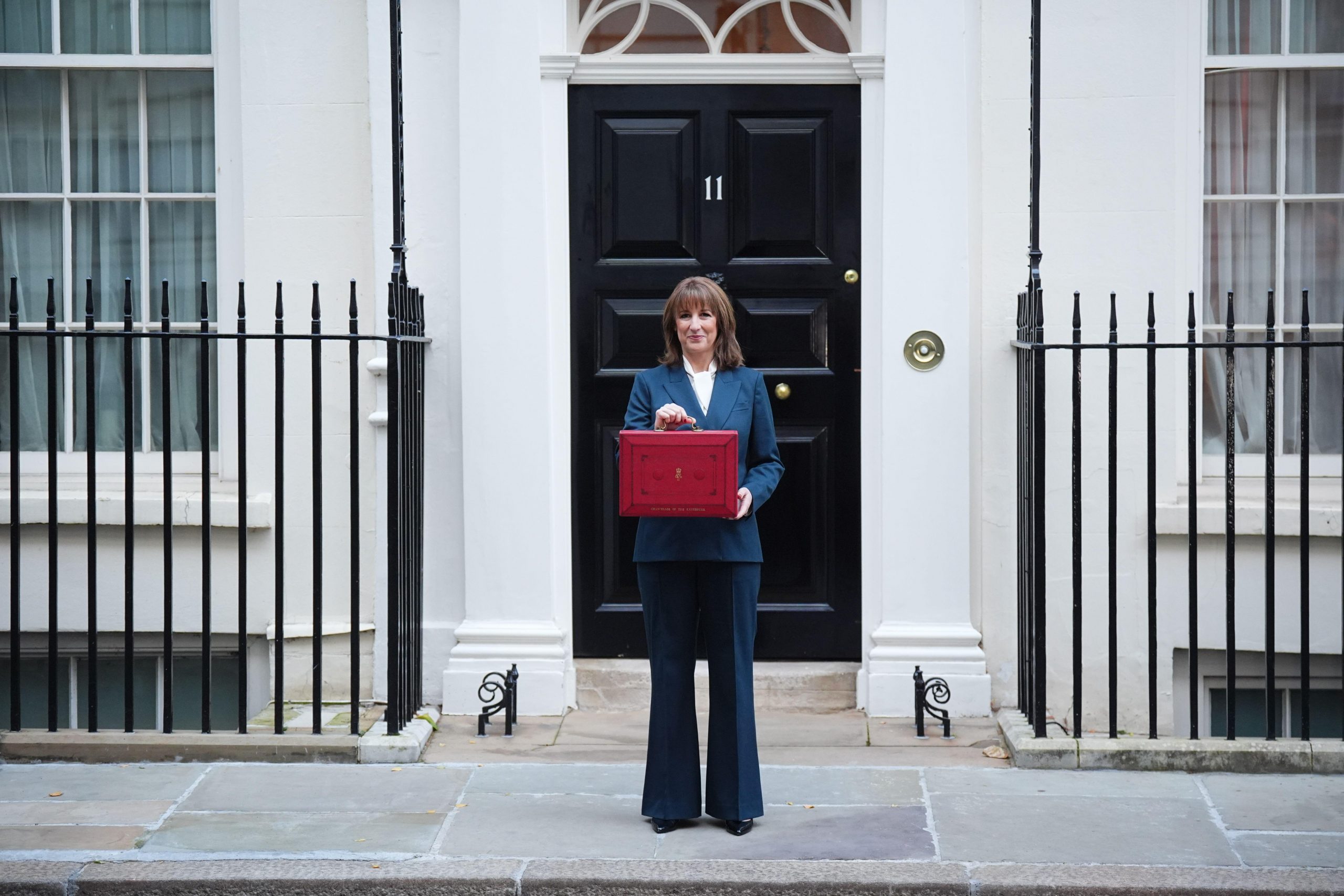
Ahead of the Autumn Budget in November, the Institute for Fiscal Studies has published its Green Budget which looks at the challenges faced by the Chancellor and suggests areas for consideration.

Responding to the Green Budget, Fiona Graham, Chief Operating Officer at FBUK, said:

The IFS has suggested, along with many others, that taxes will have to rise. We welcome their suggestion that any changes to tax policy should improve the design of the tax system, not worsen it.

The IFS is also right to say that many of the tax-raising options open to the Chancellor, outside the ‘big three’ of income tax, national insurance and VAT, would have particularly damaging effects on growth and welfare, so we urge the Government to carefully consider the unintended economic consequences of seemingly minor policy tweaks.

Whilst we welcome the IFS’ objection to an annual wealth tax, we are concerned that changes to other taxes on wealth – including areas such as Capital Gains Tax and the rules on gifting – may well be in the Chancellor’s sights.

Any consideration of changes to wealth taxes must consider the particular needs of the owners and shareholders in family businesses – and the valuation of their assets. Treating a share in the fabric of a business in the same way as personal wealth would be hugely damaging to the millions of family-run enterprises that deliver growth and employment across the country – as we have seen from the changes to BPR and APR unveiled last year.

Private and family-owned businesses are the backbone of the UK economy, employing more than 15 million people and contributing hundreds of billions in tax.

Announcements made during last year’s Budget have left many facing considerable challenges. The UK’s growth agenda, which FBUK members back completely, will only succeed if changes to fiscal policy are used to strengthen, rather than undermine, the long-term foundations of family enterprises.

FBUK responds to Finance Bill consultation

Family Business UK has reiterated its concerns over the changes to Business Property Relief (BPR) and Agricultural Property Relief (APR), warning of the consequences of the proposed policy changes on investment, succession planning, and the long-term success of family-owned enterprises.

In evidence submitted to the House of Lords Finance Bill Sub-Committee, FBUK warns that the policy reforms risk undermining Britain’s family business sector with many firms still ill-prepared for the policy change.

In its submission FBUK warns:

  • the policy risks having a chilling effect on the UK economy – which could result in 208,000 full-time jobs lost, a near £15billion reduction in GVA and a net fiscal loss to Government of almost £2bn in this Parliament.
  • of serious concerns around valuations and capacity within HMRC
  • the 6-month window for reporting and paying IHT is unrealistic for family businesses committed to long-term investments – creating a liquidity crisis among family firms
  • the timetable for implementing the reforms is too aggressive and lacks the necessary transitional provisions to protect family businesses.

Matt Jaffa, Policy and Public Affairs Director at FBUK said:

We have grave concerns about the changes to this pivotal policy for family businesses, and the speed with which the Government plans to implement them.

Family business often need years, not months, to rearrange their affairs. Implementing these policy changes in April 2026 creates a cliff-edge for family-owned firms and has enormous implications for the decisions they are being forced to take.

Outside of a technical consultation on Trusts, the wider reforms to BPR and APR were announced without any meaningful engagement with family business owners leading to widespread confusion, anxiety and mistrust.

A transparent and inclusive consultation process is now essential to ensure that tax policy supports – not undermines – the long-term success of family businesses. So, we are calling on the Chancellor to meet with us, our Members and stakeholders and co-design a policy that balances fiscal responsibility with economic sustainability.

FBUK Members can read our full submission to the House of Lords Sub-Committee in the Policy area of our website.

FBUK unveils Corporate Partnership with Julius Baer International

Family Business UK (FBUK) is delighted to announce a new corporate partnership with Julius Baer International, the UK-entity of the global wealth manager with roots as a family business.

FBUK has established partnerships with carefully selected and highly respected organisations that provide compelling professional services to family businesses.

They are critical allies and supporters of our work with family businesses, to ensure generations to come inherit a more prosperous, inclusive, and sustainable future.

Founded in Zurich in the 1890s, the Julius Baer Group has managed wealth and served clients as a trusted, truly personal and holistic advisor for more than 130 years.

Jonathan Dobbin, Head of UK Regions, Julius Baer International said

With a deep-rooted heritage as a family-owned business, we are proud to further demonstrate our commitment to supporting entrepreneurial families across the UK through our new partnership with Family Business UK, a not-for-profit organisation dedicated to championing the interests of family enterprises.

At Julius Baer, we have teams across the UK who have worked closely with entrepreneurs, their families, and their businesses for many years. In doing so, we have become acutely aware of the challenges business leaders face around governance, next generation planning, wealth structuring and philanthropy.

This collaboration with Family Business UK reflects our dedication to engaging meaningfully within the communities we serve. By combining our highly personal service, local market insight, and global capabilities, we aim to support family businesses through every stage of their journey – today and into the future.

We look forward to being a part of this important community.

Neil Davy, CEO Family Business UK said

We’re delighted to welcome Julius Baer to FBUK and join our growing community of Corporate Partners.

As a business rooted in family ownership and family values, they pride themselves in putting the interests of their clients, and their long-term success, front and centre.

We look forward to working closely with them over the years ahead supporting FBUK Members prepare for changing markets and growing risks.

For further information on how Julius Baer can support your family business, and to contact them, visit their page on our website.

Find out more about FBUK’s support to the sector, and our carefully selected Corporate Partnerships, including Julius Baer, providing meaningful support and services to UK family businesses at www.familybusinessuk.org


Family Business to National Role Model: The Timpson Story

Sir John Timpson CBE is one of the UKs most successful family business entrepreneurs. Sir John delivered the opening keynote speech at our 2025 Annual Conference. Afterwards, Sir John spoke to FBUK’s Martin Greig.


For the last 27 years, Sir John Timpson CBE, has not told anyone what to do, at least not in his capacity as Chairman and Director of a family business which has become one of Britain’s largest and most successful.

Not telling people what to do is one of just three rules that all employees of Timpson Group are expected to observe. The other two are: Look the part (wear the uniform, turn up on time) and put the money in the till!

These rules are fundamental to Sir John’s philosophy of upside down management – a philosophy he introduced years ago when he removed the company’s Head Office (the building remains but it is no longer called the Head Office) and the role of managers was transformed in one of supporting and empowering front-line colleagues to deliver outstanding customer service.

“We do things differently at Timpson. We are a retail services businesses which is about people serving people. We have a lot of very good day to day managers and they succeed by looking after colleagues, not by telling them what to do.”

Every Timpson shop displays a notice carrying a message from Sir John:

The colleagues in this shop have my complete authority to do whatever they want to give you an amazing service.

timpson family business

It is a message that conveys a culture of trust in people and values that runs through the heart of Timpson Group – a culture which has been pivotal in creating one of the country’s best-known, and loved, family business.

History

Sir John became a Director of Timpson in 1969. His first role in the business was buying women’s fashion shoes – a “juicy role” as he recalls, not too high up in the business but one he found great fun. “You might think I have not got an ounce of fashion style in me but I worked out how to do it. It was like playing a game, like doing a crossword puzzle every day. And I think I was quite good at it.

“But I am someone who works on instinct and I had not realised how much I do that until someone drew a cartoon of me. Everyone else [in the picture] was sitting looking at budgets and marketing reports while I was just sitting looking into a crystal ball.

Cartoon characters are very important at Timpsons (more about that below). What isn’t very important however, are budgets and marketing reports. In fact, they do not exist. The family business does not produce budget forecasts, there are no KPIs, they do not advertise or conduct market research and Board meetings last no longer than two hours.

“When I was at Barclays, Board meetings went on for two days with lots of people reporting on decks that went on and on. We just do not do that sort of stuff. I mean, we do not do budgets because I cannot see the point of them.”

Instead, at 82 years of age, Sir John spends his time visiting hundreds of colleagues at Timpson shops up and down the country getting to know them and hearing how things are going where it matters most.

“It is the thing the makes the difference. Our success depends on the people who work in our shops. Everything else we do is really just backing them up – doing the things that makes it as easy as possible for them to deliver the service.”

Culture and Values

To help reward colleagues and create a special culture within the business, Timpson runs a myriad of schemes to say “well done” and “thank you.” From offering personal loans to those in financial trouble, incentives to stop smoking, meals out, football tickets, scratch cards, paying for driving lessons, a free weekly lottery with prizes of up to £1,000 and a programme to make colleagues “Dreams Come True.”

When this particular scheme was launched in 2013, Timpson committed to making one colleague’s dreams come true. Every month it now funds many more including everything from dream holidays to weddings in Las Vegas and several divorces. “They have never been cheap dreams” quips Sir John.

Timpson also employs a Director of Happiness. A “magic angel” in Sir John’s words who, despite her title, spends most of her time supporting colleagues who are in distress.

Understanding this unique culture is key to Timpson’s continuity. Maintaining it is so important that the company no longer hires external candidates into area management teams preferring instead to promote those who already understand what makes the company tick.

“We are still smarting from an appointment we made several years ago” recalls Sir John, “a person from another business who brought new ideas and an old style of management. That person cost us a lot of money and upset many colleagues in the process.”

Positive Personalities

Timpson family business assessment form

Timpson has also stopped hiring skilled key cutters and shoe repairers preferring to hire people with positive personalities that fit with the culture and values of the business.

Sir John has devised a set of Mr Men cartoon characters for the purpose of interviewing prospective candidates. Rather than grill them on their work history and the detail in their CV, the interviewer simply ticks the box of the Mr Man character most like the person sitting opposite them. “It may not be a process that gains the approval of most HR Directors, but it works for us” says Sir John.

The process has been crucial in enabling Timpson to proactively recruit ex-offenders, something for which Sir John and his son James have, quite rightly, won many plaudits. About 500 colleagues have joined Timpson directly from Prison. Many have been with the business for more than 10 years and several have progressed to important management roles.

Sir John believes that being a family business has helped them to have the courage and vision to employ ex-offenders.

“I met a guy recently who said to me, this is the only job I have ever had. I went to prison at 18 and I came out at 33. My way out was the scheme you were running, and I have been with the business ever since.

“We now have a loyal employee that nobody else would touch, and he is great. He is on the area team and on his way up the ladder. It is all about hiring the right personalities.”

Total Control

Timpson Group is now a 6th generation family business, founded in 1865 or 1869, depending on how you measure it. The company is totally family-owned.

But like with many families, the Timpson family had a bust up. Theirs, in 1973, took place in the Board room and resulted in much of the equity in Timpson being sold to United Drapery Stores. For the following 10 years, Timpson was no longer a family business.

“It was very unpleasant” recalls Sir John. “But it happened. This was the reality of being in business. You thought it was the end of the world but, actually, it did us a lot of good.

“As a result, I managed to get 100% of the equity back and it hastened our decisions to change the business. So, yes it was painful. But it would have been even more painful if my wife had not told me to fight it.”

Perhaps because of what happened in the past or because of his profound love for the business, or both, owning 100% of the equity in Timpson is important to Sir John.

“To remain in charge of a long-standing family business you need to be in control of the equity – and total control means 100%, and despite the unwelcome prospect of inheritance tax I will do whatever I can to ensure that total family control remains for generations to come.”

Several years ago, Sir John made a TV programme about Timpson with the entrepreneur and Dragon’s Den star Peter Jones. During the programme Peter Jones asked Sir John “what’s your exit strategy?” “I’m going to die” replied Sir John!

Is that still his plan? “Yes,” he says emphatically. “Absolutely! What else is it going to be? Can you imagine selling this business to someone else who is just going to screw it up?”


This article was first published in the FBUK Magazine. You can read and download the full magazine below.

Read FBUK Magazine.

FBUK September Magazine Published

The latest edition of FBUK’s magazine has been published and is now available to download.

Full of insights, analysis, feature interviews, Member news and highlighting important Member anniversaries, the magazine is now published every three months.

Download September’s Magazine

Following his keynote address to the FBUK Annual Conference in June, the magazine profiles Sir John Timpson, one of the UKs best loved and most successful family entrepreneurs. You can read that article online too.

In addition you’ll find:

  • Views from the leaders of European Family Business and FBN Sweden on how these regions are dealing with and have dealt with inheritance tax for family businesses,
  • An Autumn Budget look ahead from Chris Romans, Chair of FBUK’s Tax Committee,
  • Mark Samworth, Chairman of Samworth Brothers on saving the unique status of an iconic pork pie,
  • Peter Leach on Family Councils
  • And we celebrate with FBUK Members who’ve received prestigious awards

Get Involved

Do you have news about you or your family business you’d like us to cover? Perhaps there’s an issue you’d like to read about or you sharing your views on an important subject? Drop us a line and contact the team.

Advertise With Us

Would you like to advertise your business and services to some of the UK’s premier family business owners? You can find more information below about securing space in future editions of the magazine. And, if you’d like to talk to us about other advertising, sponsorship and partnership opportunities, we would love to hear from you.

Download More Information

Family Business Week 2025 Launches

Family Business Week is back for 2025.

Returning in November this year, FBW25 will shine a light on the vital role played by family businesses in creating sustainable, long-term growth and opportunities in every corner of the UK – and beyond.

24 – 28 November – find out more

This year’s theme, Global Legacies: Expanding Horizons for UK Family Businesses highlights the ambition and resilience of family firms as they look beyond borders to shape a connected, global future.

Growth Through International Trade

Around 11.5% of UK businesses export to more than 200 companies around the world. Those exports of goods and services are worth almost £840 billion to the economy.

But, despite the clear challenges of trading internationally, the potential for growth is enormous.

To succeed on the international stage family businesses need the right support – from policymakers, trade bodies, and partners to unlock exports, access new markets, and drive sustainable growth.

Events Through The Week

Join us for a week of events, insights, and stories from Westminster to shop floors as we showcase how family businesses power inclusive, long-term economic growth.

Whether you’re a business owner, policymaker, or partner, this is your chance to get involved, be inspired, and help shape the future of UK family businesses.

Head to the FBUK Events Page to find the latest events and to register your interest.

FBUK Events

FBUK responds to reports on Lifetime Gifts

FBUK says media reports the Government may be looking to change the rules on Lifetime Gifts in the Autumn Budget would be “an enormous disincentive” that would “further reduce investment and jobs.”

The reports were first published by The Guardian newspaper.

In response, FBUK CEO Neil Davy wrote to the paper saying:

New changes to inheritance tax, and their impact on Britain’s family businesses, will lead to further economic damage as owners again cut investment and jobs.

The Guardian’s article states that changes to IHT announced in last years’ budget may have a significant impact on how much money is raised by IHT, but it is unclear how they might alter behaviour.

Neil Davy continues:

Independent research conducted earlier this year, commissioned by FBUK and conducted by CBI Economics, has already answered these questions.

Responses from over 4,200 UK family business owners and backed by over 30 leading industry bodies, predicted that far from increasing tax receipts, capping APR and BPR at £1m will result in a net fiscal loss to the Treasury of £1.9 billion over the course of this parliament.

The research also predicted a reduction in GVA of £15 billion to the UK economy, and the loss of 208,500 full time jobs and as a direct result of the policy change.

And we know precisely how family business owners have behaved; 55% have already paused or cancelled planned investments (and a further 44% expect to do so); 23% have reduced headcount; 12% are contemplating selling their businesses or shutting shop entirely.

Our research remains the only credible assessment of the impact of changes to inheritance tax on family businesses in last year’s budget.

Another potential hit on family business through more IHT policy changes will act as an enormous disincentive, and business owners will further reduce investment and jobs.

We continue to urge the Government to hold a formal consultation on the changes so that IHT policy changes can achieve their stated objective of raising tax receipts, whilst continuing to protect family businesses and incentivise them to invest and support badly needed economic growth.

You can read and download a copy of our research by clicking the image below.

Celebrating 130 Years with Gordon & MacPhail

“Our future is shaped by what we do today and today reveals what we did in the past”

By Neil Urquhart, Chairman of heritage UK brand Gordon & MacPhail


From humble beginnings as a grocer in Elgin to purveyor of the finest and rarest Scotch whiskies enjoyed by enthusiasts around the world, Gordon & MacPhail has grown significantly since our family-owned UK brand was established over 130 years ago.

Heritage UK brand Gordon & MacPhail was established on the 24 May 1895 by James Gordon and John Alexander MacPhail as a family grocer and purveyor of the finest teas, coffees, groceries, meats, cheeses, wines, spirits and Scotch whisky.

These types of merchants were a feature of the era, with Johnnie Walker of Kilmarnock, Chivas Brothers of Aberdeen or Matthew Gloag and Son of Perth; all starting out as high-quality grocers, wine, spirits and whisky merchants, bottling and selling their own ‘house’ blends. These businesses focused on blended Scotch Whisky and today these ‘house’ blends are enjoyed throughout the world.

Gordon & MacPhail took a different path, choosing to specialise in single malt whisky.

Licensed bottlers

In the first year of trading, my great grandfather, John Urquhart, joined to assist with the whisky side of the business. John became well versed at negotiating with the distillers and blenders of the day. They bottled several single malts under license from distilleries that are now established household names.

He had begun to order new fillings to help the brokering business and for Gordon & MacPhail’s own label bottlings. John would become senior partner and sole owner of the business in 1915. Since this time Gordon & MacPhail has remained independent and owned by descendants of John Urquhart.

Relationships matter

George Urquhart

Forming strong working relationships with likeminded people and businesses is of huge importance to Gordon & MacPhail. John’s son George, my grandfather, joined the business in 1933 and together father and son forged relationships with, not only distillery owners around the region, but also with sherry producers in Spain to acquire sherry for bottling and casks for sending back out to distilleries to be filled with new make spirit.

Whilst the industry focused on blended Scotch Whisky, John, and George, went against the grain. They chose to bottle whisky as single malt and leaving casks to mature for longer than was the norm.

The Father of Single Malt

Acclaimed whisky writer, Charles Maclean MBE described George Urquhart as the ‘Father of Single Malt’. Mr George as he was known by many, learnt the arcane knowledge about evaluating the quality of a whisky. Moreover, he learnt how to mature a good whisky first hand from his father.

He applied that knowledge to construct a solid whisky business, which enjoys an unrivalled position in the whisky industry today. He shrewdly forged long-term contracts for new fillings with distilleries in the post-war period. Gordon & MacPhail enjoys the benefits of the long-term approach adopted through the generations of a family owned UK brand; typified by our Generations Range of world class long aged single malts. Furthermore, our range of rare old single malts is unparallelled having won great acclaim and many awards through the years.

Gordon & MacPhail UK brand
Gordon & MacPhail 80-Years-Old from Glenlivet Distillery

Growth continues

Furthermore, as John brought his son into the business, George’s children joined Gordon & MacPhail. Together, Ian, David, Michael and Rosemary, grew the company, expanding from the grocery business into wholesaling wines, spirits and whiskies throughout Scotland and the UK.

UK brand Urquhart family
3rd Generation of the Urquhart family – Michael, Ian, Rosemary and David

From the early years of the business, Gordon & MacPhail exported whiskies to markets in Europe – in particular Italy and France – and during the second world war to the USA. The international business grew as Gordon & MacPhail’s whiskies gained further popularity around the world. In 2009 and again in 2013 the company was awarded The Queen’s Award for Enterprise in International Trade.

Today, members of the 4th generation of the Urquhart family work for the business alongside over 150 colleagues and the company’s products are enjoyed in more than 40 International markets.

Becoming a distiller

UK brand distillery
Benromach distillery

It was always a desire for the company to become a distiller. This ambition became a reality in 1993 as the company purchased Benromach Distillery in Forres.

Further distilling capacity was added to the company’s estate in 2020 when the construction of The Cairn Distillery began. It started on the outskirts of Grantown-on-Spey, before distilling commenced in May 2022. Additionally, the Benromach range is handcrafted using traditional working practises by skilled distillers using the finest Scottish barely and pure spring water from the nearby Romach hills.

The Cairn adopts a modern approach the ancient art of whisky making, having started distillation in the spring of 2022. While we wait until future years to release a single malt from The Cairn, we have created a portfolio of blended malts, called CRN57°, to provide whisky explorers the opportunity to discover the aromas and flavours of the future. Moreover, a high-quality visitor experience opened in autumn 2022 offering tours and tastings, aiming to attract visitors from around the world.

Our core principles remain as we look to the future

UK brand Gordon & MacPhail
Gordon & MacPhail working in partnership with Trees for Life in 2021

An unwavering commitment to quality, long-term thinking, investment for future prosperity, and the value of relationships, are all key principles. Moreover, these have helped guide success throughout the company’s long history and they will continue to drive our business as we look to the future. This helps us focus on growing the company’s brands in key international markets.