This second Family Business Pulse survey presents a mixed picture of the current operating environment for UK family businesses.
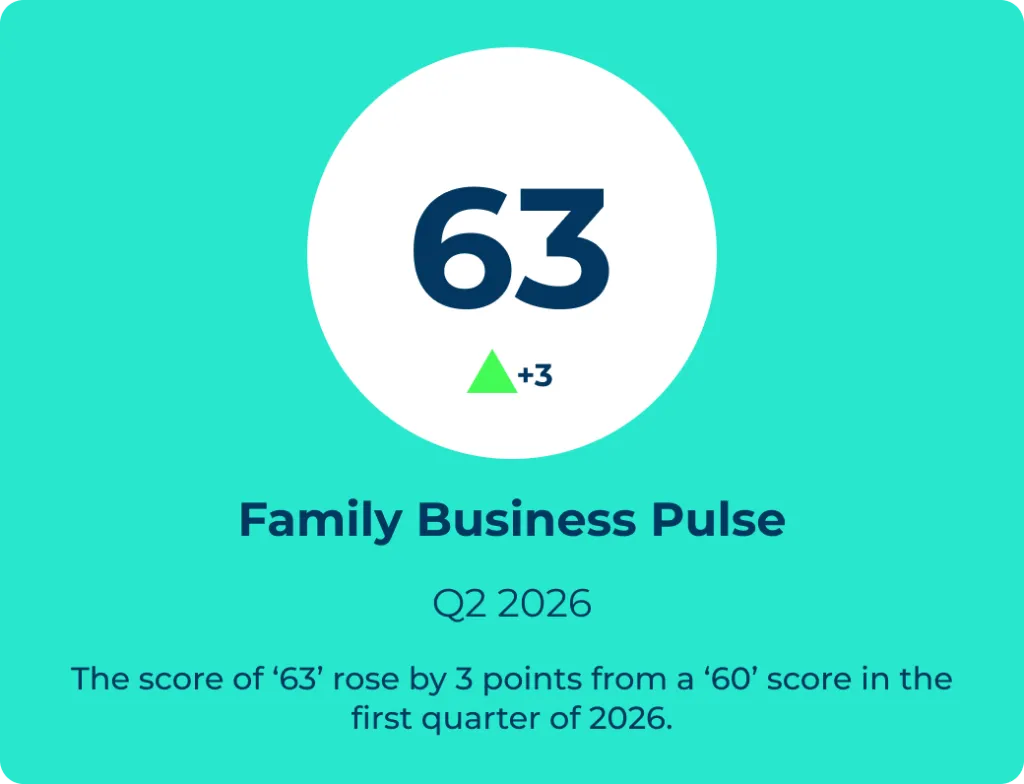
The overall Pulse score has risen slightly from 60 to 63, reflecting increased confidence in the UK economy following recent political change. There is also optimism that the new Government’s focus on “growth in every postcode” and place-based growth will recognise and support the vital role family businesses play in communities across the UK.
We call for a new era of action and collaboration with business, alongside a more receptive approach to family firms, including a reconsideration of the changes to Business Property Relief (BPR) and Agricultural Property Relief (APR).
When asked about what would increase their confidence in a new Prime Minister’s commitment to supporting family businesses [during his first 100 days], more than half (52%) said they wanted the new Prime Minister to address falling confidence, investment and employment by reversing the changes to BPR and APR, and to rule out increasing other taxes on business ownership, succession and investment.
FBUK is keen to work with Government to create employment opportunities for those furthest from the labour market, and family businesses stand ready to play their part. However, the Government must also listen to the concerns of family firms, many of which are pausing or cancelling recruitment plans because of the changes to BPR.
FBUK calls on Government to reintroduce full Business Property Relief and Agricultural Property Relief to support continuity of family ownership. Restoring 100% Business Property Relief, with no upper thresholds, would raise additional tax revenues for the Treasury by unlocking investment, driving business growth, and creating and sustaining jobs across the economy.
Furthermore, we call on Government to hold open and meaningful discussions on the policy in the short term, examining the behavioural and economic impacts on family businesses. This would provide Government with a clearer understanding of the consequences of the changes and allow for an informed reassessment of the policy.

Family business ‘Pulse’ score
The second quarterly Family Business Pulse reads a score of 63 out of 100 – demonstrating medium levels of confidence.
This Pulse Score is based on four index questions, each aligned to a core pillar
of Family Business UK’s work. Each question is weighted equally at 25 points,
creating a total index score out of 100.
To support analysis, we group results into three categories (low, medium
and high confidence) to enable comparison across performance levels and
highlight key behavioural differences.
Scoring system
50 or less
Low confidence
51-65
Medium confidence
66+
High confidence
The index covers four key areas: i) family ownership and succession; ii) business performance and confidence; iii) investment, growth and innovation; iv) confidence in the economy. Each area contributes up to 25 points to the overall score.
Family business confidence
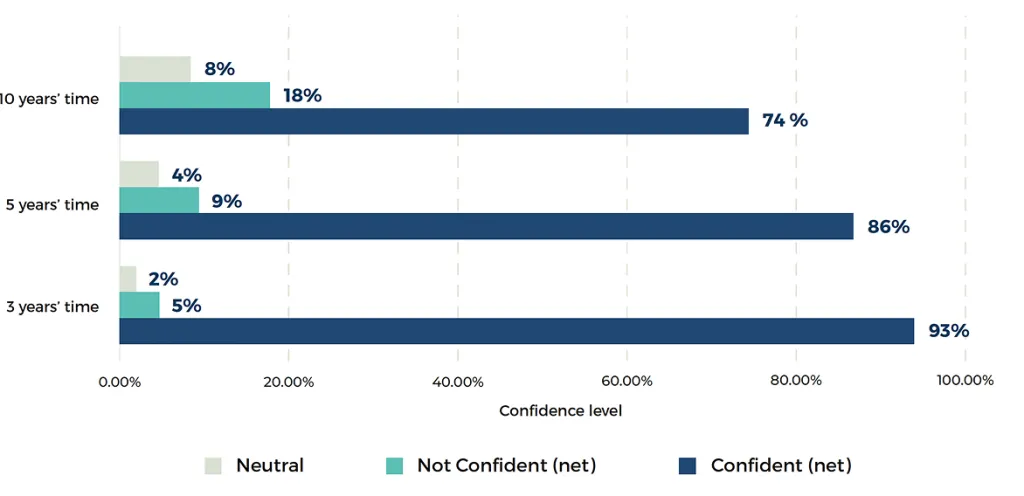
Looking specifically at family ownership, confidence remains high in the short term, with 93% of respondents believing their business will still be family-owned in three years’ time, although this has fallen slightly from 95% in Q1. Longer-term confidence remains unchanged from Q1, with 74% expecting their business to remain family-owned in ten years’ time.
FBUK has recently undertaken work on midmarket scale-up businesses. These regionally rooted enterprises have the capacity to grow but are being held back by a policy environment that was not designed with their needs in mind.
A deeper analysis of this family business pulse data reveals a clear difference by business size: 69% of firms with 10 to 99 employees are confident they will remain family-owned over the next decade, compared with 87% of businesses employing more than 500 people.

Fig 1: How confident, if at all, are you that your business will remain family-owned over the next 3, 5 and 10 years?
Growth prospects
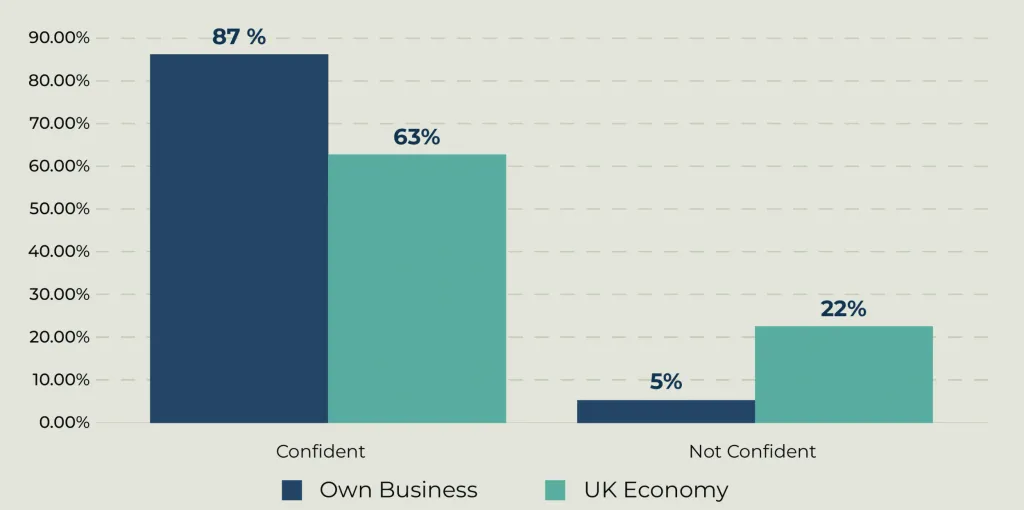
Family business owners continue to demonstrate strong confidence in their own organisations. Some 87% of family businesses said they were confident about their prospects over the next 12 months, up slightly from 84% in Q1.
Confidence in wider UK economic growth has risen significantly over the last quarter. Almost two-thirds (63%) of family firms said they were confident about the growth of the UK economy over the next 12 months, compared with 48% in Q1.
The net confidence score for the UK economy in Q2 (the proportion confident minus the proportion not confident) stands at +40%, compared with +17% in Q1.
Family businesses in the North and Yorkshire and the Humber were the most optimistic about UK economic growth, with 70% expressing confidence in the economy over the next 12 months, compared with 60% of businesses based in Greater London and the South East.
Smaller family businesses are less optimistic about the UK’s growth prospects. Just 37% of micro-businesses said they were confident about economic growth, compared with 78% of businesses employing more than 250 people.

Fig 2: How confident are you about the growth prospects of your business and the UK economy over the next 12 months?
Business sales
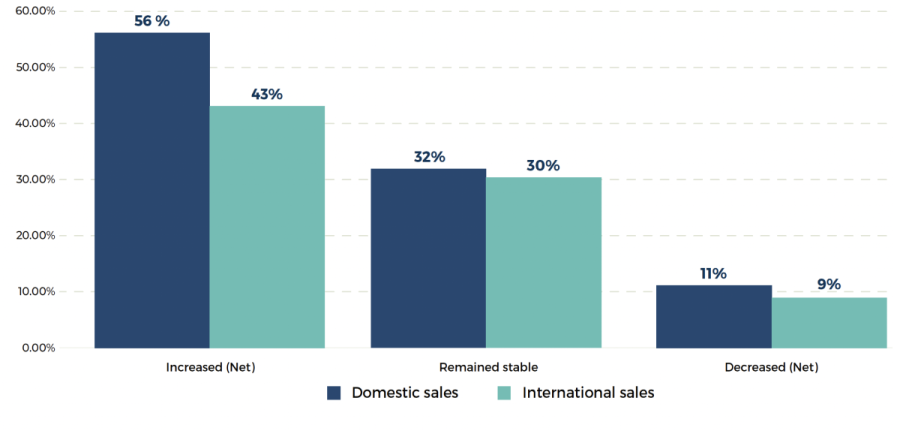
Our survey found that 82% of family businesses trade internationally. Among these businesses, 43% reported an increase in the value of their international sales over the last quarter, compared with 31% in Q1 (see Fig. 3 below).
Domestic sales also showed continued growth, with 56% of businesses reporting an increase, up from 50% in Q1. The net domestic sales score stood at +45% this quarter.
Sales performance varied by business size. The net domestic sales score for small businesses (1 to 49 employees) was +36%, compared with +49% for medium-sized businesses and +59% for larger businesses employing more than 250 people.

Fig 3: How did your sales perform over the last quarter against your predicted forecasts?
Business succession
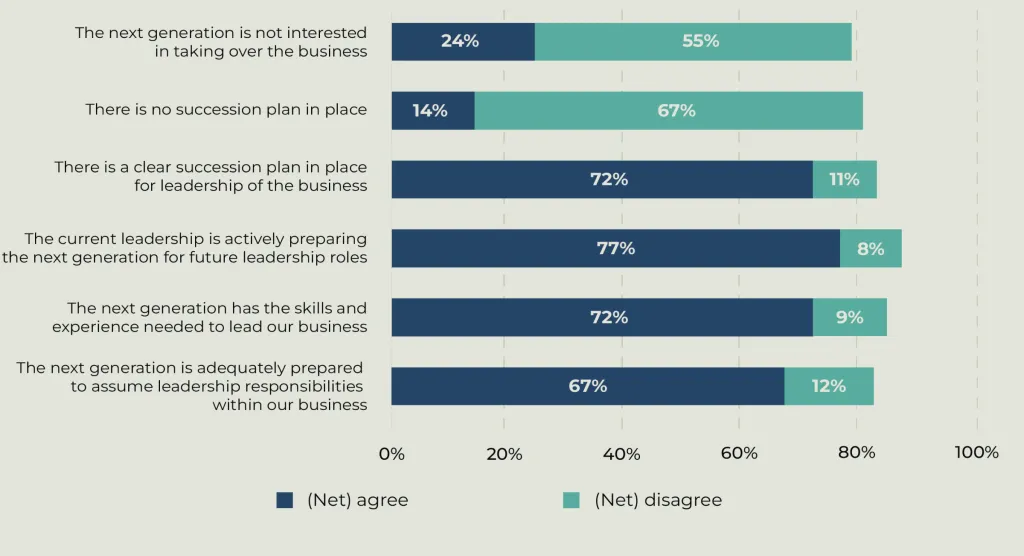
The Family Business Pulse shows that while Britain’s family-owned businesses often have clear succession plans in place, preparedness for leadership transition is less assured.
Although almost three quarters (72%) of family businesses believe the next generation has the necessary skills and experience, a smaller proportion (67%) believe the next generation is adequately prepared to take on leadership responsibilities.
Fig 5: To what extent do you agree or disagree with the following statements about leadership succession in your family business?

Tax factors
The three tax factors currently having the greatest immediate impact on family businesses are business rates (35%), employer National Insurance contributions (29%), and Inheritance Tax changes (27%).
Almost half (49%) of businesses in the retail, catering and leisure sectors identified business rates as the tax measure having the greatest impact on their business.
Looking ahead, the forms of tax support most likely to help family businesses grow over the next 12 months are Inheritance Tax reform (37%), business rates reform (37%), and reductions in employer NICs (36%).
Changes to Business Property Relief (BPR) and Agricultural Property Relief (APR) remain a significant concern, ranking among the three most frequently selected responses for both immediate tax pressures and future tax support priorities.
More than four in ten (41%) small family businesses identified business rates as their most pressing immediate tax issue.
Among large family businesses, 30% said the Growth and Skills Levy (previously the Apprenticeship Levy) was having the greatest negative impact on their business. Only employer NICs (38%) and Inheritance Tax changes (38%) were cited more frequently.
For medium-sized family businesses, Business Rates (33%) and the National Living Wage/National Minimum Wage (28%) were identified as the most pressing cost and tax-related challenges facing their businesses.
Looking ahead, half (50%) of large family businesses said that Inheritance Tax reform would be among the measures most likely to support growth over the next 12 months. An equal proportion (50%) also identified a reduction in employer National Insurance contributions (NICs) as a key factor in supporting business growth during the coming year.

BPR / APR
Since changes to BPR / APR were announced, family businesses have invested significantly in legal and financial advice. Nevertheless, approaching two-thirds of family firms (58%) still expect to be affected by the changes.
Medium and large family businesses remain the most exposed: 65% of those employing more than 50 people say they will be affected by the changes.
The changes to BPR / APR have continue to impact jobs and investment. 24% of family businesses have deferred or reduced investment over the last 12 months while 23% have cut jobs or frozen recruitment.
These trends look set to continue. Over the next 12 months, 20% of family firms plan to reduce headcount or freeze recruitment.

Employment intentions
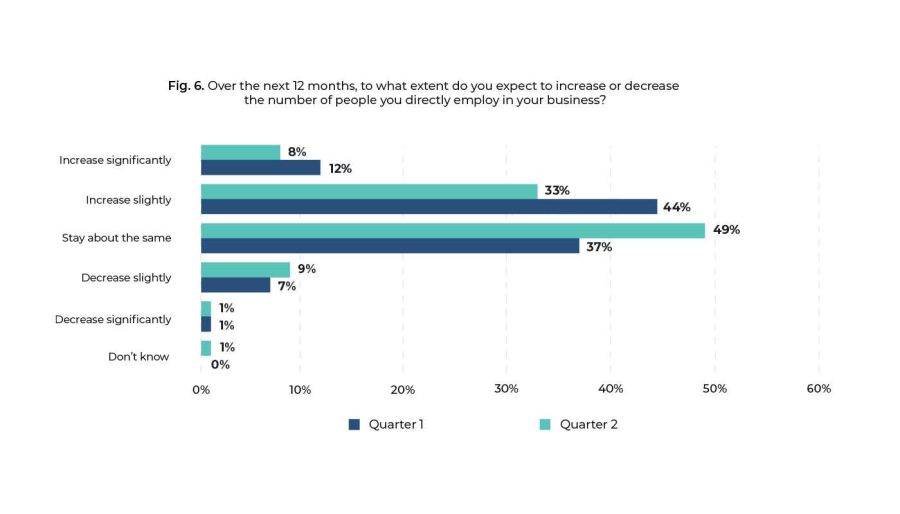
The net employment score for expected direct employment over the next 12 months (the proportion expecting to increase employment minus those expecting to decrease it) stands at +48% in Q2, up from +31% in Q1.
Fig.6 shows that family businesses remain broadly optimistic about employment prospects over the next 12 months, with 55% expecting to increase their workforce, compared with 41% in Q1.
However, the majority of those planning to recruit anticipate only modest growth. Of the businesses expecting to increase employment, 79% expect to make a ‘slight’ increase to staff numbers, while just 21% anticipate a ‘significant’ expansion of their workforce.
Businesses continue to face a range of barriers to hiring. The most significant challenges are rising employment costs (38%), high wage expectations (34%), a shortage of candidates with the right skills (28%), and uncertainty about future demand (26%).
These pressures should also be considered alongside the continuing impact of the changes to Business Property Relief (BPR) and Agricultural Property Relief (APR), which are influencing recruitment decisions across many family businesses.

Fig 6: Over the next 12 months, to what extent do you expect to increase or decrease the number of people you directly employ in your business?
Access to finance
Family businesses rely primarily on internal sources of finance, such as retained earnings and owner capital. This is fundamental to their business model and helps explain why the proposed changes to BPR and APR are so damaging.
Capital that would otherwise be invested in creating jobs, developing skills and training, and driving business growth will instead need to be retained to meet additional Inheritance Tax liabilities.
Table 2 show a gradual increase over the last year in use of access to external funding options, including debt finance (such as loans and credit facilities) and equity investment from external investors.
In Q2, 45% of family businesses that sought equity finance said it was easy to access, compared with 32% in Q1. At the same time, only 19% reported not accessing equity finance, down from one-third (33%) of respondents in Q1.
Access to equity finance appears to be particularly strong among larger firms. Nearly half (49%) of medium-sized businesses said they found it easy to access equity finance, rising to almost two-thirds (63%) of large businesses.

Table 2: Over the past 12 months, how easy or hard did you find it for your family business to access finance?
| Funding source | Easy (Net) | Hard (Net) | Neutral | N/A |
|---|---|---|---|---|
| Internal funding | 55% | 11% | 29% | 5% |
| Debt financing | 46% | 14% | 26% | 14% |
| Equity financing | 45% | 12% | 24% | 19% |
| Government grants | 38% | 22% | 24% | 16% |
| Other forms of finance | 34% | 10% | 34% | 22% |