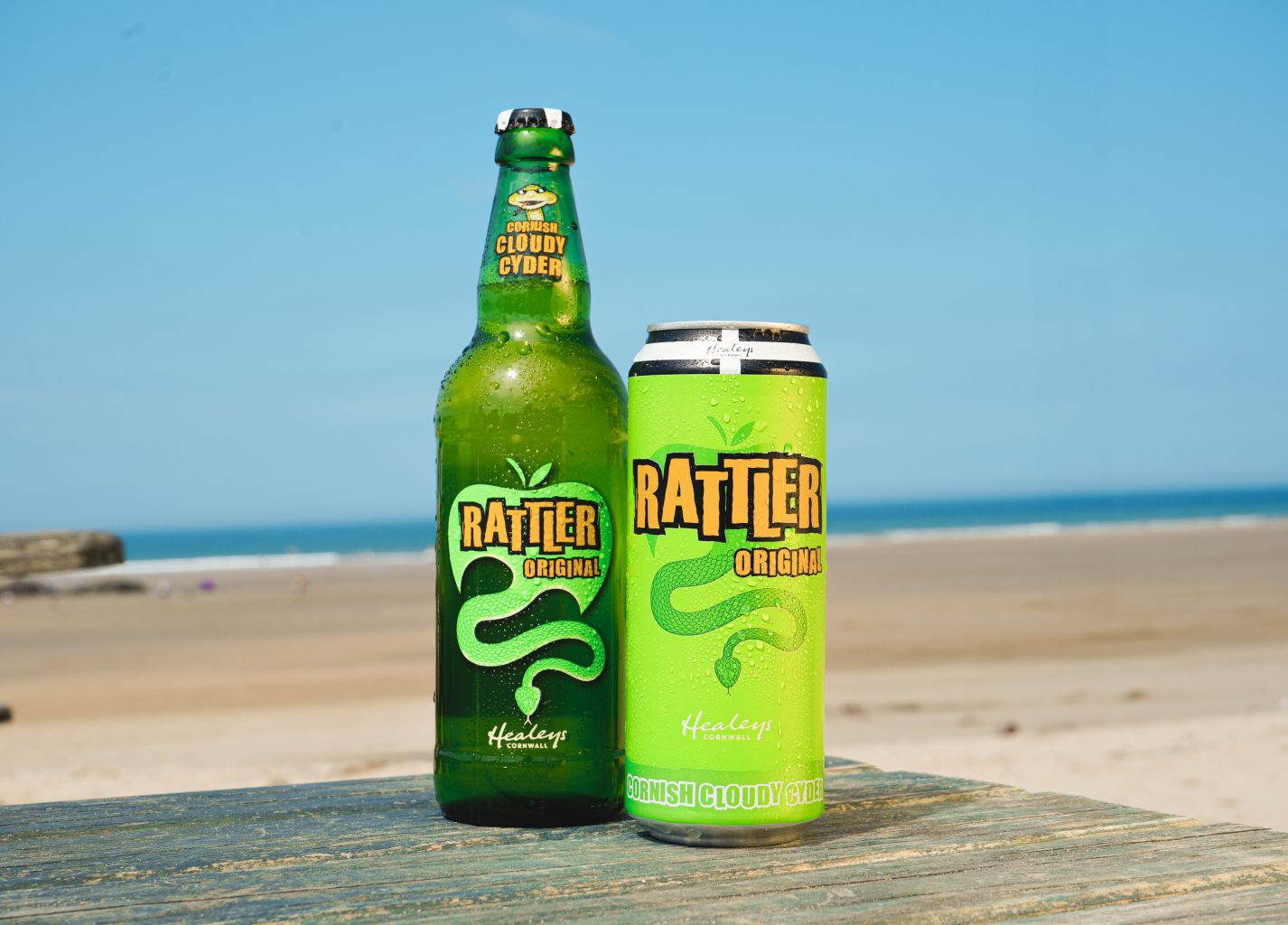
Rattling the export market
Joe Healey, second-generation Managing Director of Healeys Cornish Cyder Farm, shares his export experiences for Family Business Week.
 Healeys first major foray into the export market quite literally went off with a bang.
When the company shipped its flagship Rattler cider overseas, it used non-returnable plastic kegs instead of stainless-steel ones typically returned and reused. Some exploded mid-way through the voyage.
“They opened the container and there was cider everywhere,” recalls Joe Healey. “We only lost about seven percent of the 600-unit shipment, but that’s still quite a lot of liquid.”
It was a messy episode, but one they quickly learned from. The problem turned out to be heat and overfilling, leaving no room for the cider to expand. “We’ve fixed that now,” says Joe. “The equipment fills each keg more precisely, leaving the correct expansion gap.”
In its first year of international trading, Healeys opened routes to nine global markets, with early traction in Finland, Germany, Denmark and Thailand. The latter has become its largest export destination. Exports currently account for half a percent of turnover, but Joe expects that to rise to around five percent within five years.
Early success in Thailand did not come as a huge surprise to Joe after an experience travelling in Bali during his gap year. Spotting Cornish pasties on the menu at a local bar, he discovered the owner was a Cornish expat. “It reminded me how far the county’s culture and potential customers travel,” he says.
“Thailand wasn’t an obvious market for us, but there’s a strong expat and tourist connection. People discover Rattler when they visit Cornwall, then recognise it again when they’re back home or abroad. Cornwall’s tourism halo gives us a real advantage.”
From Scrumpy to Rattler
Rattler was born in the early 2000s when Joe and his brother Sam, were teenagers on the family farm. Back then, Healeys made a traditional Cornish scrumpy. A strong, farmhouse cyder, sold in flagons. “It wasn’t something our friends would drink,” Joe admits. “You’d never see it in a pub, it was designed purely for the tourist market.”
The brothers saw an opportunity for a cider that suited their generation. Cleaner, lighter and made for the bar, not the off-licence. Their father David, who founded Healeys in 1980 and is now chairman, encouraged them to go ahead.
They developed a crisp new blend and named it after a Cornish variety of apple called Rattler, so named because the pips rattle when ripe. The bold, colourful branding was deliberately youthful and stood apart from rivals that leaned on heritage.
Early batches were trialled in local pubs. Sales were modest at first, but the response was strong. After his gap year, Joe returned to find landlords asking where Rattler had gone. That summer, he loaded kegs into his car and toured pubs handing out samples. “That was the turning point,” he says. “It’s when we realised we had something people wanted to drink all year round, not just as a tourist souvenir.”
In the last decade, Healeys’ UK operation has tripled in size while the wider cider market has shrunk by about 40 percent since its 2008 peak. Rattler has been central to that success.
45-year overnight success
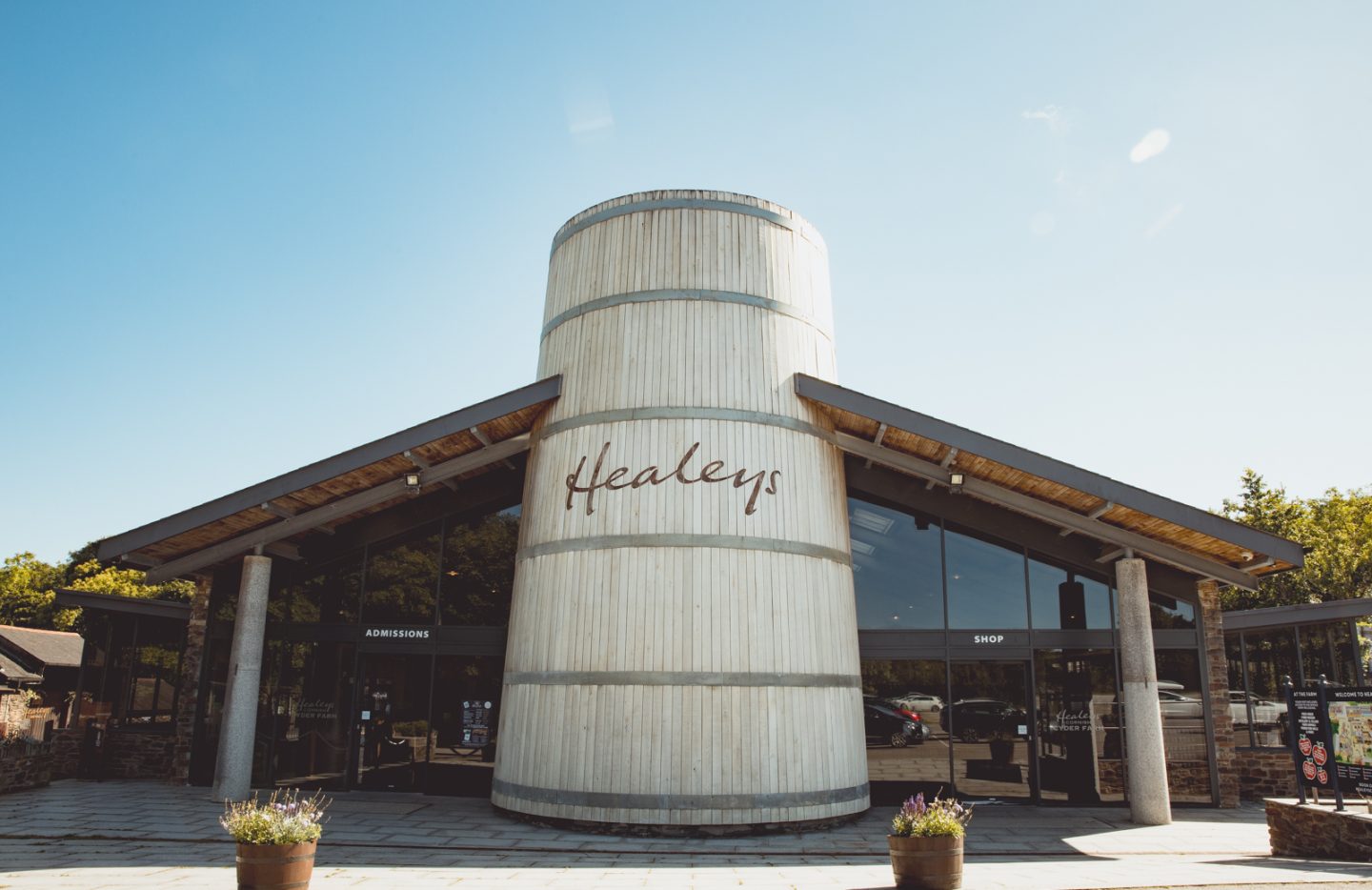
Healeys’ story began in 1980 when Joe’s parents, David and Kay Healey, ran a small off-licence. None of the ciders they stocked were Cornish, so they decided to make their own. They bought a couple of barrels, bottled the cider and branded it Cornish Cyder. It caught on quickly, prompting them to buy a smallholding and start pressing apples. Visitors soon asked to see where it was made, planting the seed for what would become Healeys Cornish Cyder Farm, now one of Cornwall’s best-loved attractions.
The current site near Truro was bought in 1986. It was a rundown dairy farm with no electricity or running water, purchased from the receivers with the help of David’s father, who put up his home as security. Many doubted apples could be grown in Cornwall, but the family proved them wrong.
Punished for growth
Healeys faces the same pressures as many UK manufacturers and family firms. “We’re hit on several fronts,” says Joe. “We make alcohol, so we pay duty. Because we produce packaged goods, we’re caught by the new Enhanced Producer Responsibility rules, which will take our packaging tax bill from around £100,000 to nearer £700,000 a year. Add National Insurance and inheritance tax reform and it sometimes feels like the system punishes you for growing.”
The result, Joe says, is time and money spent on compliance instead of innovation. “We just want to get on with making and selling great cider.” That’s one reason Healeys signed an export deal. “We’d dabbled with exports over the years, but never converted them into meaningful sales,” Joe explains. “It was too time-consuming to manage the paperwork, labelling, duties and customs ourselves.”
Partnering with a specialist export consultant proved decisive. “Having the right export partner removes bureaucracy and pressure from the business,” says Joe. “Although you could argue we should have been able to do this on our own,” he adds with a smile and a nod towards Cornwall’s independent spirit. “The running joke is that everything north of the Tamar River was already being exported in the first place.”
Healeys Cornish Cyder Farm, at a glance:
Founded: 1980.
Managing Director: Joe Healey (second generation).
Headquarters: Penhallow, near Truro, Cornwall.
Employees: About 250 (seasonal peak).
Turnover: £22m with 0.5% from exports, projected to rise to 5% in five years.
Core products: Rattler Cyder, Cornish Gold, Cornish Whiskey and spirits, soft drinks, jams and preserves with a small chain of hospitality businesses.
Export markets: Finland, Germany, Denmark, Thailand and other emerging markets across Europe and Asia.
Joe’s tips for family businesses considering exporting
1. Choose the right export partner. Managing international sales in-house can be a major distraction. A specialist partner understands local markets, paperwork and logistics, allowing you to focus on making and selling your product.
2. Start small and learn fast. Early mistakes are part of the process. Begin with small shipments, refine your systems, and build confidence before scaling up.
3. Lead with brand and heritage. Your story is your strength. Healeys’ Cornish roots and family values resonate abroad because authenticity and provenance stand out. Stay true to what makes your business distinctive.

Challenging times
There have been challenges along the way for Healeys. The hardest was the passing of Joe’s mum, Kay pictured above, centre, in 2022. “Mum was a huge part of the business from day one,” says Joe. “One of the challenges of running a family business is that ‘family’ and ‘business’ are so inter-twined. Of course, we are affected by the same issues as everybody, but as the owner, you can’t stop, business never stops. We’re really pleased to have named our most recent expansion after mum, Kay’s cyderhouse, a name I’m sure would have made her chuckle”